A GOVERNMENT that needs the Supreme Court to remind it how to count public money has a problem bigger than arithmetic. It has a problem with restraint. And that covers two branches of the Republic: executive and legislative.
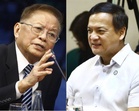
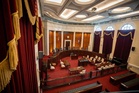
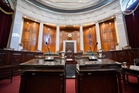
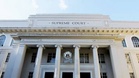
In a decision penned by Senior Associate Justice Marvic Leonen and released on Oct. 20, the Court declared the 2024 and 2025 national budgets unconstitutional over congressional increases that breached the president’s recommended appropriations. These included P449.5 billion in additional unprogrammed appropriations for 2024 and P17.99 billion added to the Special Road Fund for 2025. It also struck down provisions governing releases of unprogrammed funds under the 2026 budget.
The constitutional boundary is straightforward: Congress cannot increase the president’s recommended total by treating standby appropriations as money outside the ceiling. Unprogrammed funds are contingent appropriations, not a second treasury. The bicameral conference committee exists to reconcile legislative differences. It should never become a chamber where accountability disappears, and another budget appears.
Who answers for this? Start with the conferees and congressional leaders who steered the appropriations process. Moving allocations between budget categories to manufacture spending room deserves scrutiny beyond the excuse of legislative discretion. Repeated manipulation cannot simply be dismissed as faulty drafting. But responsibility does not stop at the House. The Senate ratified those conference reports. Senators applauding the ruling should explain what they approved, what they questioned, and what they did not examine.
Neither can Malacañang stand outside the frame. The president signed the budgets. He had the temerity to claim he read all the 1,408 pages of the enrolled copy. The executive implemented them. A veto pen carries responsibility precisely because presidential approval is a constitutional checkpoint.
Congress passed the measures. The executive approved and administered them. Responsibility is shared, although the evidence must establish each official’s role.
Here comes an immediate test: the P7.2-trillion budget for 2027. The People’s Budget Coalition has flagged more than P1 trillion in questionable allocations, spanning infrastructure, assistance programs and unprogrammed appropriations. These are watchdog assessments requiring examination, not judicial findings that every flagged peso is unlawful. Nevertheless, the pattern warrants alarm: Essential programs face reductions while politically attractive assistance and local projects expand. After all, 2027 is preparatory to the May 2028 elections, with the filing of the certificate of candidacy happening in September 2027.
Ilocos Norte’s first district, represented by the president’s son Sandro Marcos, received the largest reported net addition to district infrastructure allocations: approximately P4.375 billion. That does not, by itself, establish wrongdoing. It demands a published explanation of need, readiness and priority.
The Senate says it will make corrections. Its latest commitment to remove inadequately documented projects is welcome. But promises to cleanse the budget must produce a verifiable result before ratification. The Senate has to publish the amendments. Identify their proponents. Release the supporting documents. Show the public, line by line, what changed between the president’s proposal and the final law.
Malacañang should state its own standard now: no unconstitutional increases, no opaque contingencies, and no signature on provisions that evade the Court’s ruling. Seeking reconsideration is a legal option. It is no substitute for correcting the budget.
The impeachment trial of Vice President Sara Duterte presents a separate accountability test. It would appear that a distinct set of rules cover the vice president from the rest of the executive and legislative branches. For a spare tire, the whole-of-government approach to put down a duly elected vice president is clear.
The prosecution has withdrawn three articles, leaving the charge involving alleged unexplained wealth. Its witness, Alexander Cabrera, estimated P817.87 million in allegedly undeclared assets and unexplained wealth involving Duterte and her husband, potentially rising under broader assumptions. Those figures remain a prosecution witness’ calculations. They are not a verdict, nor do they automatically establish that public money became private wealth. Ownership, methodology, lawful income, and possible double counting must withstand examination. Duterte denies wrongdoing. The defense must have a meaningful opportunity to challenge the evidence. Accountability requires proof; fairness requires that the opportunity to answer be real.
The budget cases and impeachment proceedings involve different facts and standards. Their common institutional test is whether power submits to scrutiny — and whether scrutiny follows consistent rules.
Meanwhile, the economy pays for failures of governance. Second-quarter growth slowed to 2.3 percent. September inflation reached 7.2 percent. Business confidence remained negative, although it improved from August. Infrastructure spending has contracted sharply as tighter scrutiny, implementation bottlenecks, and documentation checks slow disbursements.
Safeguards are necessary. Administrative paralysis is costly. Government must distinguish projects requiring investigation from sound projects ready to proceed. The country needs an administration capable of protecting public money while putting lawful appropriations to work.
From January 2027 to June 2028, the administration will have 18 months left. That period cannot recover every lost opportunity. It can prove whether government has learned anything.
First, pass a clean budget on time. Protect essential health, education and agricultural services. Deliver assistance through transparent eligibility rules and verified beneficiary systems. A citizen’s access to help should not depend on a politician’s referral.
Second, restart verified infrastructure. Prioritize projects with completed designs, defensible costs and clear procurement records. Publish progress reports, independently inspect major works, and pay promptly for work actually delivered.
Third, address inflation through supply. Invest in irrigation, storage, logistics and agricultural resilience. Prepare early for weather disruptions and manage food imports predictably. Spending that eases shortages offers a stronger recovery than indiscriminate stimulus.
Fourth, make disclosure routine. Publish releases, procurement awards, project changes, and drawdowns of unprogrammed funds promptly in usable form. Transparency must let citizens trace money from appropriation to delivery.
Finally, restore predictability for private investment. Resolve permits, honor lawful contracts, and advance viable partnerships. Investors need confidence that rules will endure and decisions will arrive.
The Supreme Court has drawn a boundary. Congress and Malacañang must now show that they understand why it exists.
The final 18 months should deliver more than another spending law and another promise of reform. They should deliver a budget the Constitution can withstand, projects citizens can use, and accounts the public can inspect.
The Court has done its job. Congress and Malacañang must do theirs before another budget requires judicial repair and another year of recovery is lost, story of the 17th!