This Friday, 9 October, the Budget will be tabled. Numbers will be announced. Cash aids, wage talks, infrastructure promises. The ritual will play out. Most will watch, hope a little, then return to the monthly arithmetic of survival.
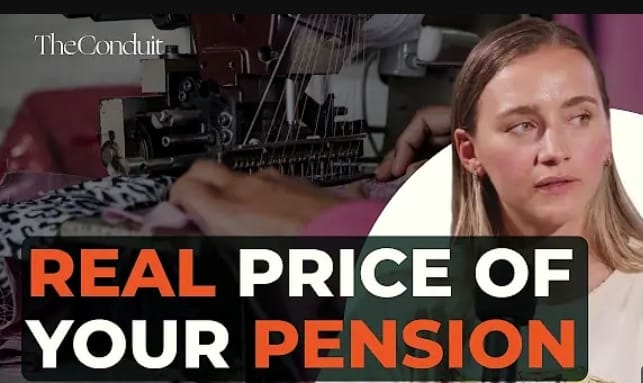
My earlier piece laid out the EPF numbers. T20 hold 82% of total savings. B40 hold 1%. More than half of members under 55 sit below RM10,000. You finance the highways, power plants and data centres with locked contributions. Then you pay tolls, tariffs and inflated food prices from take-home pay that never stretches far enough. The dividend arrives , but only after 55. The flexible account became a pressure valve: RM16.6 billion withdrawn, mostly for daily food. Workers consuming their own future to eat today.
That is not a pension system failing. It is a capital accumulation engine working as designed.
Grace Blakeley names the same mechanism on a global scale. In Vulture Capitalism she shows that modern capitalism is not free markets. It is planned oligarchy: corporations, finance and the state coordinate to protect capital while workers face competition, debt and atomisation. The system tells the majority they are free individuals who must hustle alone. Meanwhile the largest players plan together, extract, and shift costs downward.
The Malaysian EPF is a precise local expression of this. Compulsory contributions create a captive pool of patient capital. The lock until 55 guarantees long-term funds for sukuk and infrastructure that generate private returns. Workers cannot exit. They cannot demand alternative uses of their own money. Low wages ensure contributions stay small for the majority, so the dividend percentage-based flows overwhelmingly to those who already hold most of the savings. The many subsidise the few, then pay again as consumers for the assets their savings built.
Blakeley calls this the death of freedom. Not the absence of formal choice, but the structural conditioning that makes collective refusal feel impossible. Individualism is sold as empowerment. In practice it isolates. You blame yourself for low savings. You accept the lock as protection. You treat the annual dividend announcement as progress even when half the membership remains near zero. Passivity becomes rational. Why organise when the mechanism is presented as neutral technical necessity?
This is how a generation is trained into submission. From first job, a portion of every salary disappears into an account you cannot touch for decades. The message is clear: your future is managed by others. Your present is to be endured. Living wages are secondary to the need for stable capital. When costs rise, the solution offered is partial release of your own locked money further depleting the retirement that was already inadequate. The cycle closes. Survival consumes the future. The system remains intact.
Blakeley insists the system is not broken. It is functioning. The same holds here. The extreme concentration of EPF savings is not an unfortunate side-effect of unequal wages. It is the predictable outcome of a low-wage base plus percentage returns plus forced long-term commitment. The infrastructure boom financed by workers’ savings delivers returns to capital owners and the top slice of members. Everyone else gets the bills and the lock.
Friday’s Budget will almost certainly offer more targeted aid, perhaps another tweak to contribution rates or withdrawal rules. These are management techniques. They do not alter the underlying relationship: workers as captive financiers of a system that systematically under-pays them and then charges them for the assets their under-payment helped build.
The alternative is not abstract. Blakeley argues for democratising economic institutions public investment banks, people’s asset managers, sectoral bargaining, universal basic services that decommodify survival. Locally that means treating retirement savings as belonging first to the people who earned them, not as a guaranteed financing tool for projects whose profits flow elsewhere. It means wages high enough that forced saving actually produces security rather than guaranteed shortfalls. It means the right to decide, collectively, how long-term capital is directed.
None of that arrives by waiting for the next Budget speech. It requires refusing the conditioned passivity. Talk about the numbers without apology. Reject the framing that low savings are personal failure. Support organising that treats wages, housing, food costs and retirement as connected, not separate policy silos. Demand that any further release of EPF money comes with structural wage floors, not as another temporary valve.
The lock was never mainly about protecting the old. It was about securing capital. Recognising that fact is the first act of reclaiming agency. A generation trained to submit can choose to stop. The arithmetic of survival does not have to be accepted as destiny. The system that requires your forced patience while delivering concentrated returns is not inevitable. It is maintained. And what is maintained can be changed by people who decide their own money, their own time and their own futures are not someone else’s captive resource.
This Friday the numbers will be read out. Listen carefully. Then act as if the money and the years belong to the people who earn them. Because they do.
Dr Kavesh (kaveshdr@gmail.com) is a content creator under the Newswav Creator programme, where you get to express yourself, be a citizen journalist, and at the same time monetize your content & reach millions of users on Newswav. Log in to creator.newswav.com and become a Newswav Creator now!
The User Content (as defined on Newswav Terms of Use) above including the views expressed and media (pictures, videos, citations etc) were submitted & posted by the author. Newswav is solely an aggregation platform that hosts the User Content. If you have any questions about the content, copyright or other issues of the work, please contact creator@newswav.com.