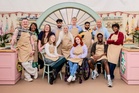
The Great British Bake Off is back for its 17th series, which, frankly, nobody would care about were it not for one thing: the arrival of Nigella Lawson. The Queen of the cookbook, your dad’s favourite TV chef, Nigella arrives on Channel 4 to replace the retiring Prue Leith. So, after 16 seasons of smouldering innuendo, will Nigella add some more heat to the kitchen? Or will she be stifled by the terminally twee atmosphere in the Bake Off tent?
“I don’t have many skills,” Nigella tells the aspiring bakers, “but eating is one of them.” For this first episode they lay on a range of treats for the new judge: a chocolate stout cake, a coffee and walnut cake, and, finally, a showstopping self-portrait rendered entirely from – you guessed it! – cake. Naturally, there are calamities. “Oh yeah, perfect,” contestant Molly notes as she opens her oven. Moments later, the cake is on the floor. “I’m going to cry,” she says now, her triumphant tone turned to dust in her mouth. But there are also successes, such as an elegant, tiered cake bedecked with an image of deadpan student Mo and his pet cat, Simba. What type of cat is Simba? “I dunno,” Mo replies. “Ginger?” All of these shenanigans are comfortably shepherded by the presenting duo, Alison Hammond and Noel Fielding, who are on their fourth series as a partnership.
But the question everyone wants answered is this: how does Nigella slot into the line-up? She’s famous for her classy home cookery programmes that turned her into the nation’s most loved “domestic goddess”. But she’s also a writer and columnist at the Financial Times, as well as a frequent feature of tabloid gossip. After Mary Berry and Prue Leith – Paul Hollywood remains like an ancient granite figure, uneroded by centuries of tides washing in – Nigella adds a bit of glamour to the “female judge” slot. It is hard to tell how tight her baking analysis is going to be, but she presents a good, sympathetic ear for contestants. “I suppose a lot of us feel we have a person beyond the surface,” she remarks, biting into a cake inspired by the baker’s drag persona. By the end of her first day in the tent, she feels part of the fabric. Just another square on the gingham tablecloth. “I feel so happy,” she reflects, “even though I have got sugar poisoning.”
But this is also the problem. The Bake Off format is very tired. It first appeared in 2010 and spawned a whole host of imitators. Some, like The Great Pottery Throw Down, have proved superior, whereas others, like Interior Design Masters, are fluff designed to fill the schedule. But in the 16 years that Bake Off has been on our screens – and despite three changes of judges, and four of presenters – the structure has remained the same. A quick signature challenge, showcasing classic recipes; a technical challenge, testing amateur skills they can’t easily rehearse; and a showstopper, on which the whole challenge really rests. It is hard to muster any enthusiasm for such a predictable set of trials. The cakes wobble, the decorations melt, the bakers over-salt the batter, and everything remains the same.
Nigella’s arrival might have been an opportunity for a harder refresh. After all, the Bake Off of 2026 is, in many ways, very different to 2010’s Bake Off. Different hosts, a different judge, even a different broadcaster. Only Paul Hollywood is the same, jutting proudly into the whipping winds of the Aegean like the figurehead of the ship of Theseus. But instead of bending the format to suit Nigella, the new judge bends to the will of the programme. She titters along when Paul says, “the nut size is huge”, as though she herself isn’t a master of culinary innuendo. She slots into an easy, and well-worn, dynamic with Paul, despite rumours of tension on the set. “I know you like neatness, but I like a bit of goo,” she notes. And, by the end of the episode, she’s cradling a cup of tea and lamenting that she has to send someone home. If the goal is to export Bake Off (or The Great British Baking Show, as it’s known in the US) to international audiences with no interruption to that core brand, then this latest series is an inoffensive success.
But when a show has a primetime slot on Channel 4 for 16 years and doesn’t even subtly tweak the recipe (a new challenge, perhaps, or fewer predictably vapid VTs), it feels like a waste. The televisual equivalent of Iain Watters’ melting baked Alaska, ready to be hurled into the bin. The Great British Bake Off producers might have done brilliantly to snag Nigella, and it will undoubtedly lead to an uptick in viewers. But they've applied her prodigious charms too thinly, and even she – with her preference for all things “sumptuous” – can’t stop the feeling that the show has gone more than a little stale.
Read MoreGreat British Bake Off 2026: Meet the 12 bakers stepping into the tent for season 17
Comedian’s daughter lands role in new Inbetweeners movie
Paul Hollywood says Nigella Lawson is a ‘warmer’ Bake Off judge than Mary Berry