
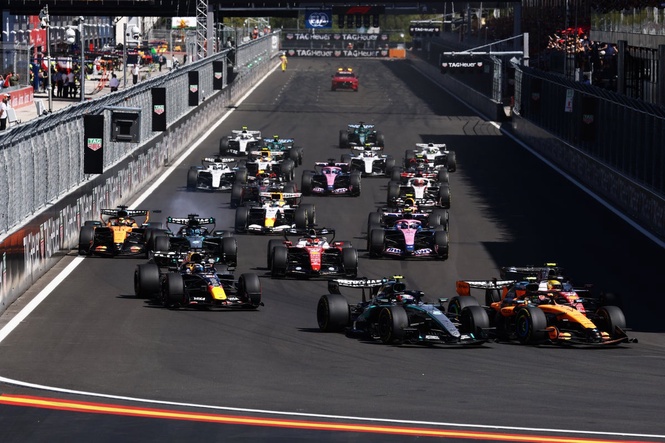
In one respect, it is the largest of compliments for a new Formula 1 grand prix. As comparisons go for a new European street circuit, Monaco is the gold-standard for the glitzy extravaganza which comes with the top-tier of modern-day single-seater motorsport. And Madrid on Sunday, awash with Real Madrid’s superstars and the King of Spain no less, was a buzzing assortment of packed grandstands, impressive logistics and lavish A-lister outfits.
Yet after 90 minutes of largely dull and non-existent on-track racing, where simply “placing your car in the middle of the track” was adequate defence, as per Max Verstappen, the analogy to the Monaco crown-jewel event was not favourable for the new Madring circuit.
Put simply: the 22-turn tight and twisty track layout was widely chastised for its lack of racing value.
Kimi Antonelli triumphed again – his eighth victory of the season, taking him one ahead of forlorn Mercedes teammate George Russell’s career-total – after being the recipient of a fortituously timed virtual safety car (VSC) on lap 15. Verstappen also benefited, taking second place, but Lando Norris can count himself mightily unlucky to not come home with the victory, as by the time his McLaren car entered the pit-lane, yellow-flag conditions had ended. Ultimately, he did well to finish on the podium.
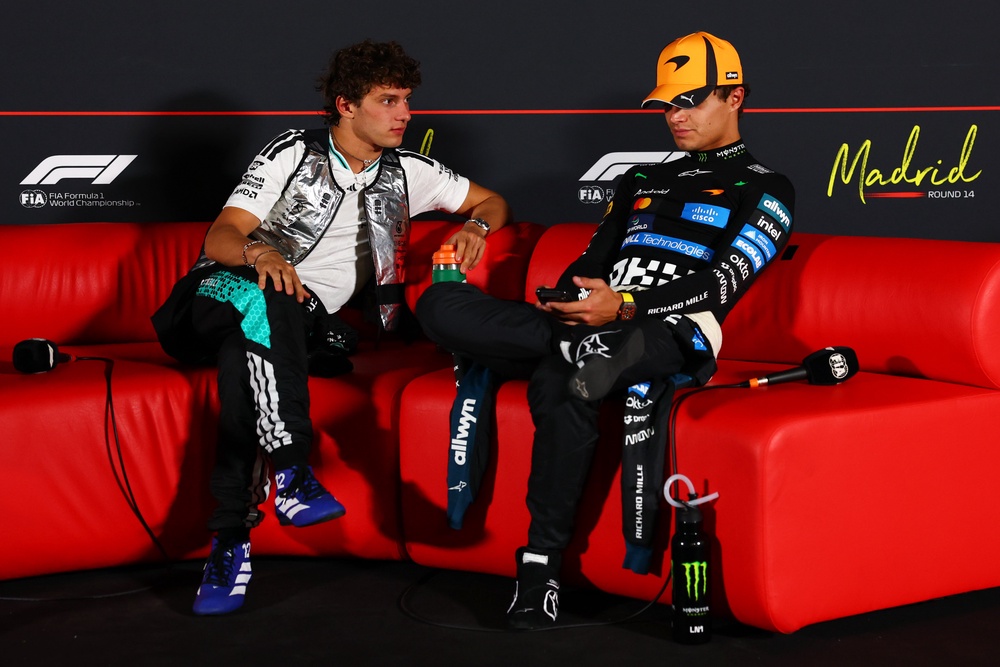
Yet proceedings after lap 15? Monotonous. "I don't know how someone looks at this design and goes, mint!" said a downbeat but refreshingly honest Norris in the press conference afterwards. “To me, it’s not a great racetrack.”
Verstappen noted post-qualifying, having predicted a lack of overtaking from hours in the simulator, that some adjustments to the circuit are needed. Easier said then done, of course, but reigning F1 world champion Norris was on hand with quickfire solutions too, given the lack of a long-straight which similar circuits in Baku and Jeddah do possess. An irony, in fact, given the Madring has the longest pit-lane of the season, at 550 metres, which also rendered multiple-stop strategies redundant, as fifth-placed George Russell found out to his detriment.
"I think there are some obvious changes they should make,” Norris added. “They should get rid of turn 18-19… useless. Just have more of a straight into a hairpin.
“A straight line from [turn] 17 straight to 20 [would help] to have a much wider entry like Austin turn 1 or turn 10, a big hairpin. You’ll create much better opportunities for everyone and you’ll be able to enjoy the race.”
The topic of race entertainment-value was not isolated to the main event either. On a weekend where the Formula 3 season concluded and F2 held a sprint and feature race too, only crashes and red-flags provided a sense of intrigue. When you’re relying on heavy shunts for a level of exhibition, in a sport which has made such strides in safety in recent years, you know you’re in an inauspicious spot.
With one anomaly – Mari Boya’s stunning pass around the outside at the turn 12 ‘La Monumental’ banked corner in the F2 race on Sunday – there was next-to-no opportunity for daring manouevres. We’ve been here before: post-race in the media pen triggered the same discussions which we have on an annual basis in Monte-Carlo. Qualifying? Thrilling. Race? Dreary.
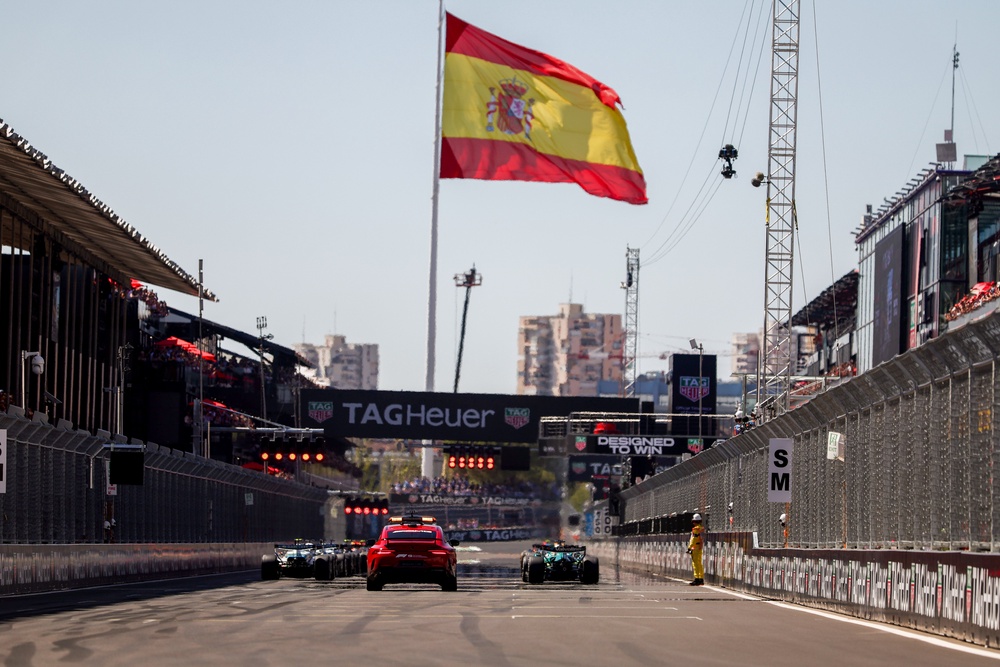
"I hope there's open-mindedness to make some track changes for next year,' Williams’ Alex Albon, who finished 15th, said. "I mean, if the F3 cars can't overtake, then you know there's going to be no overtaking the whole weekend.”
The good news is that open-mindedness, that willingness to acknowledge shortcomings and adapt, does seem authentic. Madrid has a lucrative £41m-a-year deal with F1 over 10 years to host the Spanish Grand Prix, with Barcelona switching to a two-year rotational deal with Spa-Francorchamps. This event and circuit, positioned in the north-east of the Spanish capital, is not going anywhere.
“They’ve built something challenging for the drivers – like a mini-Macau or mini-Monaco,” Mercedes boss Toto Wolff said in his written media session afterwards. “The location was good and we should think about how much more we can do here. We have the space, which is rare in F1.
“I had lunch with the COO [chief operating officer] of the circuit yesterday and they are totally open-minded about next year. How should we change the track layout? They’re on it and they understand. But honestly, being here for the first time, overall I’m very impressed.”
To a large degree, Madrid has proved the antithesis to the last debut race we had, in Las Vegas in 2023. That inaugural event, littered with pothole and scheduling issues early on, was saved by a enthralling grand prix after some brilliant racing at the end of the long straight through the famous strip.
Here, The Independent spoke to stakeholders very satisfied with the organisation and order of play throughout three days of on-track action, with an impressive figure of 353,000 fans watching on. While some videos on social media show some questionable viewing spots with general admission tickets, on plots of land still dusty and in need of development, the use of public transport made routes in-and-out of the circuit relatively smooth; a process not straightforward, given the intricacies of a sporting venue on public roads.
The IFEMA Madrid exhibition centre, with its vast array of aircraft hangars, provided excellent facilities for teams and media, with a spread-out paddock widely praised given the huge influx of people, particularly on raceday.
Yet inevitably, as F1 has found out the hard way this year given this much-maligned set of regulations and cars, the sport is the ultimate product for adjudication. Here, the main event fell flat. How easily can executives revise the fast-flowing 22 corners? That remains to be seen. But if changes are feasible, changes must be made for 2027 and beyond.
Read MoreLando Norris fires back after being told he can’t drink Coca-Cola: ‘I just did a race’
Kimi Antonelli oozes composure with another F1 victory as debut Madrid race fails to fire
F1 standings after Spanish GP as Kimi Antonelli extends lead to George Russell