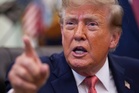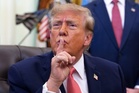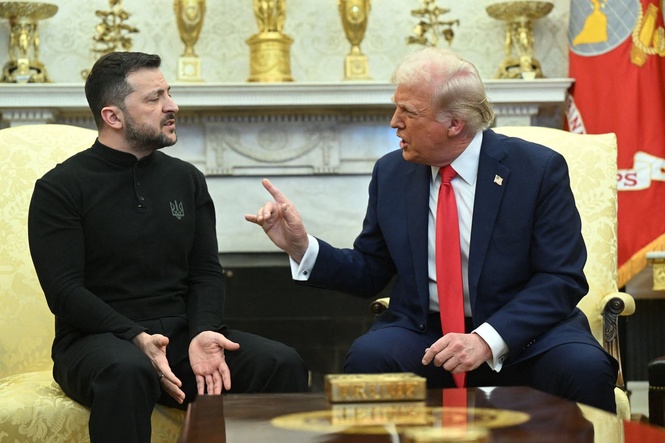
Relations between Donald Trump and Volodymyr Zelensky have reached a new low after the US president tore up sanctions on Russia and struck a highly controversial deal to purchase Russian diesel.
The latest fracture followed months of careful positioning by the Ukrainian president and his allies in Europe to avoid upsetting Trump and the US abandoning the country altogether.
But with Ukraine facing another brutal winter of Russian strikes, Washington’s commitment to sharing vital intelligence and interceptor missiles is again in question.
And where Zelensky would once have tried to court the American president with open displays of praise and gratitude, this time he has stood his ground.
As US special envoy Steve Witkoff meets the Ukrainian president in Oslo in a bid to repair ties, The Independent looks back on the key moments that have shaped the rocky relationship between the two leaders.
July 2019: Phone call ‘favour’ threatens to bring Trump down
Shortly after Zelensky was elected in 2019, and during Trump’s first term in office, the US president called his Ukrainian counterpart to discuss a ceasefire proposal over the illegal Russian annexation of Crimea.
In the now-infamous phone call, Trump asked Zelensky to “do us a favour” and investigate then-former vice president Joe Biden, his son Hunter Biden, and the discredited theory that Kyiv colluded with the Democrats in the 2016 election to harm Trump.
That call later ultimately triggered the first impeachment case against Trump by the Democratic-controlled House in December 2019 on abuse of power and obstruction of justice charges. Zelensky later said Trump did not try to blackmail him, while Trump denied wrongdoing and described their interaction as a “perfect call”.
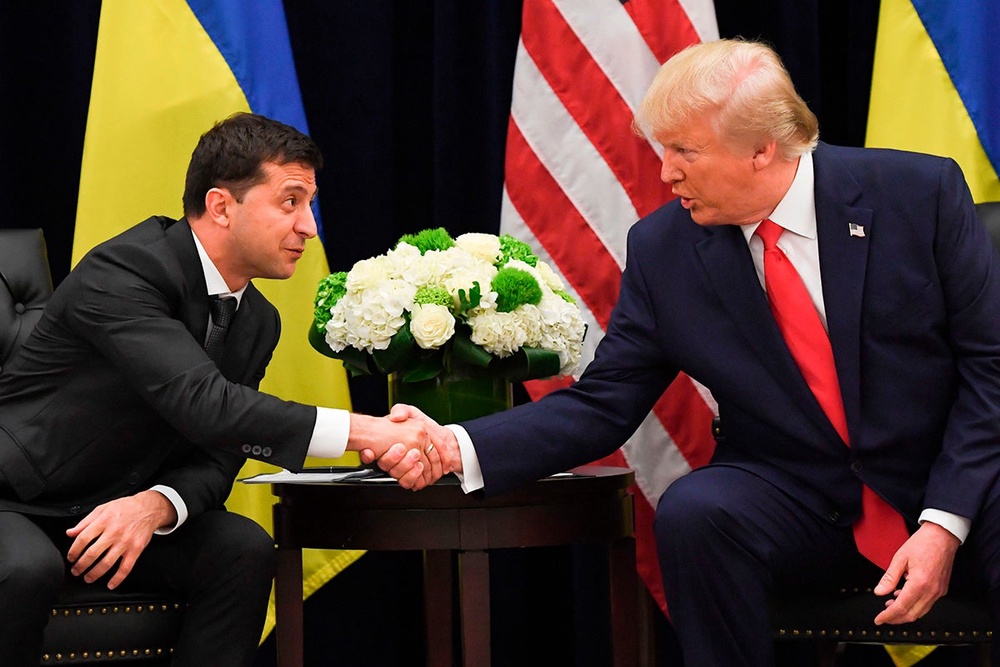
The timing of the July call, shortly after the United States froze nearly $400 million in aid to Ukraine, prompted concern that Trump used taxpayer money approved by Congress as leverage for his personal political gain.
Trump was ultimately acquitted by the Senate in 2020.
February 2022: Trump acknowledges ‘brave’ Zelensky after praising ‘genius’ Putin
In February 2022 Russia launched a full-scale invasion of Ukraine. It was Moscow's biggest attack on a European state since World War Two.
Trump, having by then been ousted from the White House, condemned the invasion and said he was praying for Ukrainians, after earlier in the week getting flak from Republicans for saying Putin’s attacks were “genius” and “pretty savvy”.
“The Russian attack on Ukraine is appalling. We are praying for the proud people of Ukraine. God bless them all,” Trump said, adding that he thought Zelensky was “brave” for staying in the capital.
Trump also began insisting that the “horrific disaster would never have happened if our election was not rigged and if I was the president”.
During his 2024 election campaign, Trump would vow to end the war within 24 hours, adding pressure on the administration and a desire to show progress after he missed his deadline.
February 2025: Trump and Vance ambush Zelensky in White House showdown
Trump won the 2024 election and returned to office in January 2025 with a new mandate and promises to end the war in Ukraine and avoid dragging the US into war.
Zelensky had been among the first world leaders to congratulate Trump and his “decisive leadership” when he won the election. But the two clashed dramatically at their first face-to-face meeting at the White House in February.
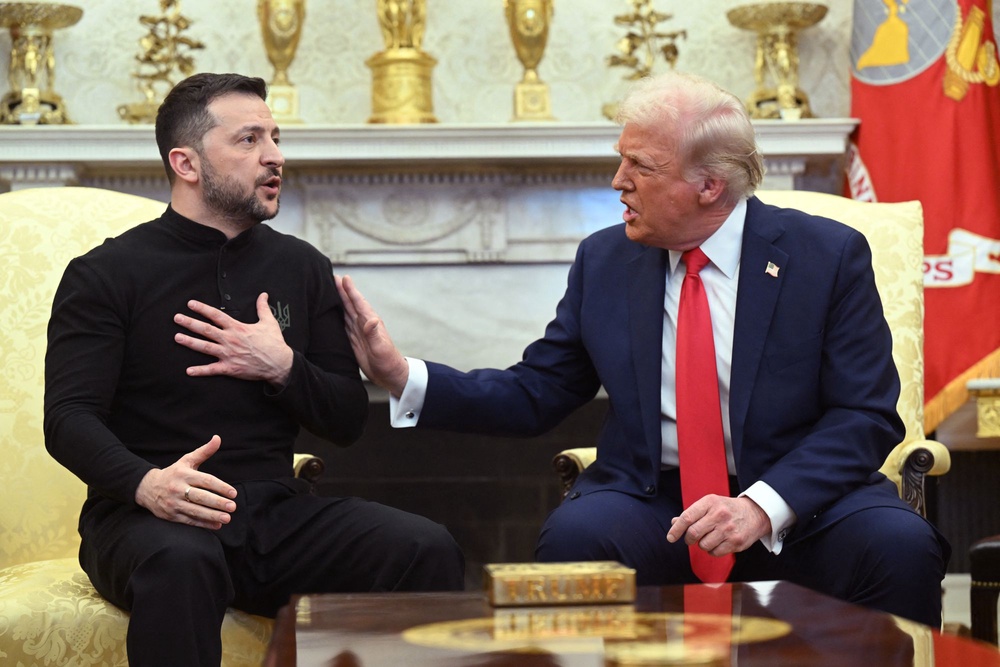
The Ukrainian president had seen the meeting as an opportunity to convince Trump not to side with Putin. But Trump and his vice president JD Vance laid into Zelensky, saying he showed disrespect and had not thanked America for its support.
Zelensky was told to leave, a US official said, and a deal to jointly develop Ukraine’s rich natural resources was left in limbo.
March 2025: New administration cuts aid to Ukraine
European allies rushed to Zelensky’s aid after the summit, but Washington within days had cut military aid and vital intelligence sharing to Ukraine, blocking billions in shipments.
Between 2022 and the end of Joe Biden’s term in 2024, the US had sent $33.8 billion in weapons from its own stockpile to Ukraine and $33.2 billion in further aid, allowing Ukraine to modernise and hold off the invasion.
Trump’s second term defence secretary Pete Hegseth cut off direct aid soon after the administration came to power, and European allies picked up more of the bill.
Zelensky urged that Ukrainian civilian populations would suffer without access to US-made Patriot interceptor missiles.
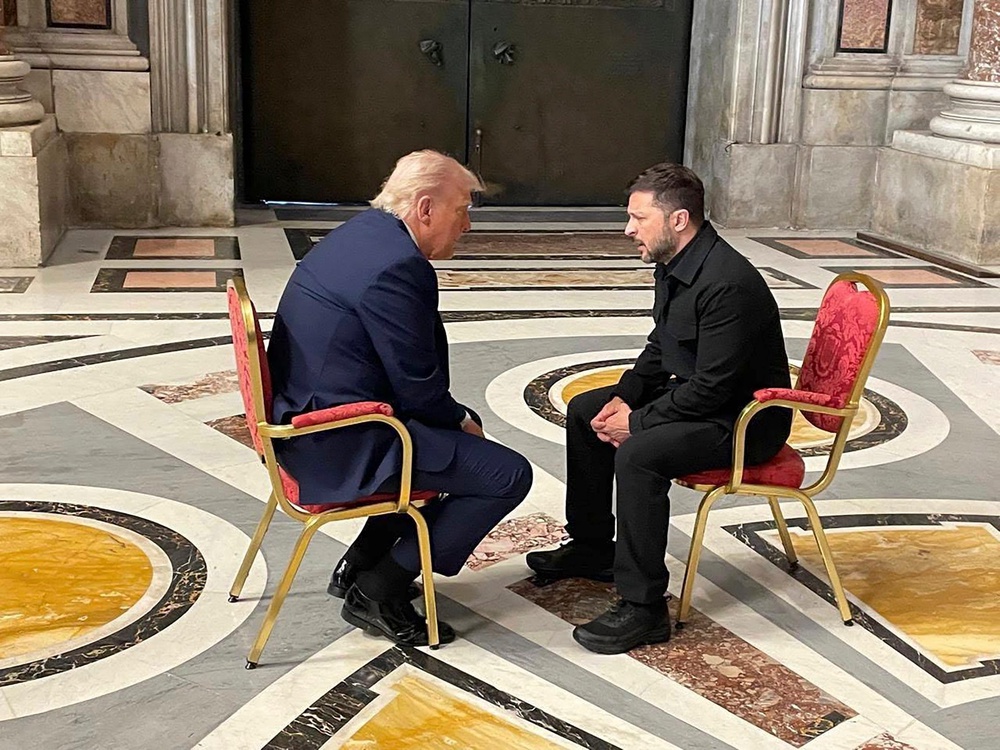
The relationship between Zelensky and Trump steadily recovered after the White House showdown, with the pair meeting quietly on the sidelines of Pope Francis’ funeral in April last year to discuss peace plans.
Trump later restored information sharing and intelligence officials in June 2025 were helping Kyiv to improve the accuracy of its strikes on Russia’s energy infrastructure, including oil refineries.
August 2025: Trump tries to play peacekeeper
After more than half a year, it was clear the war in Ukraine was no closer to resolution. Russia still sought land and concessions, while Ukraine wanted security guarantees against a future invasion.
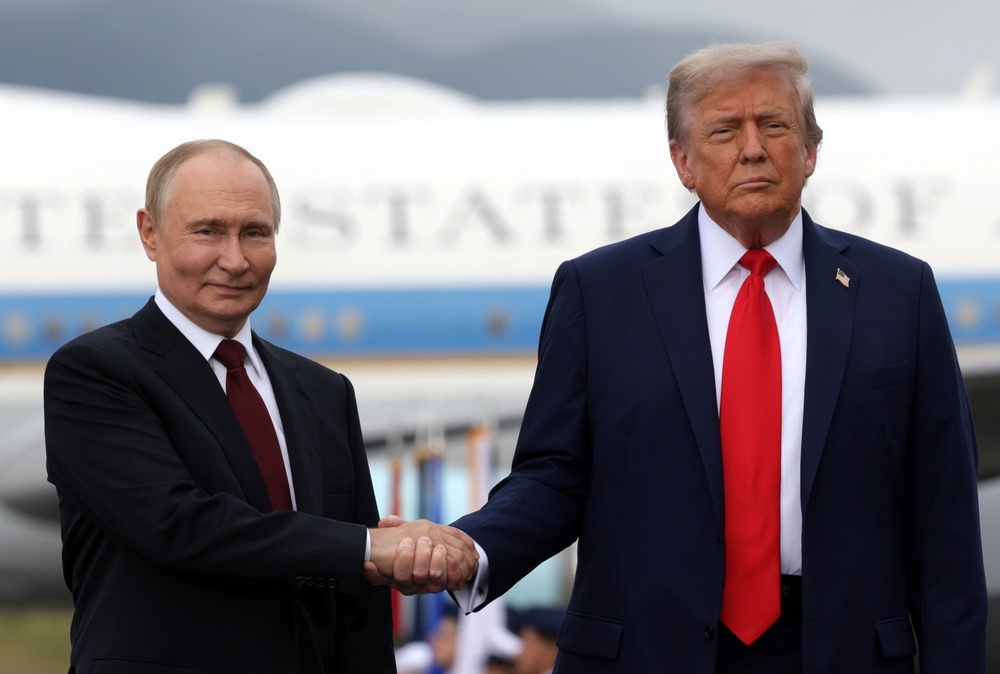
Trump, eyeing a role as peacemaker, met with Putin in Alaska for closed-door talks in August, but came away without a clear agreement. He later suggested it was up to Ukraine to give up territory and end the war.
After weeks of deliberation, a 28-point US peace plan emerged in November, demanding that Kyiv give up its Nato ambitions and cede land to Russia in return for security guarantees. The plan was widely condemned by allies, prompting further talks with Ukraine before a 20-point revision was shared in December.
Zelensky assessed then that negotiations with the US were ‘90 per cent’ complete. But Russia maintained its original demands that Ukraine should give up land for an end to the war.
The US resumed negotiations with both sides, including trilateral talks in Geneva in February 2026, but could not present a breakthrough before the Iran war put talks on ice.
October 2026: US signs diesel deal with Putin as Iran war bites
Trump had told Zelensky in the Oval Office that he “didn’t have the cards” in the war with Russia. But by August 2025, Ukraine had developed the capability to start hitting oil refineries far across the border, dealing damage to the Russian economy and taking the fight closer to Moscow.
By summer 2026, it appeared Zelensky had found a solution of sorts to his defensive problem, too. Trump said in July that he would give Ukraine a license to produce its own Patriot interceptors, easing pressure on the administration as the Iran war soaked up US stockpiles. By September, though, he had started to renege.
The war with Iran was by now contributing greatly to rising energy prices ahead of the November midterm elections. Trump directed much of the blame towards Ukraine and its strikes on Russian energy infrastructure.
It was against this backdrop that in October the US president announced a deal with Putin to allow Russia to sell diesel, undermining years of mounting pressure for little material difference to prices. When Russia ignored Trump’s ‘energy ceasefire’, Ukraine restarted its attacks across the border, and Trump hit out at Zelensky.

Ukraine subsequently reported difficulty with its Starlink communications service. Elon Musk deflected criticism, saying it was the US government that owned and controlled the military variant in use on Ukraine’s frontlines.
Ukrainian officials also said they were no longer receiving reliable US warnings of incoming Russian attacks, while the White House said there had been no changes to intelligence sharing with Ukraine.
Asked last week whether Trump could be using Zelensky as a scapegoat for his own domestic problems ahead of the November midterms, the Ukrainian president could only smirk and say: “This is my answer.”
Read MoreTrump’s super PAC is now running campaign-style ads created with taxpayer dollars
EU reveals new Arctic strategy amid Russia threat and Trump's Greenland interest
More Americans are now worried about AI than war and terrorism, poll finds
Trump has finally abandoned the West for Putin. This is what UK and Europe must do
Rioting in Milan caused by ‘hybrid war’ against West, says Italian defence minister
Mother and baby daughter in pushchair killed in Russian strike on Ukraine park