Think South Korea and you’ll probably picture its frenetic capital, Seoul – an centre for tech, beauty treatments and the beating heart of Hallyu (the Korean Wave of all things pop culture), encircled by dramatic mountains. Though just under 400km southeast, the country’s second city reveals a more laidback side to the destination.
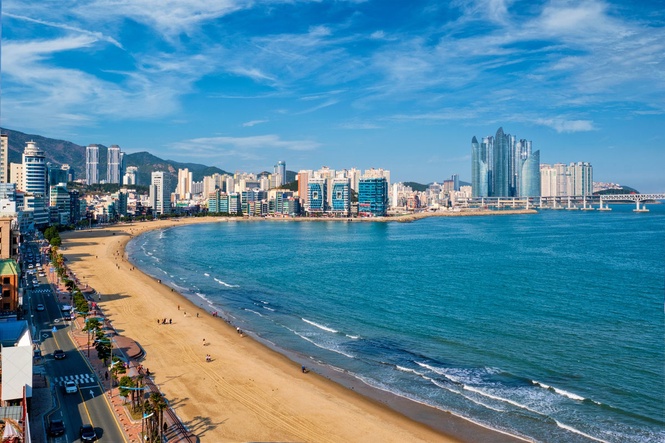
Nicknamed the “Miami of Korea”, Busan is a maritime hub boasting sandy beaches as well as dramatic peaks. It shares the same rich cultural heritage of Seoul, though combines it with a coastal cool vibe, and is home to quirky neighbourhoods, and bustling fish markets serving decades-honed speciality dishes.
As a Londoner I love a hop to the south coast for a weekend by the sea, and likewise, Seoul’s creative crowd see Busan as their go-to mini break destination. Especially as it’s now easier than ever to reach the city thanks to a new high-speed KTX rail route from Seoul.
So after a few days getting to know the capital, I followed suit and joined the hordes squeezing onto the sleek train for the two-and-a-half-hour journey that speeds through Daejeon, aka Korea’s Silicon Valley, and scenic Dongdaegu en route. Having left mid-morning I was in touching distance of sand and sea by the afternoon.
If you want to add a few days in Busan to your South Korea itinerary, these are the most exciting places to explore and eat your way around.
Read more: I fell in love with this island-to-island cycling trail through rural Japan
What to eat
Jagalchi Fish Market
For a taste of some of South Korea’s best speciality dishes I’d recommend starting your trip with a food safari in and around Jagalchi Fish Market. One of South Korea’s largest, it’s named after the female vendors, Jagalchi Ajumma, who took to selling fresh catches here after the Korean War to support their families.
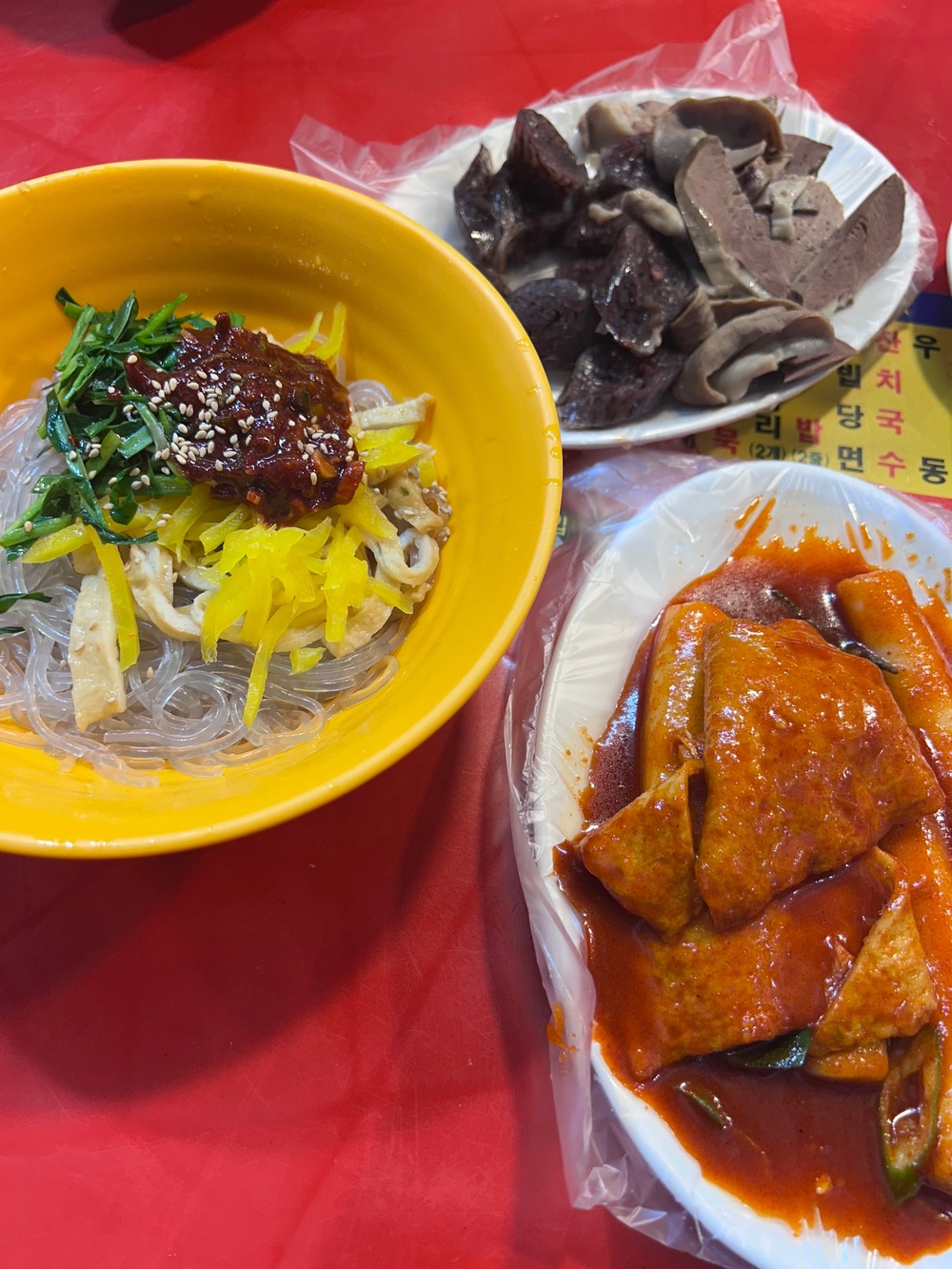
Inside the market, pull up a stool at one of the bustling food joints with a plastic-covered menu. My Inside Asia guide Jesse – who’s lived in Busan for over 20 years – cherry-picked the best dishes for us to sample; steamy blood pudding, the ubiquitous tteokbokki (spicy rice cakes) in glossy orange sauce, and slippery glass noodles topped with vibrant pickles, all served in bright melanin dishes.
Just outside the market’s awnings, Korean Pizza is an unassuming, decades-old cafe where the female chefs have been honing the recipes for their perfectly crispy, deep-fried savoury “pancakes” since the 1980s. Choose from shrimp, potato and pork, or red bean, and make sure you grab some makgeolli wine from the fridge to wash them down with – a traditional milky rice wine with a unique slightly sparkling taste, and a longer history than soju.
It’s also worth making a pitstop to sample a perfectly charred whole mackerel (the most sourced fish in Busan) at one of the speciality restaurants. If you’re an adventurous eater, san-nakji (live octopus) is a delicacy, chopped into pieces and served immediately with the tentacles still wriggling.
Haeundae area and Traditional Market
Three-mile-long Haeundae Beach is one of the country’s most famous stretches of coastline, surrounded by skyscrapers. The pedestrianised street, Gunam-ro, that leads up to it is a buzzy, late night destination filled with an eclectic mix of neon-lit grabber machine arcades, food joints, pharmacies for K-beauty shopping and fashion boutiques such as Gentle Monster. It’s a great place to try another Busan speciality: dwaeji gukbap. A steamy, comforting combination of milky broth, rice and slow-cooked pork. The restaurant named after the dish that translates as “Miryang Korean Sausage Pork and Rice Soup” on Gunam-ro, is an easygoing, authentic place to try it, and accepts solo diners.
The area is also home to Kumsu Bokguk, one of the most notable restaurants that serves spicy puffer fish (bokguk) stew. It’s poison if improperly cooked, but a delicacy in the right hands, and you can trust the staff at this Michelin Guide restaurant.
Still got room for snacks? The Haeundae Traditional Market, near the top of Gunam-ro, is packed with food stalls dispensing popular dishes. There are sweets, such as Bungeoppang (pancakes shaped like fish and oozing with Nutella or bean paste), as well as savoury dishes – make a beeline for steaming meaty mandu (dumplings).
Gwangalli Beach
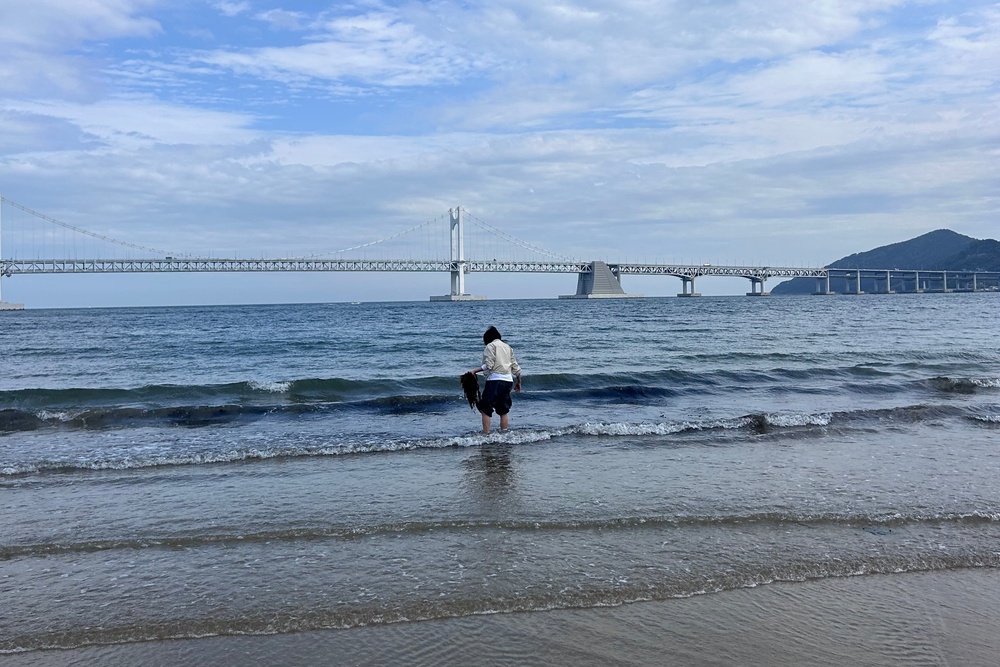
The area around this crescent-shaped beach is emerging as a favourite late night hangout for Busan's younger crowd. It also has a lively coffee shop culture by day. Go to Working Holiday cafe on the fifth floor for perfect picture-window views over the golden sands and out to the Gwangan Bridge. It serves perfectly brewed coffees alongside an Aussie-inspired brunch menu.
Stay in the area for a taste of its emerging bar scene. Near the bridge, Ggultteok House dispenses a house-brewed makgeolli and creative snack pairings. While Hongdan is a stunning, traditionally styled spot for cocktails where Korean flavours, including red beans, are mixed into speciality highballs and short cocktails.
Read more: I’ve been on holiday to the Maldives eight times – this is the best way to do it
What to see
Haedong Yonggungsa Temple
Busan is famous for its Buddhist temples, and this is the most iconic thanks to its unique vantage on the coast in the northeast of the city in Gijang-gun. Wander the colourful 14th-century buildings dedicated to the Sea Goddess Buddha of Mercy as the waves crash below, and seek out the statues of the 12 animals of the Chinese zodiac.
Busan Air Cruz
To get the lay of the land, I’d recommend taking the Busan Air Cruz (formerly the Songdo Sea Cable) on your first morning in the city from Songlim Park. It whisks you smoothly over Songdo Beach, gliding past the dramatic cliffs and forest of Yeongdo, and scaling over the Namhang Bridge before dropping you at Songdo Sky Park. Here you can wander the observatory, Amnam Park’s trails, and get another great view over the sea from the coastal suspension bridge.
Gamcheon Culture Village
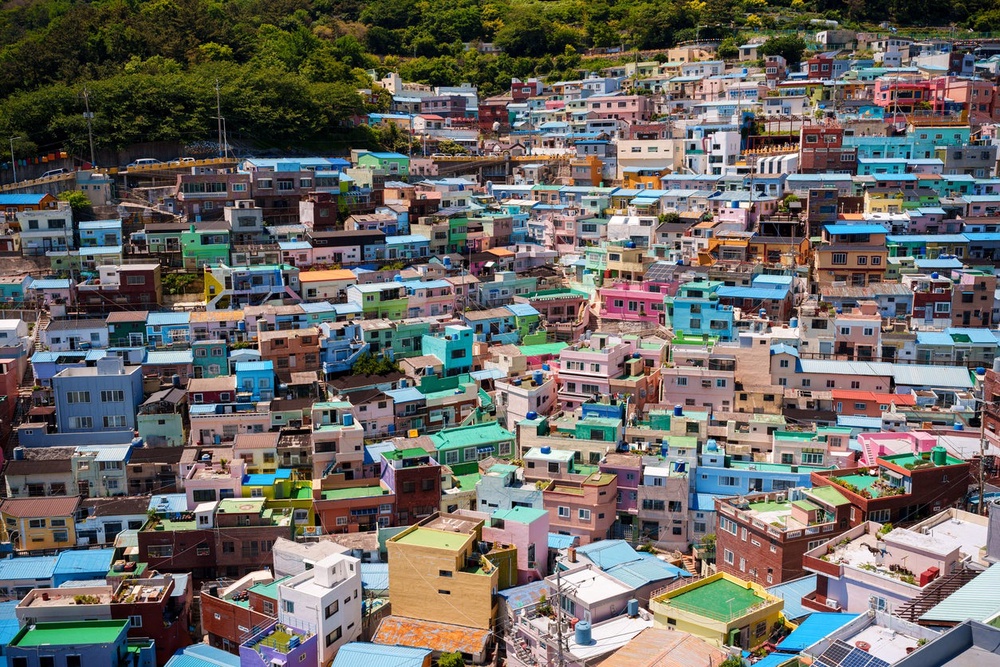
Another of the city’s big hitters is the Gamcheon Culture Village, nicknamed the "Machu Picchu of Busan" for its hilly topography on the slopes of Cheonmasan; though its colourful houses are more likely to recall a town made of Lego. The buildings were erected in the 1950s for Korean War refugees when Busan became the last safe refuge on the peninsula; though after an exodus began in the 1980s, a 2009 project turned it into an attraction. The primary-coloured facades were added, as well as murals (including one for the BTS fans of Busan-born bandmates Jungkook and Jimin) and art workshops for creatives took over some of the residences. A statue of the Little Prince is the most popular selfie spot – the star of Antoine de Saint-Exupéry’s novella is a cult figure in the area as his refugee narrative resonates with many who have lived in the village.
There’s a curfew of 8:30pm, as some of the homes remained occupied, though early evening is a less busy time to visit, and ideal for browsing the quirky shops selling locally made crafts, cute cafes and ice cream stalls. In May, the annual Village Alley Festival takes place with entertainment and events from local talent.
Haeundae Blueline Park
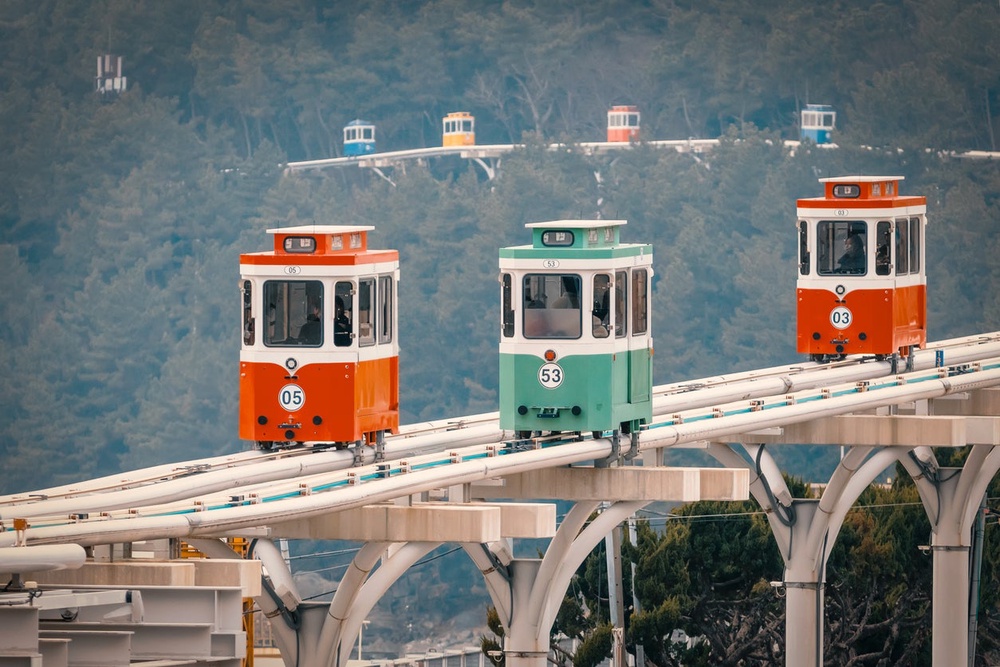
The Sky Capsules that run parallel to the sea at the Haeundae Blueline Park – added in 2020 to revitalise the area’s disused train system – are Busan’s hottest ticket for sundown. Book ahead and board the brightly coloured rail cars at Mipo Station for a 30-minute ride to Cheongsapo, taking in the best views of the city’s high-rise skyline from across the water. Choose a return, or head back on the original ground-level Beach Train which has seats facing the ocean. You can hop off early to tackle part of the three-mile path that runs alongside it on foot.
Spa Land
Getting tired? A jjimjilbang (bathhouse) experience is the perfect way to revive yourself, and Busan just happens to be home to one of the largest of these tradition-steeped spas in the country – Spa Land at Centum City (the world’s largest department store). They are a gathering space for friends and families, and an after-work ritual for many Koreans, and this one is separated by gender. Leave any prudishness at the door as it requires you to go naked (PJs are provided for the communal areas) to use its 13 kinds of saunas and nap rooms.
You can refuel between soaks at the ramen bar, or take a break in the games room with arcade machines. Entry is around £13, and you can book a traditional exfoliating scrub for £19. Be warned, it’s a humbling experience as every scrap of dead skin is smoothed away from your body, though you’ll emerge seal-like and feeling anew.
Hayley was a guest of Inside Asia
Read more: Hot springs, shrines and sake: This diverse part of Japan is perfect for first-time visitors
How to get there
Virgin Atlantic operates direct daily flights from London Heathrow to Incheon International Airport in Seoul, starting at £889 economy. Flight time is around 15 hours.
The KTX high-speed train from Seoul to Busan takes about 2.5 hours for direct routes, and standard adult tickets cost around £33 for economy class.
How to do it
Leading Korea travel specialist, Inside Asia, creates customisable itineraries to South Korea.
Where to stay
It’s a case of location, location, location at the comfortable, reasonably priced high-rise Ramada Encore by Wyndham Busan Haeundae hotel. Steps away from Gunam-ro, the pedestrianised street leading up to Busan’s most popular beach, it makes a comfortable base. Breakfast is included in the rate, which starts at £45 per night.
Read MoreStaying in a traditional hanok revealed a refreshingly slow side to Seoul
I’ve found a surprisingly affordable luxury stay in the heart of Hanoi
Inside the K-beauty boom – I went to Seoul to try the most viral treatments
I’ve found a surprisingly affordable luxury stay in the heart of Hanoi
The best small ship cruises to explore the settings and story of The Odyssey