.png)
SHAH ALAM – It started with an umbrella.
Kumpulan Karangkraf founder Datuk Hussamuddin Yaacub was with his grandchildren when one of them, without being asked quietly stepped over and held an umbrella above his head.
It was a small thing. The kind of moment that passes in seconds and is forgotten by the next day.
But Hussamuddin could not let it go.
He watched his grandchildren, comfortable around him, easy in his presence, trusting and found himself asking a question he could not shake: ‘what happens to them when I am no longer here?’
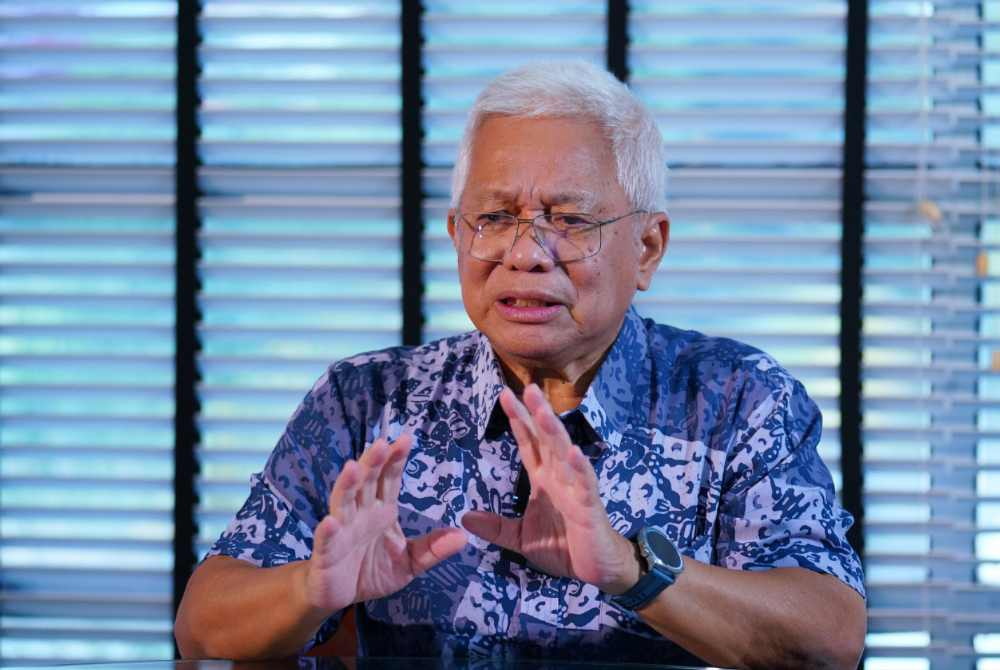
"One of them is very articulate and comfortable around me. He can even come and hold an umbrella for me. But I worry about what will happen when I am no longer around," Hussamuddin, also the Warisan Ummah Ikhlas Foundation (WUIF) founder told Sinar Daily.
The worry did not leave him.
And the more he sat with it, the more he realised it was not only about his grandchildren.
It was about all of them, every child growing up in this country, in every home, under every roof and the Malaysia they would one day be left to run without their parents and grandparents beside them.
"At the very least, while I am still here, I feel I have to do something within my ability to help ensure their future," he said.
"And this is not just about my family. It is about all our families,” he said.
That quiet, private worry has since grown into something much larger.
Hussamuddin is now driving #Malaysia100, an initiative calling on Malaysians to begin asking a question most have not yet thought to ask: what kind of country do we want our children to inherit when Malaysia marks 100 years of independence in 2057?
Thirty years sounds far away.
But Hussamuddin points out that it is only one generation.
The baby in a stroller today could be a doctor, a teacher, a parent, a member of parliament, or a prime minister, when Malaysia blows out 100 candles.
"The Malaysia they inherit in 2057 is, in reality, being shaped today," he said.
And right now, he is not sure Malaysians are paying enough attention to that.
He said too much energy was being swallowed by political arguments, racial tensions and religious disputes, noise that crowded out the harder, quieter work of building something that would last.
"If we are constantly busy with politics, fighting among ourselves and becoming sensitive over small matters, we are not going anywhere," he said.
Malaysians choose their leaders, he said. That means the responsibility for what Malaysia becomes sits with ordinary people too, in the way they vote, the way they speak and the way they raise their children.
"We are the voters and we are the ones who choose our leaders. It is our choice," he said.
But his worry went deeper than ballot boxes.
He said the most powerful influences on a child's thinking were shifting and not always in the right direction.
Where parents, teachers and community elders once shaped how children saw the world, YouTube channels and social media personalities were increasingly filling that space and not always with values worth following.
"That is something I worry about," he said.
He believed children needed role models who stood for something more than likes and follower counts, people who showed them what integrity, compassion and responsibility actually looked like in real life.
Because the child watching a screen today, he said, would one day be the adult making decisions that affected the rest of the country.
"A child who is one today will be 30 in 30 years. By then, they could be an executive, a manager, a parent and someone with responsibilities of their own. We have to prepare them for that future," he said.
For Hussamuddin, that preparation could not wait for a government programme or a national policy.
It had to begin at home.
In the values parents chose to teach. In the way families talked about people who were different from them. In the quiet, daily choices that children watched and absorbed long before they were old enough to understand what they were learning.
"It begins with the values we instil in our children. It begins with the way we respond to differences in race, religion and culture. It begins with how we choose our leaders," he added.
#Malaysia100 grew out of the work Hussamuddin had already been doing through Malaysia #QuranHour, which had long encouraged Malaysians, particularly from the Malay and Muslim community to pause, reflect and carry the teachings of the Quran into their daily lives.
But he said that conversation now needed to widen. The Malaysia of 2057 would not belong to one community. It would belong to all of them.
"#Malaysia100 does not belong to me. It must belong to all of us who love this country and care about the Malaysia our children and grandchildren will inherit," he said.
At the heart of it all was a fear he kept coming back to, that Malaysia could one day look successful from the outside while slowly hollowing out from within.
He described it the way a carpenter might describe a beam eaten through by termites: standing firm, looking solid, right up until the moment it gives way.
Corruption, abuse of trust, injustice, these things did not announce themselves, he said. They crept in quietly, and became normal before anyone thought to stop them.
"Compassion and integrity must grow alongside prosperity and development," he said.
The questions he wanted Malaysians to start asking were not only about roads and hospitals and economic targets.
They were about people.
What kind of Malaysians did they want to be in 2057? What kind of society did they want their children to grow up in? What did they owe each other, across race, religion and background as people who shared the same country and the same future?
Those questions, Hussamuddin believed, could not be left to someone else to answer.
Not to the government. Not to the next generation.
To us. Now.