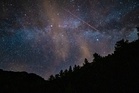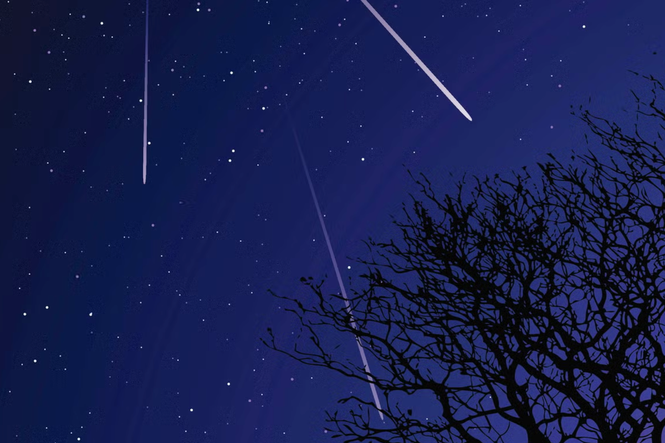
Stargazers will have the chance to witness the Orionid meteor shower’s peak this week, though a bright moon will limit visibility until after it sets late at night.
The Orionids peak during mid-October each year and are considered one of the most beautiful showers of the year. They are one of two major annual meteor showers created by space dust from Halley’s comet.
During the Orionids’ peak Wednesday night into Thursday morning, observers under ideal conditions may spot as many as 20 meteors per hour, according to the American Meteor Society. Meteors remain visible for several weeks on either side of the peak.
Though named after the constellation Orion, the meteors can be seen across the entire sky in both the northern and southern hemispheres after midnight, NASA says.
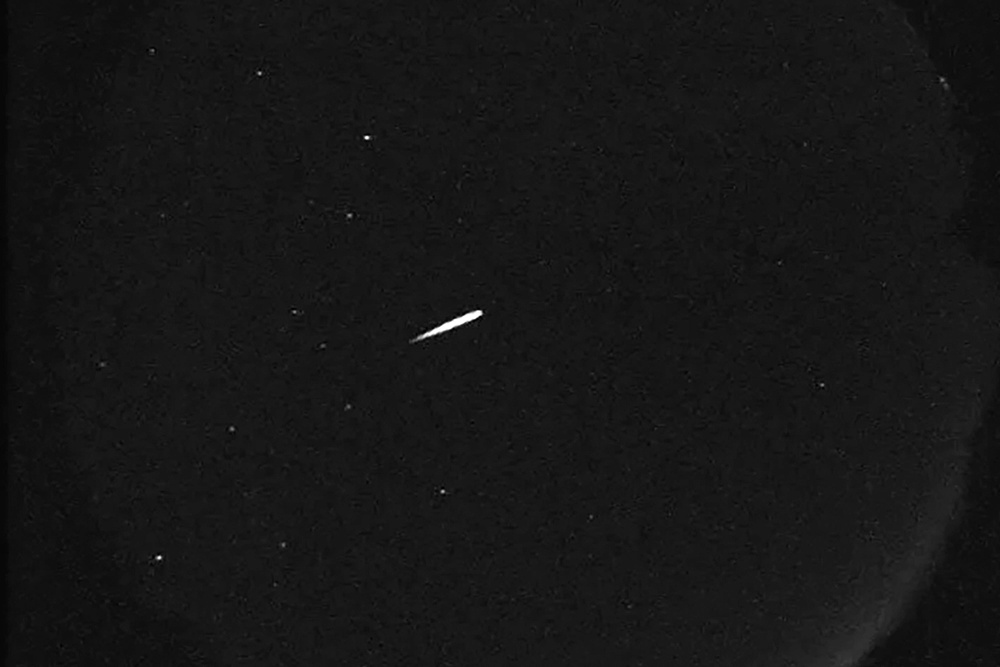
Orionids are often exceptionally fast and bright, leaving behind glowing tails of light that linger for a few seconds. The Orionids are also framed by some of the brightest stars in the night sky, which lend a spectacular backdrop, per NASA.
How meteor showers work
Earth regularly passes through clouds of debris left by passing comets or asteroids. The Orionids originate from Halley’s comet, which completes an orbit near Earth roughly every 75 years.
When these swift fragments collide with Earth’s atmosphere, friction creates extreme heat, causing them to burn up. The surrounding air glows briefly, leaving the vivid streak known as a "shooting star."
Special equipment is unnecessary, though finding a location far from city lights will boost visibility.
Viewing advice
The hours after midnight and before dawn are typically best for viewing, as moonlight interference subsides. However, light pollution from artificial lights or a bright moon remains the main obstacle. Clear skies paired with a small moon offer the best conditions.
Viewers should remain patient, as eyes require several minutes to adjust to the darkness.
“Find an area well away from the city or street lights. Come prepared with a sleeping bag, blanket, or lawn chair,” NASA suggests. “Lie flat on your back with your feet facing southeast if you are in the Northern Hemisphere or northeast if you are in the Southern Hemisphere, and look up, taking in as much of the sky as possible. In less than 30 minutes in the dark, your eyes will adapt and you will begin to see meteors. Be patient – the show will last until dawn, so you have plenty of time to catch a glimpse.”
The next shower
The Southern Taurids will peak next on Nov. 5. A slim crescent moon should provide favorable conditions for viewing.
Read MoreNasa astronaut feared they would never get home as they flew around the Moon
Martian moon space mission hopes to solve mystery of landing on Mars
SpaceX sends mini human brains to space as part of Nasa experiment