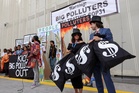
ONCE again, we have to focus on the greatest threat to our continued existence and that of all species on this beautiful but wounded planet. The world as we know it today will not be the same in 20 to 50 years’ time. The world’s climate is changing rapidly, and the challenges it poses will be greater for millions of Filipinos in the next decade. If you are from a coastal town or village and plan to retire there, you need to change your plan and look for a mountain retreat because the house you grew up in would most probably not be there in 10 or 20 years.
Continuous fossil-fuel burning and methane releases are pushing greenhouse gas (GHG) emissions higher, fueling global warming. These emissions prevent heat from escaping the planet, causing it to grow warmer. We are cooking ourselves, as well as animals and plants, in our manmade oven. This is an environmental disaster that is already with us, and it’s growing worse. One-third of people on the planet are living in a luxurious modern world and causing most of the pollution fueling climate change, and poorer countries are bearing the brunt of it.
That may be a good lifestyle for a third of the population, but it is causing human misery and hunger for the rest of humankind, driving some plants and animals to extinction. We could blame El Niño, but that weather phenomenon is accelerated by climate change, making the impending climate disaster stronger and more imminent. Mountain ice caps around the world are melting. Antarctica is also melting, causing sea levels to rise day by day.
The seas around the Philippines are rising 5 to 7 millimeters every year due to this seemingly inescapable scenario. That rate is double the global average of 3.6 mm. Combined with land subsidence from groundwater extraction, a projected 60-centimeter rise threatens to permanently submerge homes and displace up to 13.6 million Filipinos by 2100. So it’s time to sell that piece of seafront property and invest in ferries and houseboats.
Not only is the land drying up due to more frequent droughts, but rice fields would also soon have no guaranteed water sources, as monsoon rains continue to be erratic. We must be aware that in the Philippines and the rest of Southeast Asia, oceans absorb over 90 percent of excess heat trapped by GHG emissions. This has caused oceans to overheat, and while it doesn’t yet cook the fish, it disrupts rainfall, brings stronger typhoons, changes the region’s weather and marine systems and, above all, damages or kills the coral reefs so essential for fish reproduction. Warming sea temperatures and ocean acidification are projected to cause fish-stock losses of up to 50 percent for the Philippines and its neighbors by 2050. This threatens the primary protein source and livelihood of millions of coast-dwelling Filipinos.
More than 50 percent of Filipino families, or 29.67 million households, rely on fish and other aquatic resources as their primary source of protein, while roughly 1.4 percent to 1.8 percent of the total population — about 4 percent of the country’s labor force — directly catch fish for their livelihood and daily survival. Powerful rich families have fishing fleets that intrude into restricted fishing areas reserved for poor fishermen and steal all the fish with huge nets in violation of the law. Oceana Philippines says the number of fish caught by coastal fishermen dropped from 2.6 million metric tons (MT) in 2010 to 1.9 million MT in 2023. The rich still got richer, the poor became poorer, and 11 million Filipinos living below the poverty line have grown hungrier and more malnourished. Republic Act 10654, which amended the Fisheries Code of 1998, is allegedly not enforced by the Bureau of Fisheries and Aquatic Resources because relatives of powerful families with fishing fleets control the agency.
Impact on oceansThe UN’s 31st Climate Change Conference (COP31) in Turkey will discuss, among other issues, the impact of climate change on oceans and the warming of their waters. This warming exacerbates the El Niño-Southern Oscillation climate pattern, and that will cause more powerful typhoons in the Philippines, drought and the loss of coral reefs. This climate disruption could shed 6 percent of the country’s annual gross domestic product by 2100.
Global action is needed to stop the increase in temperatures. A united global community must act to challenge fossil-fuel electricity producers to reduce emissions to almost zero. A bigger challenge is how to remove the massive amount of carbon dioxide and methane already in the atmosphere. This will continue pushing global temperatures constantly higher beyond the 1.5 degrees Celsius threshold set by the 2015 Paris Agreement as the absolute level of tolerance for our stressed planet.
To save the Earth is to save ourselves and millions of creatures. The burning of fossil fuels, like coal, oil, and gas, must stop and must be replaced with environmentally friendly renewables as alternative sources of electricity generation. We must support programs like reforestation; planting trees on denuded land; afforestation or planting on new lands; mangrove restoration and soil carbon sequestration; and the use of photosynthesis to capture atmospheric carbon dioxide (CO2) and store it as organic biomass. These conventional methods are costly and currently remove only about 2.2 billion tons of CO2 annually globally, which is inadequate. Besides, what they remove is replaced by the continual addition of much more CO2 from fossil-fuel power plants, motor vehicles, and other sources. We need much more than that if we are going to save the planet from dramatic change that will be hostile to all life on Earth. The Philippines is now seeing the start of an early dry season, with El Niño growing more intense. Its full impact will be felt in early 2027.
The world has to get off the greedy track of unlimited growth and environmental exploitation and destruction. This calls for a change of mind and heart among polluters, politicians and corporate leaders. A call to conversion to love and protect creation, not destroy it. A greater expansion of environmental awareness and action is needed. It’s not sure if COP31 can provide the inspiration and motivation for that, but unless fossil fuels give way more quickly to renewables like solar, wind, geothermal and hydropower, the planet will be moving more quickly into irreversible and unrestrained global warming, and humankind will suffer for it.
www.preda.org