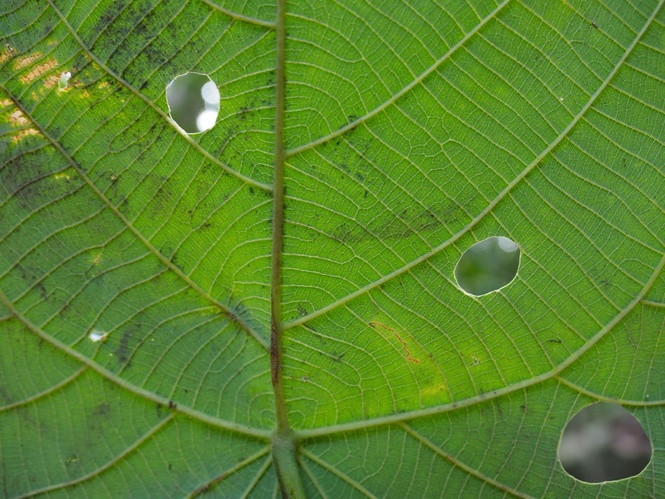
You walk into your garden and notice something odd about your vegetable plants. The leaves look as though someone fired tiny pellets through them, leaving dozens of small, round holes scattered across the surface. You search for caterpillars and slugs but can’t find anything large enough to explain the damage. The culprit may be a tiny insect that’s remarkably good at disappearing when disturbed. Flea beetles can turn healthy-looking leaves into something resembling miniature Swiss cheese, and their feeding habits are particularly troublesome for young plants.
Flea Beetles Create a Shot-Hole Pattern
Flea beetles are small leaf beetles that feed on a wide range of vegetable crops. The University of Maryland Extension identifies their characteristic damage as tiny holes that create a shot-hole appearance. Adult beetles chew through leaf tissue, often leaving numerous small openings scattered across the surface. The damage can look mysterious because the insects themselves are extremely small. Once you recognize the pattern, flea beetles become one of the first pests worth checking for.
These Tiny Beetles Can Jump Away
Flea beetles earned their common name because many species jump when disturbed. Some are dark and shiny, while others have stripes or different markings. Their small size and quick movements make them difficult to observe during an ordinary garden inspection. Many adult flea beetles are approximately one-tenth of an inch long. Gently disturbing affected foliage may reveal tiny beetles jumping away before you can examine them closely.
Young Seedlings Face the Greatest Risk
A mature vegetable plant can often tolerate limited flea beetle feeding without serious consequences. Newly emerged seedlings, however, have much less leaf area available to support growth. Heavy feeding can damage young plants before they become established. Tender seedlings are particularly vulnerable to flea beetle injury. Protecting crops during their earliest growth stages is often more important than eliminating every beetle later in the season.
Certain Vegetables Are Favorite Targets
Flea beetles feed on numerous crops, but some vegetables are especially attractive. Eggplant, radishes, cabbage-family vegetables, and potatoes are among the plants that may experience noticeable damage. Different flea beetle species have different host preferences, so the exact plants affected vary. Maryland Extension lists a broad range of susceptible vegetables and notes that eggplant can be particularly vulnerable. Identifying which crops are being attacked can help narrow down the likely pest.
The Beetles May Have Survived in Garden Debris
Some flea beetle species overwinter as adults in protected locations, including plant debris and surrounding vegetation. When temperatures become favorable, they emerge and begin feeding on susceptible crops. Mild winters can contribute to higher populations under certain conditions. However, removing every fallen leaf from a garden isn’t necessarily the best response because leaf litter also supports beneficial wildlife. Focus on crop sanitation, weed management, and targeted pest prevention rather than stripping the entire landscape bare.
Row Covers Can Protect Vulnerable Crops
Physical barriers are one of the most practical ways to reduce flea beetle feeding on young vegetables. Lightweight row covers can prevent adult beetles from reaching seedlings when installed before pests become established. The covers must be secured around the edges to limit insect entry. However, crops requiring insect pollination may need the covers removed or managed appropriately when flowering begins. A properly installed barrier can reduce the need for repeated pesticide applications.
Don’t Spray Before Identifying the Problem
Small holes in leaves aren’t always caused by flea beetles. Other insects, diseases, and environmental conditions can create damage that looks superficially similar. Examine the plant carefully and look for insects, feeding patterns, and signs of continuing injury. The University of Maryland Extension’s vegetable scouting guidance emphasizes monitoring pest populations and damage before making treatment decisions. Spraying without a reliable diagnosis can waste money and harm beneficial insects.
Healthy Plants Can Often Outgrow Minor Damage
A few holes in an otherwise vigorous plant may not justify aggressive pest control. Established vegetables can sometimes continue growing and producing despite limited feeding injury. The level of concern depends on plant age, crop type, pest population, and the amount of damaged foliage. Young seedlings may require intervention sooner because they have less capacity to recover. Monitoring changes over several days can help distinguish cosmetic injury from a developing infestation.
Garden Timing Can Influence Flea Beetle Problems
Flea beetle activity often increases as weather warms during spring. Some gardeners adjust planting schedules to reduce the period when vulnerable seedlings overlap with peak pest activity. However, delaying planting isn’t appropriate for every crop or climate because growing-season length and temperature requirements still matter. Healthy transplants may sometimes tolerate feeding better than very small seedlings. Local extension recommendations can help determine whether planting adjustments are useful in your area.
A Few Small Holes Don’t Mean Your Garden Is Doomed
Flea beetles can create surprisingly distinctive damage despite their tiny size. Their jumping behavior, preferred host plants, and shot-hole feeding pattern provide useful clues for identifying the problem. Young seedlings deserve the greatest attention, while mature plants may tolerate limited injury without major losses. Row covers, careful monitoring, and appropriate garden management can reduce damage without unnecessary spending.
Have you ever discovered tiny holes in your vegetable leaves and struggled to figure out what was eating them?
The post The Strange Reason Some Gardeners Find Tiny Holes in Their Leaves appeared first on Frugal Gardening.