I AM not a lawyer. But as a political scientist, I have spent the past several months seriously examining the constitutional text, institutional design and jurisprudence governing impeachment. That inquiry has led me to question a doctrine many now treat as settled: that the Supreme Court may intervene whenever it believes Congress has gravely abused its discretion in exercising the impeachment power.
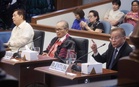
The Senate impeachment court has already heard legal experts on the voting threshold required to convict or acquit Vice President Sara Duterte.
Sen. Pia Cayetano has once again advanced the position that the Senate lacks authority to settle questions affecting its jurisdiction and that only the Supreme Court can definitively decide them.
With due respect, that position diminishes the Senate from a constitutional court into a tribunal that may act only with judicial permission.
Article XI is unusually emphatic. It gives the House of Representatives the “exclusive power” to initiate impeachment and the Senate the “sole power” to try and decide all impeachment cases. “Exclusive” and “sole” identify where constitutional authority resides and, necessarily, which other institutions are excluded.
Article VIII empowers courts to determine whether any branch or instrumentality of government has committed grave abuse of discretion amounting to lack or excess of jurisdiction. The Supreme Court relied on this expanded definition of judicial power in Francisco v. House of Representatives to declare impeachment controversies reviewable.
My difficulty is that Article VIII is a general allocation of judicial power, while Article XI is a specific allocation of impeachment authority. The general power of review should not consume an exceptional process that the Constitution expressly committed to Congress.
If the Supreme Court may determine whether impeachment was validly initiated, prescribe what procedures the House must observe, suspend transmittal of the articles, decide whether the Senate acquired jurisdiction, and ultimately nullify the proceedings, then Congress does not truly possess exclusive or sole authority. Its power is merely provisional, subject at every important stage to judicial approval.
A body given the sole power to try and decide a case must possess the incidental authority to determine its own jurisdiction. It must be able to interpret the constitutional provisions governing the case, resolve procedural objections, receive evidence and decide whether the respondent was treated fairly. Otherwise, its supposed sole power is hollow.
Judicial review is indispensable within its proper sphere, but judicial supremacy over every constitutional controversy is not itself written into the Constitution.
The problem became concrete in Francisco. The Supreme Court invalidated a second impeachment complaint against Chief Justice Hilario Davide Jr. for violating the one-year prohibition. It distinguished reviewable procedural limits from nonreviewable questions about what constitutes an impeachable offense.
Procedure determines whether a case can reach trial. A court need not decide guilt to control impeachment. It can achieve the same practical result by preventing the Senate from considering guilt at all. Moreover, Francisco involved the Supreme Court intervening in an attempt to impeach its own chief justice. That institutional conflict should have counseled nonintervention, not an expansion of judicial authority.
In Duterte v. House of Representatives, the court declared the articles against Vice President Duterte unconstitutional and void from the beginning. It ruled that the one-year bar had been violated, imposed due-process requirements during the House stage, and declared that the Senate never acquired jurisdiction.
The direct one-third mode in Article XI provides that a verified complaint or resolution filed by at least one-third of House members shall constitute the articles of impeachment and that trial by the Senate shall “forthwith proceed.” The text requires neither a preliminary hearing nor an answer from the respondent before endorsement.
Yet the court required the draft articles and evidence to be furnished to the respondent, allowed her an opportunity to answer, and made available to all House members. The constitutional difficulty is that the court added them to a process whose rules the Constitution entrusted to Congress, then invalidated the impeachment for failing to satisfy those judicially created conditions.
House initiation is accusatory, not adjudicatory. It does not remove the official or establish guilt. The opportunity to answer, confront evidence and defend oneself belongs principally in the Senate trial. By demanding trial-like protections before initiation, the court blurred the deliberate division between the House, which accuses, and the Senate, which judges.
The declaration that the Senate never acquired jurisdiction is even more troubling. Instead of allowing the Senate to hear the objection and determine whether it could proceed, the court conclusively answered the question for it. The institution granted the sole power to try and decide was prevented from exercising judgment at all.
This issue should not turn on whether one supports or opposes Sara Duterte. Constitutional boundaries cannot change with the identity of the respondent or the popularity of the charges. A principle designed to protect someone we dislike may later shield someone we admire, and vice versa.
Congress can abuse impeachment. Senators may decide irresponsibly or politically. But courts can also err, particularly when defining the reach of their own power. The Constitution addressed political error through divided responsibility, public proceedings, recorded votes, electoral accountability and the requirement of a two-thirds Senate vote for conviction.
Allowing judicial review creates its own danger. If the court can decide when impeachment begins, what procedures initiation requires, what evidence must accompany the articles, when the one-year bar runs, and whether the Senate has jurisdiction, it becomes the gatekeeper of the mechanism intended to hold impeachable officials, including Supreme Court justices, accountable.
The Senate should hear the arguments on the voting threshold and decide the issue itself in this matter. That is not in defiance of the Constitution. It is an exercise of the authority the Constitution expressly gave it.
Impeachment is not judicial power temporarily delegated to Congress. It is a separate constitutional power entrusted to the political branches. The House initiates. The Senate tries and decides. These are powers specifically carved out by the Constitution, and we should resist interpretations that quietly give the final word to someone else.
The author is a professor at UP Los Baños and vice chairman of the board of People’s Television Network Inc. (PTVNI).