In her final report into what we might now call the Covid-19 negligence scandal, Baroness Hallett, a retired senior judge, was as damning in her remarks as the laws of libel, good taste and the usual conventions of a public inquiry allowed her to be.
Successive governments – not just the one headed by Boris Johnson at the time the pandemic broke out – had failed at the most basic level to prepare properly for the emergency that eventually arrived at the start of 2020. Such shortcomings were then compounded by poor decision-making by ministers. The care sector, which by definition is full of the most vulnerable people, was unforgivably treated as an “afterthought”.
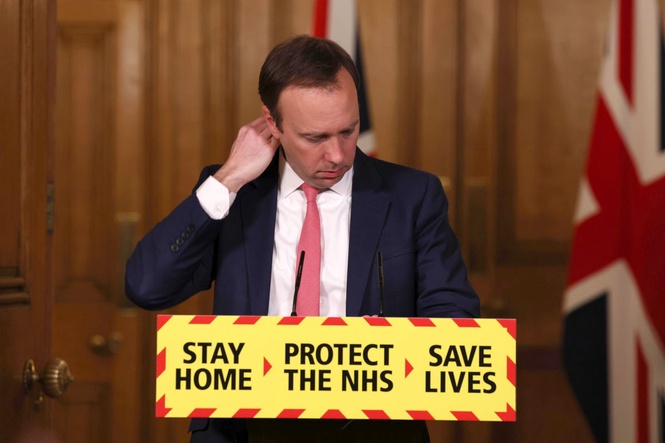
This neglect was made all the more offensive by the entirely erroneous, cynical and now notorious claim made by then health secretary Matt Hancock that “right from the start we have tried to throw a protective ring around our care homes”. The baroness calls this “unfounded”, adding that “the opposite is true”. Others, including the Covid bereaved families’ organisation, call it a “lie”.
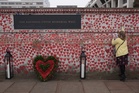
In fact, as the report states, in the case of the half million people living in care homes, the lack of planning and consequent confused and rushed reaction to a rapidly mounting crisis led to the unnecessary and untimely deaths of an unquantifiable but surely substantial proportion of the 43,000 or so people in care who died between March 2020 and July 2022.
Not only that, but the bungled management of the outbreak resulted in “immense emotional harm” for residents, especially those with dementia, and left them with “profound isolation and a sense of abandonment”. The chaos in care homes left loved ones devastated when they couldn’t say goodbye to those coming to the end of their lives. Even for those left relatively unscathed by the emotional traumas of that time, it is impossible even now to listen to the first-hand accounts of people still trying to come to terms with what befell them without being moved.
Of course something as transmissible, debilitating and potentially deadly as the coronavirus was always going to inflict death and long-term disability (even now “long Covid” is too often forgotten). What Baroness Hallett and her team have proved is that it did not have to be as bad as it was.
The list of failures is depressingly familiar. Even at the earliest stages of the outbreak, the limited evidence available from China clearly pointed to two fundamental features of the disease.
First, that it was highly contagious, even though the arguments about airborne transmission were not fully settled. Second, it was unusual in that it hit older people much harder than infants and children – against the usual patterns in flu and the common cold.
At that point it was surely obvious to the authorities – or should have been – that adult care homes should have been an immediate priority. They were not. They were an afterthought.
Patients were being discharged from hospital into care homes untested and without any effort to isolate them. Guidelines for visitors and care workers moving in, out and around homes were non-existent. As with the NHS and society as a whole, there was a shortage of personal protective equipment – much of the PPE in storage had disintegrated. So “some care workers were left having to wear waterproof ponchos from festivals, painters’ overalls, or homemade PPE made from fabric, bin bags and bed linen”.
Those who persisted and put their lives on the line were denied adequate financial support if their wages were affected by the restrictions – again, something that could have been clearly foreseen. Where is the accountability for mistakes made by those in charge?
Looked at from a coldly rational point of view, the most important thing that Baroness Hallett leaves us with concerns the future, and quite possibly the near future, rather than the past – what we have to do immediately for “when” (not if) the next pandemic arrives.
Can we be sure that if a wave of people started to be admitted to hospital next month or next year with a “mystery illness”, the NHS, care homes and wider society would have the procedures, contingency funds and equipment ready to cope with such a crisis? What about protocols for schools? High-grade masks? Ventilators? Sanitisers? Morgues? Testing capacity? Vaccine programmes ready to roll? Or will we have to depend once again on an imaginary “protective ring”?
Read MoreWhy a mysterious Russian satellite is threatening to spark a space war
Abuse intended to change who someone is has no place in modern Britain
I’m trans – why don’t I belong on a women’s ward?
Burnham admits a generation has been failed. Now comes the hard part
As France burns, Macron looks like a man who has lost control