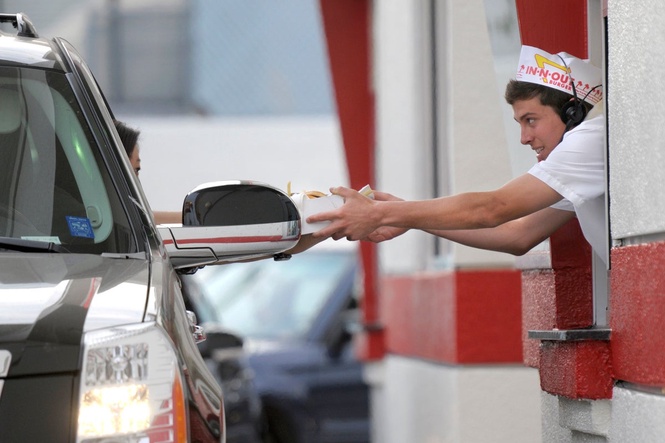
A drive-thru used to be a quick way to get a cheap meal - they’re still quick, but recent inflation data indicates they aren’t cheap.
Fast-food prices went up 3.8 percent year on year in September, while groceries rose 1.8 percent, according to federal figures published in October.
Whether by cause or coincidence, 67 percent of consumers are spending less at restaurants this year compared to last year, according to a September report from restaurant consultancy Popmenu.
“Restaurants have pushed menu prices about as far as they can go,” Popmenu CEO Brendan Sweeney said. “Consumers are looking for value and incentives to come back.”
Indeed, the typical price range of a fast-food combo meal has risen from between $6 and $7.50 in 2020 to between $9.50 and $12.50 in 2026, according to price tracking site DriveThruPrices.
That has led some to swap fast food for items in their fridge as American consumers struggle with high prices on everyday essentials such as food and gas.
President Donald Trump has repeatedly dismissed the country’s affordability issues, saying at a Kentucky campaign stop this past Saturday that “we’re in the golden age of America” and that “our nation is doing better now than ever before.”
“We’re in the golden age of America,” Trump said Saturday at a Kentucky campaign stop. “So our nation is doing better now than ever before.”
Data from multiple sources tell a different story.
Inflation rose 3.7 percent in September after holding steady at 3.5 percent in July and August, according to a Bureau of Labor Statistics report released earlier this month. It was the second-highest inflation reading in the past three years, according to bureau data.
On October 14, U.S. gas prices broke an all-time record by averaging at least $4 a gallon nationally for 158 consecutive days, according to Patrick De Haan, head petroleum analyst at fuel-price tracking site GasBuddy.
Those looking to buy a home have watched mortgage rates soar from 6.66 percent in August to 7.4 percent this week, data from mortgage firm Freddie Mac shows.
As a result, consumers have been cutting back on non-essential spending, including restaurants, for at least six months.
In April, consumers planned to spend more on essentials such as groceries and automatic needs and less on non-necessary items, a report from accounting firm KPMG revealed.
“To offset these rising costs, planned discretionary spending is on track to continue its two-year decline, with reductions forecast across almost every non-essential category,” the April report said.
“This trade-off extends to the dinner table. Sixty-seven percent of consumers are eating at home more often than dining out.”
Read MoreWendy’s is hoping its new meal deal will boost customer traffic
Walmart teams up with Sam’s Club for new $120 membership option
Experts share simple tricks to save hundreds on your grocery bill