The post “Thirty years I’ve been here. I’ve seen all of its secrets,” shares 58 year-old Malaysian Indian seller in Chow Kit appeared first on In Real Life.
For the latest stories, follow us on Facebook and Instagram.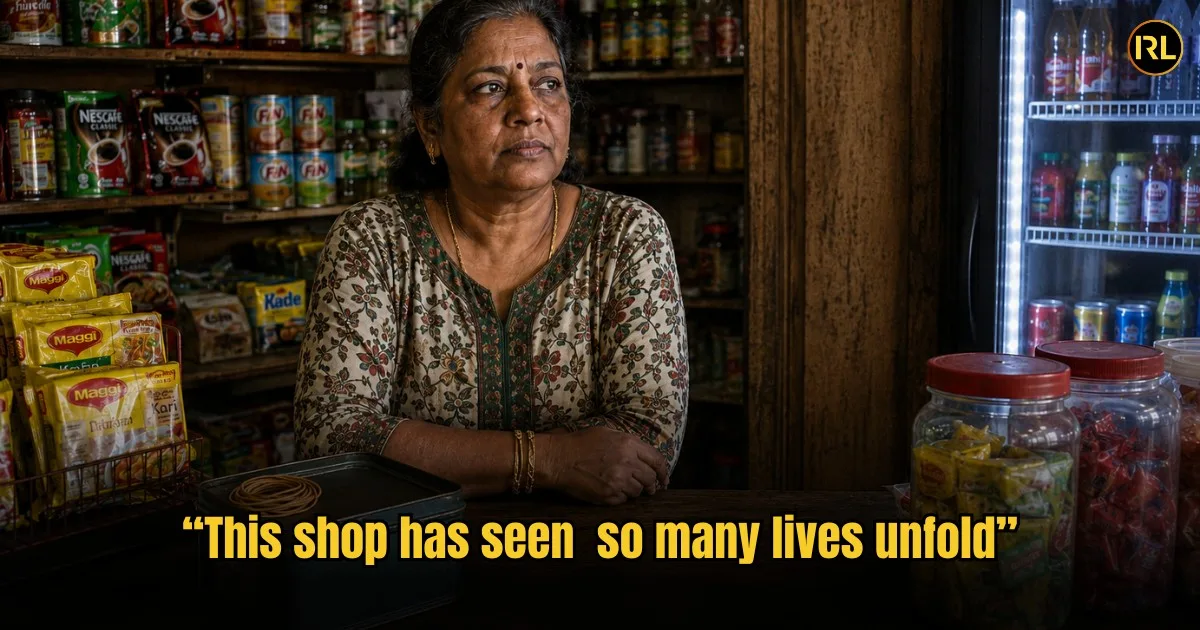
This interview was conducted in a mix of English and Tamil and has been translated and lightly edited for clarity.
She knows which neighbour is struggling, which family is hiding something, and exactly why she will never sell this shop.
Meena (name changed) has been standing behind the same counter since 1995.
Chow Kit is not the kind of neighbourhood that gets written about warmly. It is loud and crowded and complicated, a place that has been described as rough so many times the description has almost replaced the reality of it.
The market started operating in 1955 under the name of Pasar Raja Bot. Meena is a 58 years old Indian Malaysian woman. She came to this shop as a young wife, helping her late husband run it. When he passed eleven years ago, people assumed she would sell the shop, but she refused to let go.
“This shop is my life,” she says simply, arranging a row of Maggi packets with the efficiency of someone who has done it ten thousand times. “Where else will I go?”
She stands next to her counter as she shares her story. The counter itself is older than that, a heavy wooden thing, worn smooth at the edges from thirty years of elbows and transactions and conversations that were never meant to go further than these four walls. The shop is very small, maybe four rows of shelving, a drinks fridge that hums loudly, a rack of sundry items near the door. It smells like every kedai runcit in Malaysia has ever smelled. Like detergent and dried goods and something faintly sweet like Jasmine flowers.
How Chow Kit Works
Meena shares that the market has many secrets.
“You will meet everyone in this market – sinners and saints – all of them come here” she says in her native Tamil.
“I’ve served god’s servants – priests & imams, but I’ve also served bomohs and prostitutes – they all come here under this roof.”
“People from outside come here and they are scared,” she says, waving her hand dismissively. “But the people who stay here, who live here, good people lah. Hard working people. They just don’t have so much money, that’s all.”
Her customers are a cross section of the area. Long time residents, mostly. Bangladeshi and Myanmarese workers from nearby hostels. A few regulars from the flats up the road who have been coming since before their children were born. The occasional lost tourist who wandered off the main road and ended up needing water and directions.
“When you see the same people every day, you know lah.” She says: “Don’t need to ask. You can see from their faces already.”
She knows almost all of them by face and many of them by name. More than a few of them by circumstances she was never officially told but picked up over years of watching and listening from behind the counter.
“There’s many dangerous people here also,” she says calmly. “As long as you don’t disturb them, they won’t hurt you.”
When pressed, she softly says it’s common to see addicts and gang members doing meet ups.
There is a woman she mentions, a regular for many years, who went through a period of severe hardship. Meena noticed the way the woman’s purchases changed, the way she would stand in the aisle a little longer than necessary before putting something back on the shelf.
Meena started putting items aside for her. Just things she knew the woman needed were offered at a price that was lower than what was on the shelf or sometimes no price at all.
“The groceries tell you everything,” she says. “You just have to pay attention.”
The woman has since moved away, to somewhere better, Meena thinks. She does not know for certain. “I hope she’s okay,” she says. “I think about her sometimes.”
The Offer
Three months ago, a man in a collared shirt came into the shop. He bought a packet of biscuits and a Milo tin and made small conversation. Then he handed her a name card and said his company was developing the block and would be interested in purchasing her unit.
The number he eventually put in writing made her sit down.
“I read it a few times,” she says, with a small laugh that does not reach her eyes. “That kind of money, I’ve never seen before in my life.”
The offer is still sitting on the counter, tucked under the old tin where she keeps rubber bands and receipts. She looks at it sometimes. She has not signed it. She has not thrown it away either.
Her children, when she told them, had different reactions. Her son, who works in Johor, told her to take it immediately. At 58, he said, she deserved to rest. The money would set her up for the rest of her life. Why is she still standing behind a counter twelve hours a day?
Her daughter was more supportive. She asked her mother what she wanted. Meena did not have an answer.
“My husband built those shelves,” she says, gesturing at the wall behind her. The shelves are old now, the wood darkened with age, some of the brackets slightly bent. “His hands made those. You think I can just walk away from that?”
But she pauses.
“At the same time I’m not getting younger. My knees already giving problem. My children are not coming back to take over. When I cannot stand anymore, what happens to the shop then?”
She looks at the counter. Then she looks up.
“So I don’t know lah. I really don’t know.”
What She Would Miss
Ask her what she would miss most and she does not hesitate.
“The people,” she says. “Who else is going to look out for them?”
She thinks about the elderly man from the flat across the road who comes in every morning for his newspaper and stays to talk for twenty minutes because she suspects she is the only person he speaks to all day. She thinks about the young foreign workers who come in late at night, tired from their shifts, who she always gives a little extra to without adjusting the price.
“If I go, this shop becomes something else. A minimart, a bubble tea shop, I don’t know. Those people, where they go?”
She is quiet for a moment.
“But then I think, am I being selfish? Staying here because I cannot let go, and meanwhile I’m tired, my body is tired, and there is money on the table that can give me a good life.”
She shakes her head slowly “I can’t bear the thought of my shop turning into another franchise.”
“My husband would know what to do. He always knew. Me, I just keep thinking and thinking and cannot decide.”
Where Things Stand
The developer has followed up twice. Politely, she says. No pressure. But she knows the offer will not stay on the table forever.
Her son calls every Sunday and always asks if she has decided. The regulars do not know. She has not told them. She is not sure she could bear their reactions or that she trusts herself not to be swayed by them.
“These people need me,” she says. Then she catches herself. “Or maybe I need them. I don’t know which one anymore.”
She turns back to the counter, adjusting things that do not need adjusting. Outside, Chow Kit goes about its evening. Loud and crowded. Inside, the drinks fridge hums and the shelves her husband built thirty years ago hold their weight.
Meena has until the end of the month to decide. She still does not know what she will do.
Submit your story to ym.efillaerni@olleh and you may be featured on In Real Life Malaysia.
Read also: ‘I gave up my family to pursue my dreams’ Shares 34 YO M’sian woman – In Real Life
https://inreallife.my/i-gave-up-my-family-to-pursue-my-dreams-shares-34-yo-msian-woman/
For the latest stories, follow us on Facebook and Instagram.‘I gave up my family to pursue my dreams’ Shares 34 YO M’sian woman
The post “Thirty years I’ve been here. I’ve seen all of its secrets,” shares 58 year-old Malaysian Indian seller in Chow Kit appeared first on In Real Life.