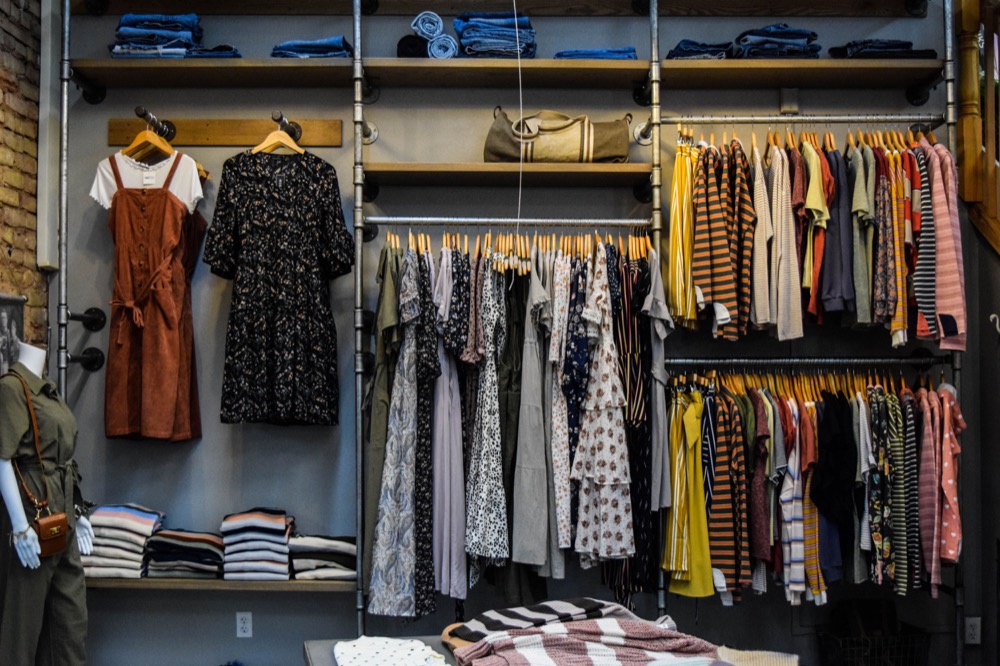
Thrifting has come a long way from being a cheap way to buy clothes and accessories to now a cool trend, but buying second-hand is certainly not a new practice for Malaysians!
Thrift shops, or often referred to as “pre-loved shops” or “bundle shops”, have been around in Malaysia for ages, although they have gained a lot more traction over time with the rise of thrifting culture during the pandemic. People used to think thrifting meant old and dusty clothes but when the Covid-19 pandemic hit and micro-influencers started posting thrift hauls on tiktok, it became a trendy yet sustainable way to shop fashionably. These thrifting hauls would be tagged under #ThriftTok and as of today, the hashtag has gained over 2.5 billion views. For locals, the hashtag #ThriftKL has around 1.2 Million views.
Thanks to this, it quickly became a global phenomenon that shaped the way society perceives and consumes fashion as a whole. But what and why exactly are people so interested in this movement? Let’s explore it, shall we?
The hype and shift to buying secondhand is heavily driven by the growing consciousness of how fast fashion negatively impacts the environment. The term ‘fast-fashion’ is used to refer to brands that rapidly design, produce and distribute clothing in order to keep up with the latest fashion trends. Fast-fashion moves through trends quickly, so the clothes that aren’t in trend anymore, as well as excess fabrics from production, tend to be discarded and dumped at landfills. Based on a study by Business Insider, 85% of textiles end up in landfills every year, which is enough to fill up the Sydney Harbour (Mcfall-Johnsen, 2019). Did you know that about 700 gallons of water is needed to produce just one cotton shirt and 2000 gallons for a pair of jeans? Making the fashion industry the second largest consumer of water.
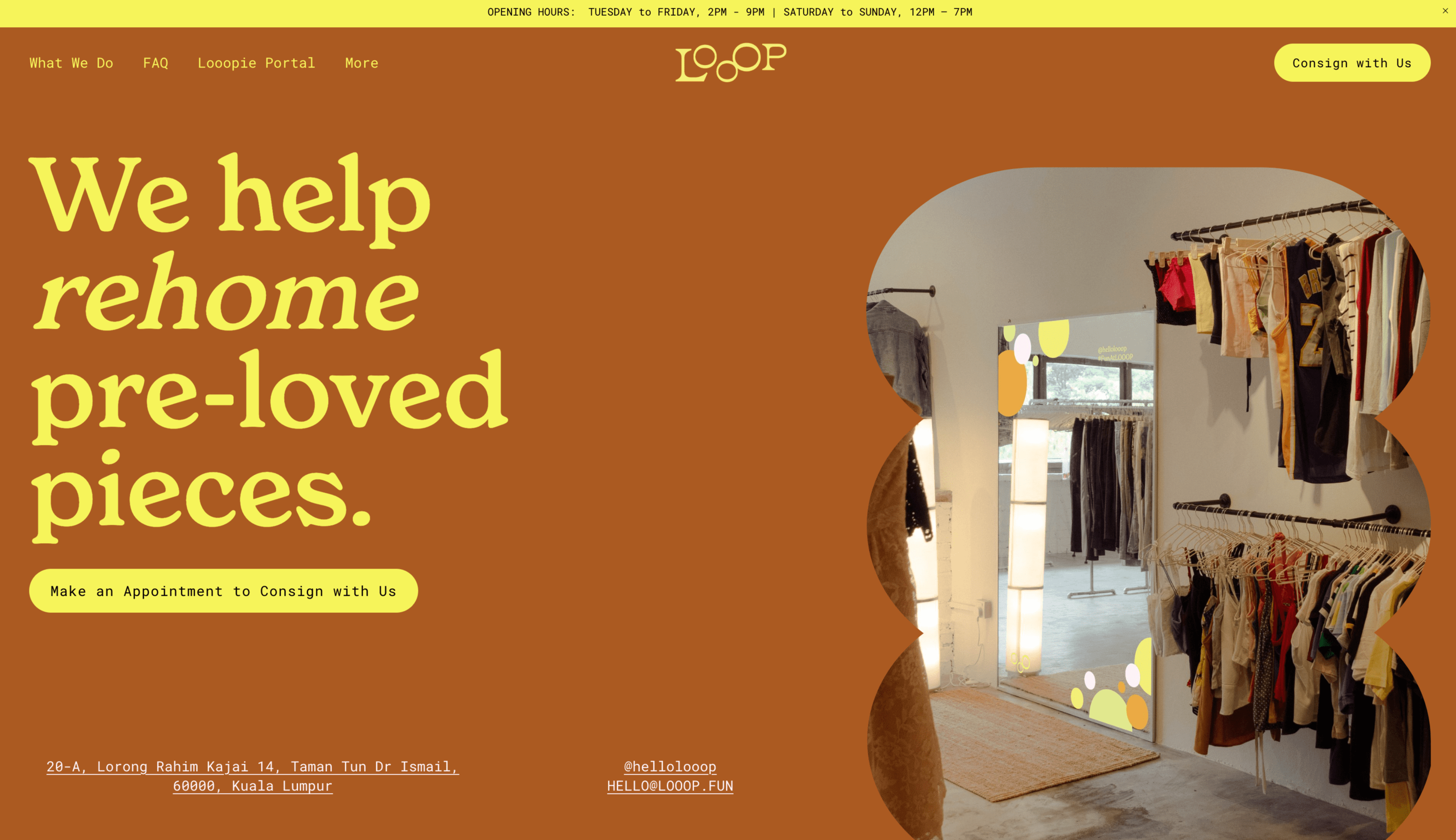
Thrifting changes the game though, it extends the lifespan of these clothes and keeps them away from landfills. Since no production and manufacturing is needed, it takes a much lower energy consumption. The owners of LOOOP, a secondhand clothing store in TTDI, explained in our interview that their business is founded on three pillars- Community, Environment and Joy of Discovery. “LOOOP gives a second (or third or fourth) chance to a piece of clothing and keeps them in a cycle of wear,” they said, regarding the Environment pillar.
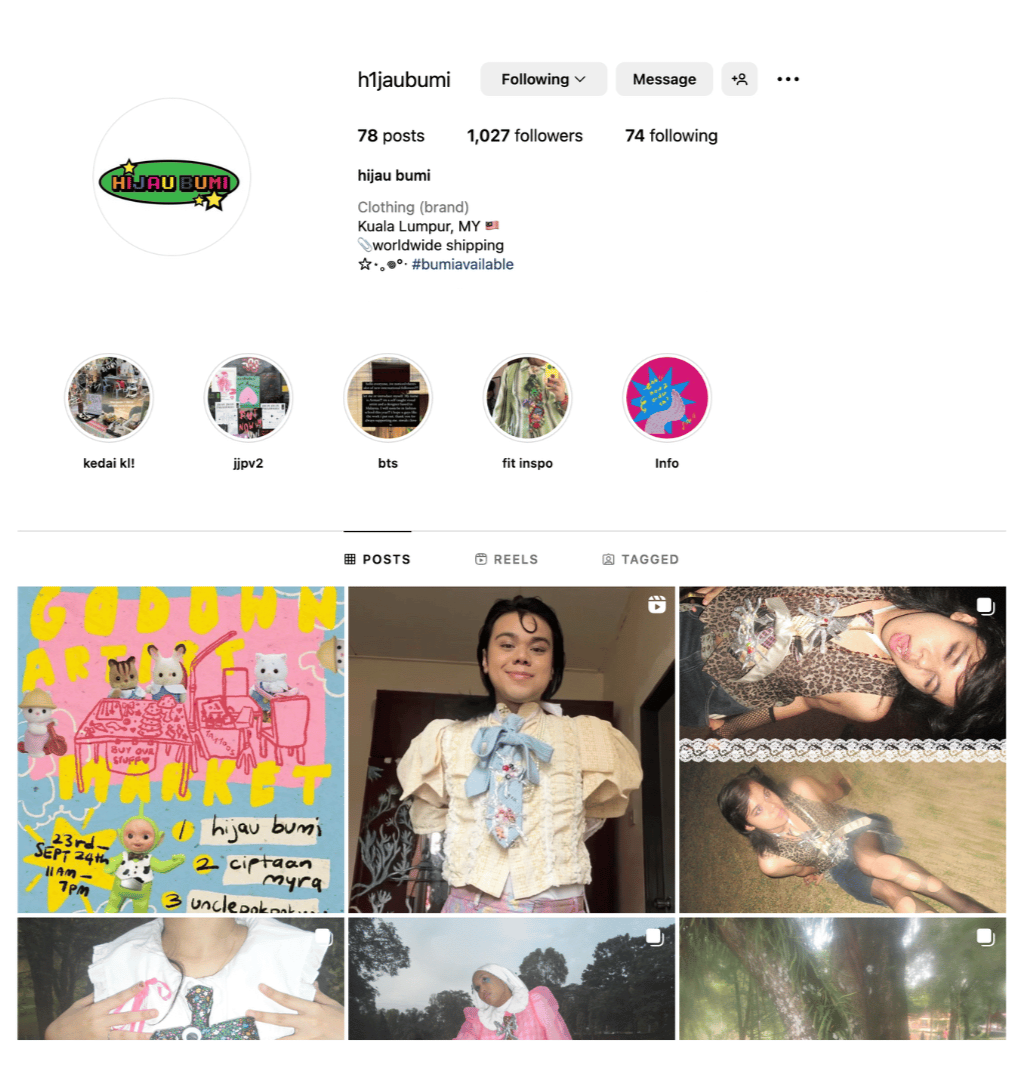
Even small business owners are making an effort to ensure their supplies come from a sustainable background. Arman Faiezal, 21, the creative mind behind Hijau Bumi, a local business known for their fun and colourful ties, often thrifts their supplies. “I got my supplies at thrift stores because I am trying to be green in whatever I'm working on.” they answered when asked about practising sustainability for their business. “Also, unique beads and bases are always found at a thrift store!” they added.
Being environmentally friendly isn’t the only sustainable aspect of thrifting, it’s also wallet-friendly! You can find cute, unique, and vintage pieces that cost as low as RM5 or even RM3 here in Malaysia. Take a look around at these well-known secondhand stores in Selangor - 2nd Street, JBR Bundle, and Jalan-Jalan Japan, and you’ll know what I’m talking about. Undoubtedly, there are thrift shops out there that are selling their second hand items for ridiculously high prices, but the only reason for this is because they are a curated store.
Yes, there is such a thing as a curated thrift store. How do they differ from the regular thrift stores? Well, curated thrift stores often offer rare and high-end pieces that have been carefully chosen, hence they are priced higher than the items in traditional thrift stores.
“We look for pieces that are timeless, unique and local. But we do take in anything so long as it is fit for selling and is of good quality. We carry secondhand clothing from local brands, cultural wear, vintage items as well as current items,” said the owners of LOOOP when asked about why they call themselves a curated secondhand store.
A very common misconception about thrifting is that the items are old and boring but that is exactly the beauty of thrifting. The best part about thrifting is finding a piece that makes you think “Oh! This would go so well with the mini skirt I have at home” or “OMG! This dress would look so much better if I sewed ribbons onto it.”
Thrifting can light up the creative bulb in people, allowing them to mix and match or even upcycle the unique items they find while thrifting. Upcycling essentially means DIY-ing old clothes to transform them into new pieces. These are fun ways to express yourself through your clothes and create your unique personal style. “Clothes do not determine someone’s personality but it does help to discover who you are as a person.” said Arman Faiezal.
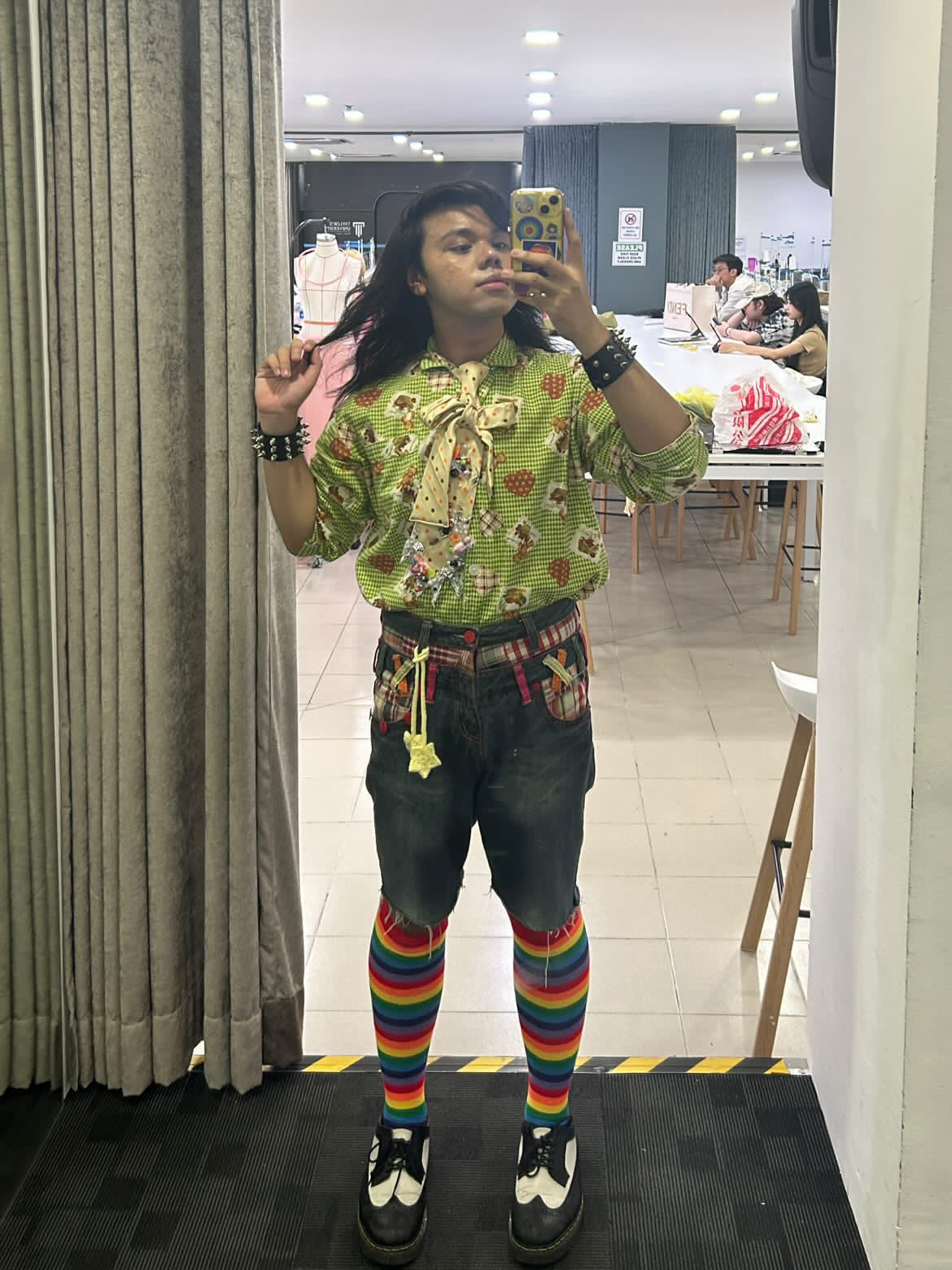
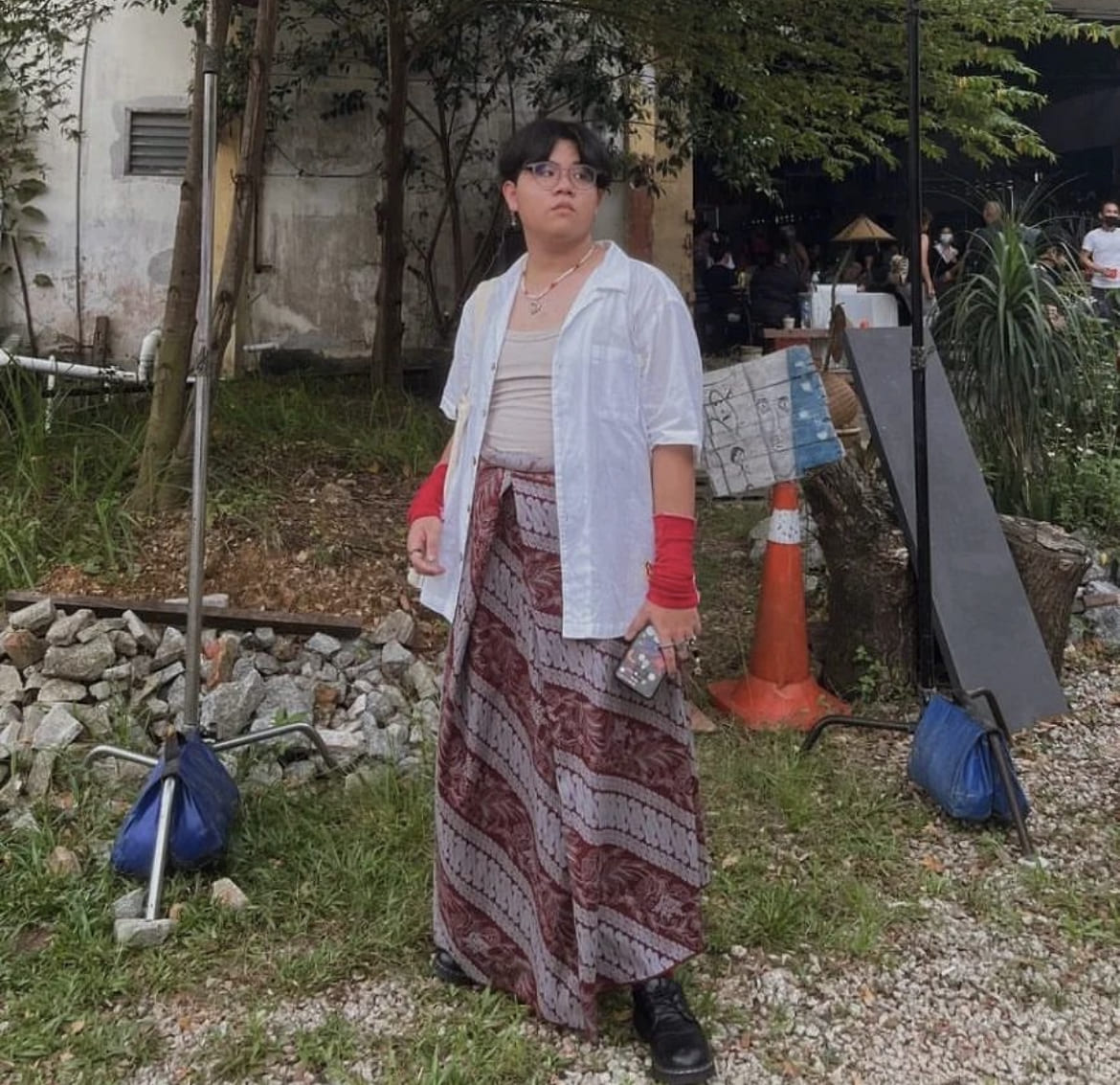
Arman serves as a good example of having fun with your outfits. Always seen expressing themself through vibrant colours and prints, which according to them, will forever be in trend. Arman often mix and matches or DIY their outfits, their favourite being the picture shown below.
Let’s look at another common mix and match fashion choice among young Malaysians nowadays, it’s pretty wholesome. They love to include traditional-wear elements to their outfits, showing their pride for the culture and beautiful traditional pieces in Malaysia. Wong Shun Kit, 20, an avid thrifter with a passion for sustainability who currently works at LOOOP, mentioned in our interview that his favourite looks are the ones he pairs with traditional pieces. “I like alot of the looks I come up with but the ones I like the most are ones I style with traditional wear such as sarongs or batik pieces because they add a touch of culture to the mix.” said Shun Kit.
Unfortunately, as with many positive trends, there is a downside. With the rise of thrifting, there are people exploiting the movement. Let's look into the potential issue of gentrification within the thrifting community. Thrifting started off as something cheap and accessible for the low-income community but as it becomes mainstream, businesses have definitely taken the opportunity to raise their prices even when it does not equate to the quality or brand of the secondhand items they sell. In return, people who resort to thrift stores as a cheap option to buy their clothes, will suffer.
“With the popularity of thrifting, it has definitely influenced many people to want to make profit or flock to thrift stores, and this demand in turn allowed for more ‘thrift’ stores to pop up. However, as mentioned about gentrification, these items are usually sold at higher prices and called ‘thrift’ despite it contradicting the meaning of thrift.” Shun Kit responded regarding the issue of gentrification.
Now, the question is, would the thrifting scene continue to thrive in Malaysia? Here’s what our interviewees have to say about it. The owners of LOOOP are positive that the scene will flourish as people are more aware now than ever about the effects of fast fashion. “We definitely see an upward trend in buying second-hand locally. We believe part of this is due to the education in the effects of fast fashion on the environment.” they said.
On the other hand, Shun Kit agrees that it will thrive but has concerns about it, “I think the scene will definitely flourish, but I hope it's for the better, with people buying out of necessity rather than a need to consume, and stores not taking advantage of this to make high profits. I hope future stores selling second hand provide different options for people such as being able to sell clothes with them as well.” Based on these answers, we can conclude that the thrifting scene in Malaysia will likely continue to thrive in the future as long as people maintain their effort in sustainable fashion and store owners uphold the core principles of thrifting, which is affordability. At the end of the day, we all want to look glamorous while keeping our spendings low and limiting our contribution to carbon emissions, right?
Wouldn’t you want to see a future where everyone has their own unique style instead of seeing the same pieces everywhere? After all, we all hate it when we show up to an event and see your friend wearing the same clothes as you. By switching to thrifting, your style not only becomes one-of-a-kind, but you’re also kind to the environment.
Jezzebelle Mcast is a content creator under the Newswav Creator programme, where you get to express yourself, be a citizen journalist, and at the same time monetize your content & reach millions of users on Newswav. Log in to creator.newswav.com and become a Newswav Creator now!
The User Content (as defined on Newswav Terms of Use) above including the views expressed and media (pictures, videos, citations etc) were submitted & posted by the author. Newswav is solely an aggregation platform that hosts the User Content. If you have any questions about the content, copyright or other issues of the work, please contact Newswav.