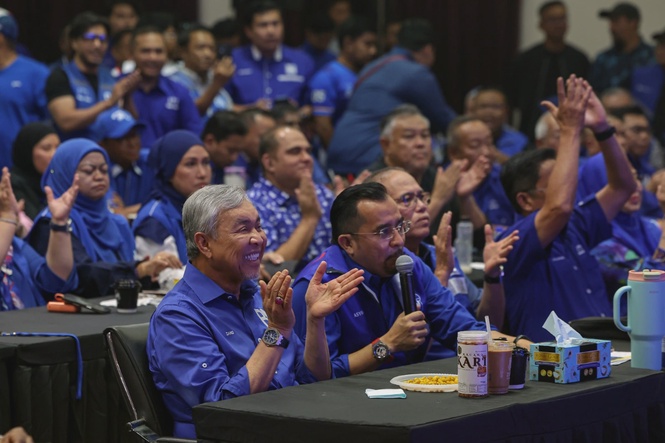
Negeri Sembilan’s result exposes a clash between ethnic dignity and reform demands that will define Malaysia’s democratic stability ahead of GE16.
THE 2026 Negeri Sembilan state election produced a decisive shift in political power.
Barisan Nasional (BN) secured 18 seats and Perikatan Nasional (PN) seven, while Pakatan Harapan (PH) won 11.
Together, BN and PN obtained 25 of the 36 seats, ending PH’s two-term administration.
Although economic concerns, governance and dissatisfaction with political leadership contributed to this outcome, the election also demonstrated the continuing importance of ethnic and political identity.
Francis Fukuyama’s interpretation of thymos provides a useful framework for understanding this development.
Derived from Plato, thymos refers to the human desire for dignity and recognition. It has two principal manifestations: isothymia, the desire to be recognised as equal to others, and megalothymia, the desire to be recognised as superior to others.
Among many Malays, political thymos is connected to the recognition of their constitutional position, Islamic identity and status as the country’s majority community.
Support for BN and PN may therefore reflect isothymic concerns that Malay interests should remain protected amid demographic, economic and political change.
Nevertheless, when political campaigns imply that only Malay-Muslim parties can legitimately govern Malaysia, isothymia risks becoming megalothymia: recognition is no longer sought as security and dignity but as permanent political primacy.
Chinese Malaysian political thymos has developed from a different historical position. As a minority community, Chinese voters have frequently supported parties promising equal citizenship, institutional reform, meritocracy and protection of cultural rights.
This orientation is predominantly isothymic because it seeks recognition as equal members of the nation.
However, perceptions that reform-oriented parties are insufficiently attentive to Malay insecurity can allow opponents to portray equality-based demands as challenges to Malay authority.
Conversely, frustration over delayed reforms may produce political disengagement among Chinese voters rather than an immediate transfer of support to BN or PN.
These tendencies should not be interpreted as fixed psychological characteristics of either community.
Ethnic categories contain substantial differences of class, generation, religiosity, locality and education.
Furthermore, voting behaviour is shaped by material issues such as living costs, employment, candidate quality and government performance.
The recent Negeri Sembilan state election’s result should consequently be understood as an interaction between identity-based recognition and practical political dissatisfaction, rather than as evidence that Malaysians vote solely according to ethnicity.
Malaysia can expect its political identity to move in one of two directions. If parties continue mobilising competing fears—Malay fear of losing political status and Chinese fear of unequal citizenship—the country may develop a more explicitly ethnic, majoritarian political identity.
Parties will increasingly compete to demonstrate who can protect their respective communities, while policy debates become secondary.
Alternatively, Malaysia could construct a shared isothymic identity in which Malay constitutional interests and Islam are respected without diminishing the equal dignity of non-Malays.
This requires parties to redefine recognition around citizenship, accountable government and socioeconomic fairness.
The central question after Negeri Sembilan is therefore not whether identity matters—it clearly does—but whether Malaysian democracy can transform competing ethnic thymos into mutual recognition.
The country’s political stability will depend upon that transformation.
Afi Roshezry Abu Bakar (Universiti Tunku Abdul Rahman)
Prof Madya Mohd Azmir Mohd Nizah (Universiti Sains Islam Malaysia)