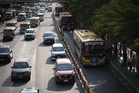
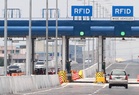
RETURNING Department of Transportation (DOTr) Secretary Vince Dizon known as a no-nonsense government executive was described by Secretary Lino Cayetano as a reformer who fits into the qualification needed in achieving the president’s commitment of giving an easier and comfortable daily commute to the Filipino. The reason cited for bringing back Secretary Dizon to the DOTr appears simple and straightforward: less time spent by the Filipino on the road and more time with family. Not that incoming secretary of the Department of Public Works and Highways (DPWH) Giovanni Lopez failed at the DOTr he did well with the resolution of the difficult issue of “right of way” in some of the road/rail transport projects which stymied efforts to improve the lot of the commuters. The two Cabinet members’ respective expertise becomes pragmatic at the stage in which they assume their new posts.
Secretary Dizon is no stranger to the transportation challenges confronting the Filipino, much of which he had seen during his stint at the DOTr. Presumably he found his work at the DPWH closely tied to the country’s transportation network which should provide him wider perspective and realistic approach in solving the inadequacies of the land transportation systems and infrastructure.
What about sea transport? Thousands of Filipinos take to the nautical highway which serves as an essential route that connects the islands. Just like automobiles conveying commuters on land, ships hold out to passengers and shippers to make island crossings and therefore need to be supported and monitored to protect the riding public.
Surprisingly, nothing much is heard as to the efficacy and benefits offered by sea transport nor are their articulation of complaints from passengers. This creates a perception of a reliable and well-run sea transport system, until a maritime casualty happens. As it is, complaints usually surface consequent to a maritime tragedy mainly leveled at inadequate life-saving gears like life vests and lifeboats and poor crew response in times of emergency. Passengers are left to fend for themselves to survive. In the immediate past years, no less than three domestic ships caught fire with close to a hundred fatalities; a tanker caused catastrophic oil pollution near the Verde Passage, a vital and highly biodiverse strait of the Philippines.
Nothing of the “mahiya naman kayo” admonition from President Ferdinand Marcos Jr. was heard even after all the recent sea mishaps. Maritime accidents after all do not equate to billions of government funds squandered as in the case of the flood control mess. Nonetheless, the grief lingers for those who lost loved ones and those who continue to wait for the missing passengers. Seemingly, there is no reason for the Filipino to complain about the country’s maritime transport service naively accepting that the modest way to reach his destination is by sea. In the same way, until a catastrophic oil spill from ships incident, coastal communities regard ships as providing the necessary mode of conveyance for them and their agricultural produce. Those communities affected by the recent oil pollution incidents are still reclaiming their livelihood sadly overshadowed by the flood control hullabaloos.
What comes to mind, thus far is how much the ballyhooed Maritime Industry Development Plan (MIDP) 2003-2208 figure in the scheme of things for maritime transport. The MIDP aims to build a strong and reliable Philippine merchant fleet that addresses the sea transport requirements of the archipelago. Central to the Plan is the expansion and modernization of the country’s domestic and international merchant fleet supported by a dynamic and reliable shipbuilding and repair industry and a pool of maritime talents consisting of seafarers, naval architects, skilled workers and maritime professionals. The expectation is for the MIDP with its overriding programs of enhancing maritime safety and implementing environmental regulations and standards to prevent pollution from ships shall accelerate that vision of realizing a progressive maritime industry. The concept of the MIDP was drawn from Presidential Decree No. 474 issued by the late president Ferdinand E. Marcos Sr. who laid down the vision of a respectable and competitive Philippine-flagged ships capable of participating in the carriage not only of local cargoes but also those of international trade.
In anticipation of the MIDP’s formulation for the period 2003-2008 that provides for the expansion of a Philippine merchant fleet engaged in both domestic and international waters the following questions arise: 1) is there any progress in increasing the number of Philippine-flagged ships plying domestic and international waters, i.e. ships that are up-to-date with modern equipment which contribute to a safe and comfortable sea travel? 2) are these ships capable of supporting green shipping and the blue economy agenda of the government? 3) how many more of the labor force were added to the country’s maritime workforce? 4) in light of the recent sea mishaps, does the system of training and education extend beyond qualifying the Filipino for manning foreign-flagged ships navigating in international waters? 5) maritime accidents are directly or indirectly attributed to human error and to violation of safety regulations, how does the MIDP figure out through its various programs ways to strengthen compliance monitoring and enforcement? These questions resonate across the archipelago’s population who recognize the importance of a national merchant fleet that connects the islands and its people and who demand safe, secure, efficient and environment-friendly sea transport.
President Ferdinand Marcos Jr. who launched the MIDP in 2023 has twenty months remaining in his term. The decision to bring back Secretary Dizon to the DOTr with his mindset for completing government programs in record time just as he did at the DPWH can hopefully make good the same commitment for maritime transport. And he may wish as a first step check on the status of the MIDP targets.
It is time to deliver!