.jpg)
By Mihar Dias January 2025
During a redent visit to a restaurant in Brooklyn, New York, a frustrated customer walked away from a confrontation with a waiter, declaring, “You don’t deserve a tip!”
The incident underscores a global question: Is tipping a reward for exceptional service or a right claimed by workers?
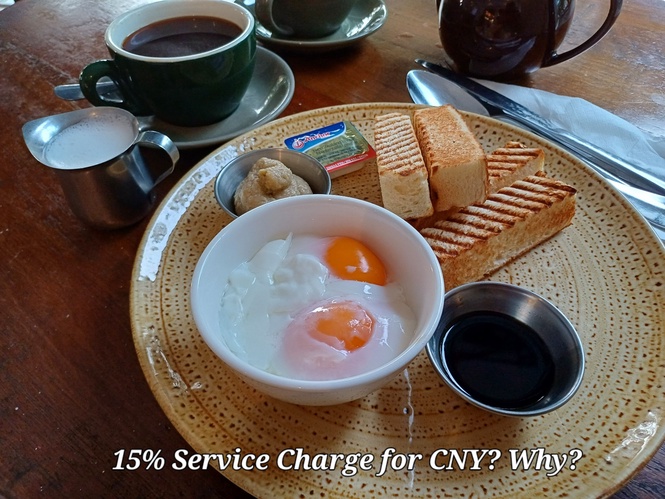
Back home in Malaysia, the debate has taken a surreal turn with calls to increase the fixed 10% service charge to 15%, particularly during festivals like Chinese New Year. https://newswav.com/A2501_2hdlSk?s=A_vD0st7r&language=en
This is not about gratitude for exceptional service; it’s about institutionalising tips regardless of the experience.
The Malaysia Singapore Coffee Shop Proprietors’ General Association recently confirmed that some of its members plan to hike service charges during Chinese New Year, framing it as a “tip” for employees working on public holidays. https://newswav.com/A2501_2hdlSk?s=A_vD0st7r&language=en
Their justification? Customers have been informed in advance and can choose to dine elsewhere. While transparency is appreciated, the argument raises troubling questions about fairness, legality, and the very purpose of tipping.
Tipping, by definition, is a voluntary gesture of appreciation for quality service. When restaurants impose a fixed service charge, customers have little choice but to pay, regardless of whether the service warrants it.
Worse, the proposed festival surcharge sets a dangerous precedent. As Tebrau MP Jimmy Puah aptly pointed out, if we accept a 15% charge for Chinese New Year, will other festivals follow suit? https://newswav.com/A2501_2hdlSk?s=A_vD0st7r&language=en
Will we soon see a “Merdeka Day surcharge” or a “Deepavali dining tax”?
The logic behind the increase is flimsy at best. The service charge is ostensibly for workers who forgo holidays, yet most businesses operating during Chinese New Year already factor holiday pay into wages. Why should consumers bear the additional burden?
Moreover, the lack of regulation enables arbitrary increases, leaving customers vulnerable to exploitation.
The issue also exposes deeper problems in Malaysia’s hospitality industry. If workers rely on tips to make ends meet, the root cause lies in insufficient wages, not in customers’ perceived generosity.
Forcing diners to shoulder the financial responsibility masks systemic issues and fosters resentment.
Restaurants must rethink their approach to service charges. Customers are more likely to reward good service when given the choice.
Fixing a charge removes this agency, transforming a personal gesture of thanks into a mandatory fee that serves no one well—except perhaps the proprietors.
A Brooklyn’s waiter might have chased after his customer for a tip, but in Malaysia, it’s the restaurants chasing profits under the guise of fairness.
If we’re not careful, we’ll find ourselves cornered by a system that erodes the joy of dining and the meaning of genuine appreciation.
The next time you see a 15% service charge, ask yourself: does this meal deserve a tip—or just a tip-off to the consumer protection authorities?
Mihar Dias is a content creator under the Newswav Creator programme, where you get to express yourself, be a citizen journalist, and at the same time monetize your content & reach millions of users on Newswav. Log in to creator.newswav.com and become a Newswav Creator now!
The User Content (as defined on Newswav Terms of Use) above including the views expressed and media (pictures, videos, citations etc) were submitted & posted by the author. Newswav is solely an aggregation platform that hosts the User Content. If you have any questions about the content, copyright or other issues of the work, please contact Newswav.