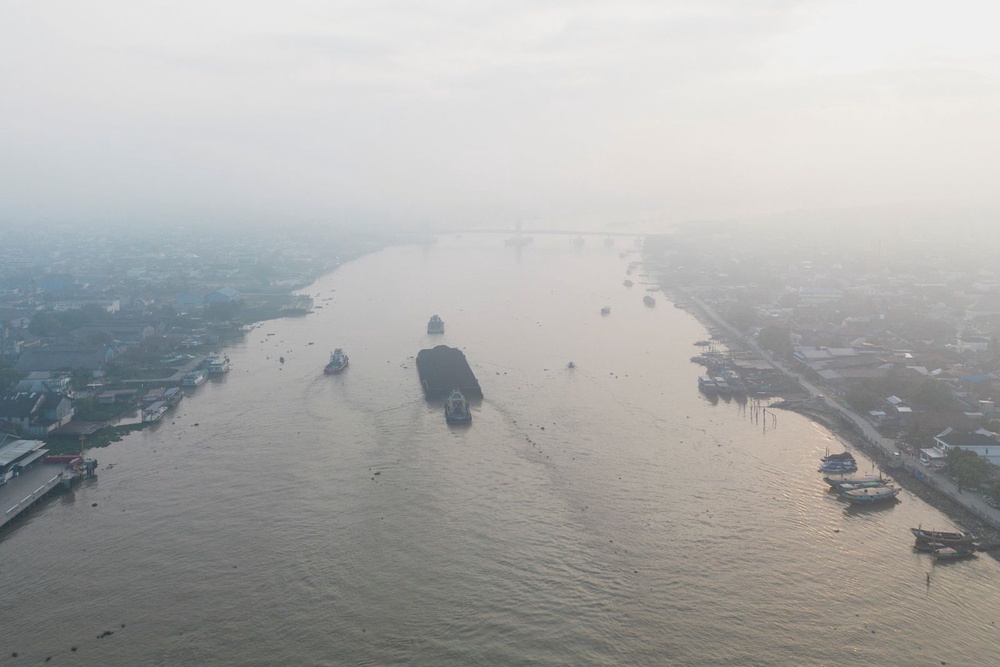
PUTRAJAYA, Sept 20 - The return of the haze across parts of Malaysia has once again brought forest and land fires in the region into focus.
But as smoke spreads and satellite images light up with hotspots, the question of where the fires are and what caused them is not as straightforward as it may appear.
Malaysia’s response this time includes an offer of firefighting assistance to Indonesia, which reflects the fact that the haze does not stop at national borders.
On Thursday (September 17), Deputy Prime Minister Datuk Seri Ahmad Zahid Hamidi said that Malaysia had offered a Bombardier CL-415MP aircraft, three helicopters, and 52 officers and personnel from the National Disaster Management Agency (NADMA), the Malaysian Maritime Enforcement Agency (MMEA), and the Royal Malaysian Air Force.
The offer was conveyed to Indonesian Vice-President Gibran Rakabuming Raka during Zahid's four-day working visit to Indonesia. It will be referred to President Prabowo Subianto for approval.
The CL-415MP, operated by the MMEA, is capable of aerial firefighting. It was previously deployed to South Sumatra in 2015, when it dropped 546,000 litres of water during a five-day operation.
Zahid, who is also NADMA's chairman, said the offer to assist was to help Indonesia tackle transboundary haze, rather than interfering in its affairs.
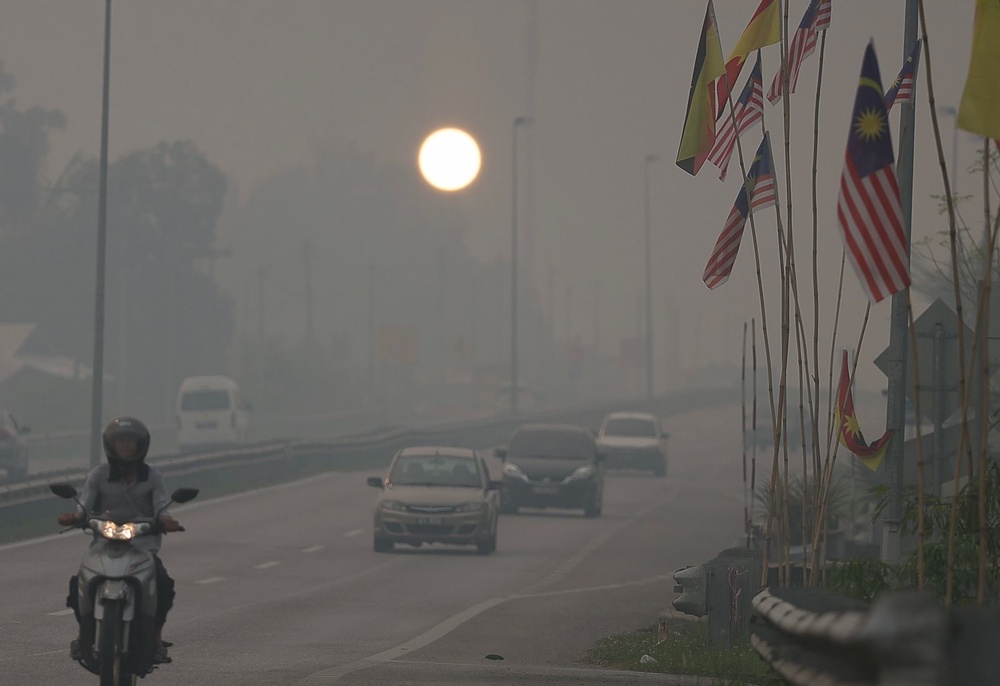
The urgency is clear from the air quality readings in Malaysia. As at 5pm on Friday (September 18), 32 areas recorded unhealthy Air Pollutant Index (API) readings.
According to the Malaysian Air Pollutant Index Management System portal, Johan Setia in Selangor recorded the highest reading at 183, followed by Shah Alam (169), Petaling Jaya (162), Banting (161), and Klang (159).
Sarawak recorded the highest number of affected areas, with Kuching recording an API reading of 174, followed by Samarahan (167), IPD Serian (166), Sibu (162), Bintulu (161), Sarikei (155), Sri Aman (154), and Kapit (153).
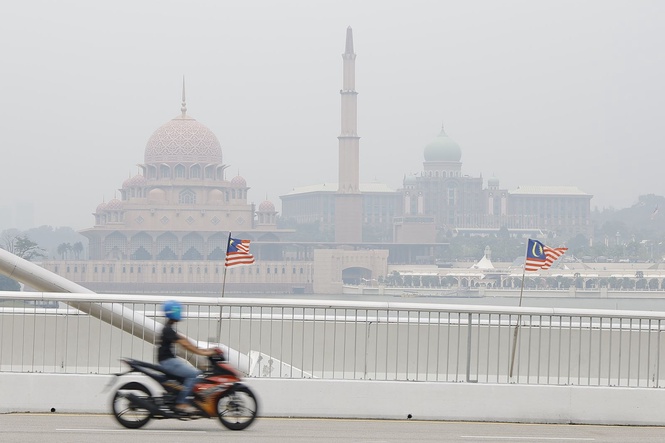
Putrajaya recorded an unhealthy reading of 172, while Batu Muda and Cheras recorded 167 and 165, respectively. Temerloh and Jerantut in Pahang recorded 155 and 151.
An API reading of 0 to 50 indicates good air quality; 51 to 100, moderate; 101 to 200, unhealthy; 201 to 300, very unhealthy; and 301 and above, hazardous.
For the public, the immediate concern is the smoke. For those trying to trace the fires, however, the picture is more complicated.
Indonesia stated that it is complying with ASEAN’s existing haze response mechanisms, including daily reporting of hotspot data, projected smoke movements, and firefighting measures.
ASEAN activated a Level Three alert for severe transboundary haze on August 26. Under the mechanism, member states share information to help neighbouring countries take precautionary measures.
At the same time, the haze has once again revived questions about the role of the palm oil industry in regional fires.
However, the Malaysian Palm Oil Board (MPOB) said regional forest and peat fires could not be attributed primarily to oil-palm cultivation, with satellite mapping currently showing hotspots across multiple land uses.
These include unmanaged areas, pulpwood plantations and small-scale farming plots.
Its director-general Datuk Badrul Hisham Mohd said human land-clearing activities remained a major driver of fires, while severe climate anomalies such as El Nino could amplify their spread.
“From a scientific standpoint, El Nino and prolonged dry weather act strictly as environmental amplifiers, not the spark itself,” he told Bernama.
That distinction matters when looking at the fires.
Badrul added that wildfires did not occur spontaneously in the region’s humid climate, with ignition generally associated with human activity.
But prolonged dry weather reduces soil and vegetation moisture, allowing fires to spread more rapidly.
The problem becomes harder to manage in peat areas, where drained peat can dry out and burn below the surface, which he said can make fires difficult to detect and extinguish.
“Once ignited, peat fires can continue smouldering underground and may reignite even after surface fires appear to have been brought under control.
“The resulting emissions can continue for weeks or months and, depending on wind direction, contribute to prolonged transboundary haze,” Badrul said.
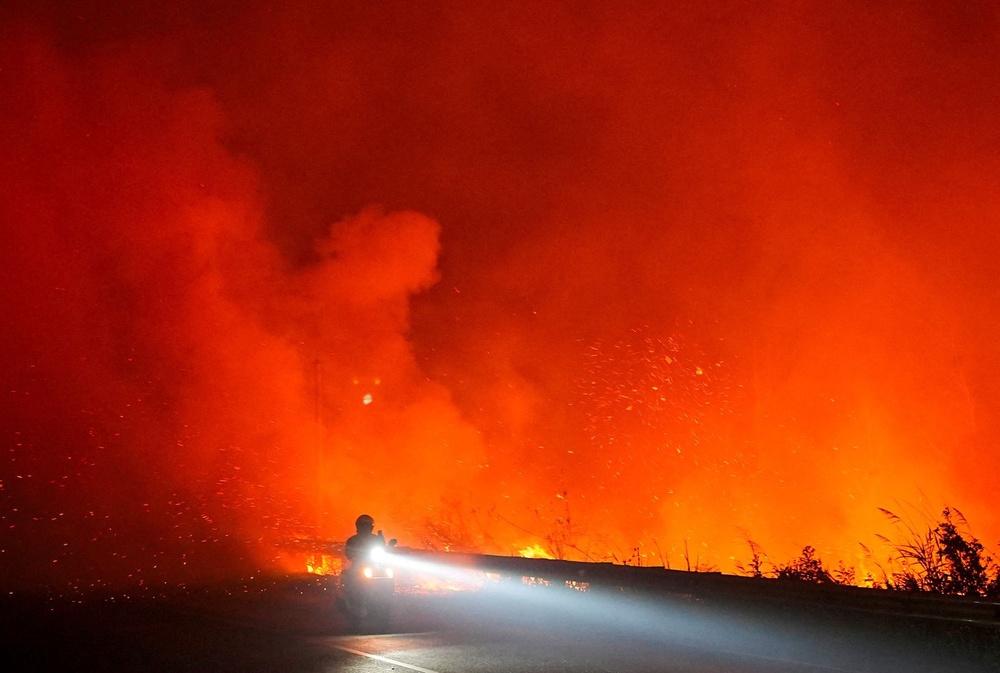
When fire risk rises
He emphasised that the Malaysian oil palm industry should not be described as having a seasonal open-burning practice because zero burning has already been established within the industry through the mandatory Malaysian Sustainable Palm Oil (MSPO) Certification Scheme, enforced since January 2020.
Instead, it is the risk of fire that changes with the seasons.
This generally increases during prolonged dry periods, particularly from June to September during the southwest monsoon, while some regions also experience a dry window around January and February.
Lower rainfall, declining soil and peat moisture and higher temperatures during these periods make accidental or unauthorised ignition more likely to spread, with El Nino capable of further intensifying the risk.
There is also a need to be careful when reading satellite hotspot maps.
A hotspot is an indicator of possible fire. It is not, by itself, proof of open burning or evidence of someone starting a fire.
“That distinction matters, because a hotspot can identify where a fire may be occurring, but not necessarily who started it, or what land use is involved.
“For Malaysia and Indonesia, therefore, the immediate challenge is twofold: containing the fires and improving the ability to identify their causes,” Badrul said.
For now, Malaysia’s offer of aircraft, helicopters and personnel is focused on putting out fires.
But the wider haze problem is unlikely to be solved by firefighting alone.
Prevention, land management, and early detection remain part of the equation, as does cooperation between countries sharing the same airspace and, at times, the same smoke.
The palm oil debate will continue, particularly whenever the haze returns.
Therefore, satellite hotspots alone cannot settle that debate. Fires occur across different types of land, and weather conditions can determine how quickly they spread and how long they persist.
That makes identifying the actual source and cause of each fire just as important as putting it out.
For Malaysia, Indonesia and the wider region, that may be the more difficult part of dealing with the haze.