A shark that spent over a month trapped in a canal in South Korea returned to the artificial waterway barely hours after wildlife authorities had guided her out in their third attempt to get her back to sea.
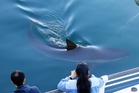
Bukang-i, a female dusky shark, was spotted swimming between two barriers near the entrance to the canal at North Port Waterfront Park in Busan on Thursday morning, a day after she was guided out of, according to the Yonhap news agency.
Authorities had installed a floating platform, called a pontoon, and additional nets to prevent her from returning. However, the shark swam beneath the outer net and passed under the pontoon to get back inside, according to the oceans and fisheries ministry.
Bukang-i was seen near the canal entrance at about 11pm on Wednesday, around five hours after the rescue operation ended.
By Thursday morning, she was swimming in a confined area between the pontoon and the second net, with two further barriers separating her from the inner stretch of the canal where she had spent most of the past month.
The shark has not returned to the main section of the waterway yet.
She remains confined near the entrance, with two additional net barriers marked by yellow buoys separating her from the stretch between the fourth and fifth pedestrian bridges where she previously stayed.
The area she was now occupying measured about 30m by 30m, according to SBS News. Footage from local media showed the shark repeatedly circling the space and surfacing above the water.
Lee Gwang-seok, an official with the Oceans and Fisheries Ministry, said Bukang-i was unlikely to slip past more barriers and move farther up the canal, considering the density of the nets and the narrow waterway in that section that leaves little room for the shark to squeeze through.
There were no signs that the shark had been feeding regularly during its monthlong stay in the canal, and falling water temperatures could pose additional health risks, officials say. The local Busan authorities did not immediately say when a new rescue effort for Bukangi would proceed.
Authorities planned to open one side of the second net barrier on Thursday to allow Bukang-i to move out of the confined area, while using an underwater drone to investigate how she had passed the first barrier, according to Seoul Shinmun.
Officials are also considering measures to prevent her from returning to the inner canal and will continue monitoring her movements.
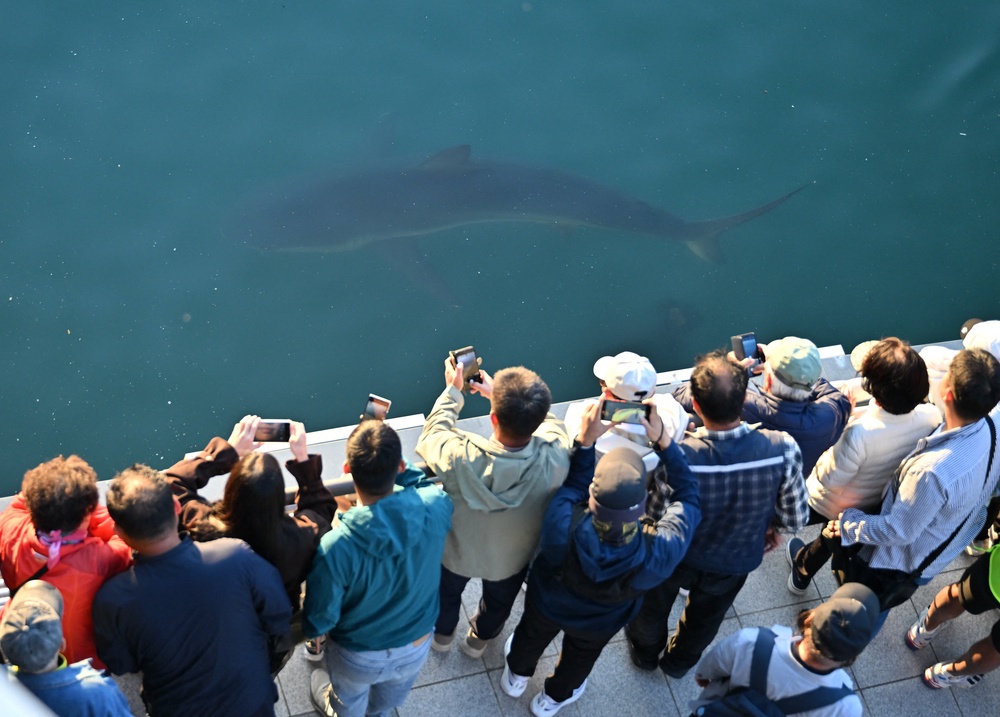
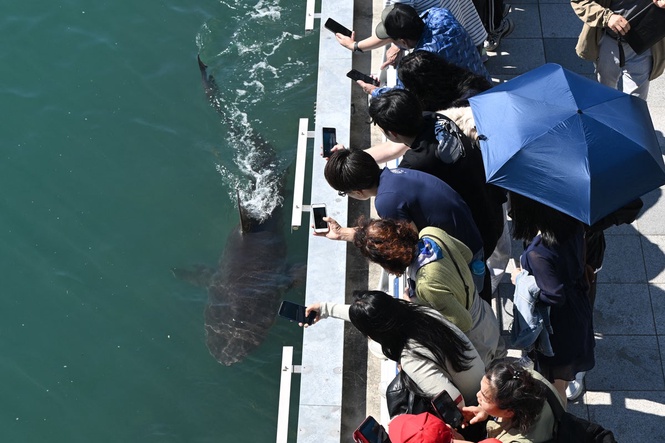
Bukang-i was first spotted in the canal on 18 September. The endangered shark’s presence turned the waterfront into an unlikely tourist attraction, drawing more than 1.6 million visitors.
Wednesday’s operation was the third attempt to guide her out of the canal. The first, on 29 September, failed after she repeatedly evaded water jets from rescue boats, swimming behind the vessels or diving beneath the surface.
During the second attempt, on 2 October, a 50m-long, 6.8m-high net became caught on the canal bed as the tide rose, forcing rescuers to abandon the operation.
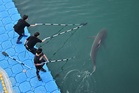
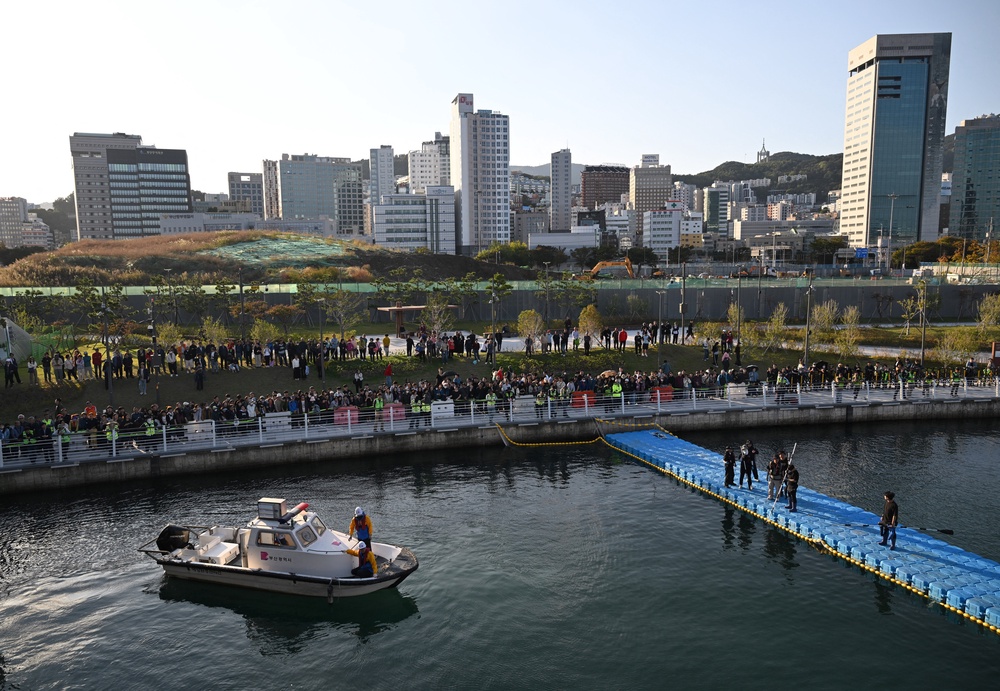
For the third attempt, authorities used a net secured to a pontoon and deployed divers to help navigate the canal’s uneven underwater terrain. Drones were also used to track the shark’s movements.
The rescue team stopped the net about 60m short of the canal exit because the water became deeper towards the mouth, making it difficult to move the net along the seabed without leaving gaps.
She was spotted near a pier outside the canal at about 6pm on Wednesday, although the waters there were not considered open sea.
Bukang-i’s prolonged stay in the waterway has raised fears for her survival.
Researchers have reported abrasions around her snout and fins, potentially caused by repeated contact with the canal walls where barnacles and oyster shells can injure marine animals.
Sharing the Korean name of Busan’s North Port, where it was first spotted in mid-September, Bukang-i had become a major tourist attraction as it slowly circled the canal, its fins slicing through the water’s surface.
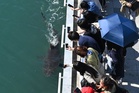
Busan officials, who made Bukangi a city mascot, say the shark attracted more than 1.7 million visitors to the canal, and hundreds of people lined up on the canal on Wednesday to watch the unusual rescue effort.
Read MoreSouth Korea succeeds in third attempt to move now-famous trapped shark out of canal
The bizarre and impossibly large book orders stoking AI fears in South Korea