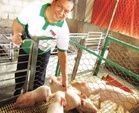
LOCAL hog producers are demanding higher tariffs on pork imports to arrest falling farmgate prices, warning that government inaction could spell the industry’s demise.
The response, however, should depend on whether the decline is seasonal or a continuing trend. A sustained decline may justify higher tariffs. A temporary slump calls for a different response. Using a lasting policy measure to address a short-term problem could create more difficulties for the industry and the economy.
Higher tariffs, while protecting producers, would raise pork prices for vendors, food processors and consumers. With opinion surveys consistently identifying inflation as a leading public concern, further increases could deepen discontent with the administration.
Agriculture Secretary Francisco Tiu Laurel Jr. reportedly attributed the declining prices to panic selling by raisers disposing of their herds ahead of the rainy season, for fear of another African swine fever (ASF) outbreak. He disputed claims that imports were responsible, noting similar price drops in Mindanao despite minimal pork imports.
His explanation suggests a seasonal slump. A recovery during the Christmas demand peak would give it credence.
The bigger question is whether higher tariffs or an import ban would make the industry more efficient, productive and competitive.
The goal should be reasonable farmgate prices alongside affordable pork for consumers.
Raising productivity is particularly urgent after ASF wiped out around 30 percent of the country’s swine population.
Annual hog repopulation has averaged about 1.7 million heads since 2021, compared with 2.2 million from 2018 to 2020. This persistent supply shortfall should ordinarily keep prices elevated, making the gap between falling farmgate prices and high retail prices worth examining.
The industry has enjoyed tariff protection for about three decades, supplemented by occasional import bans. Yet local pork prices remain almost double that of Thailand and about 70 percent higher than in Vietnam.
Did producers and the government use those years to modernize the industry and make affordable pork available? Their lack of preparedness for the ASF outbreak in 2019 suggests that those efforts fell short.
Joint action
The lasting answer to low farmgate prices and high retail prices is greater productivity. This requires joint action by the industry and government on three fronts.
First, strengthen biosecurity. Without effective, widely available protection against ASF, the virus will continue to threaten hog populations and undermine repopulation.
China and Vietnam have seen a shift toward larger, professionally managed farms as producers respond to stricter biosecurity requirements.
Here, closer cooperation between large and small producers through contract-growing arrangements could improve disease prevention and farm management. The government alone lacks the personnel, technical capacity and resources to monitor outbreaks closely, particularly in remote areas.
Second, lower feed costs, which account for an estimated 60-70 percent of hog production expenses. Corn is a major feed ingredient, but domestic production meets only about 57-60 percent of demand even without El Niño.
Calls to lower corn import tariffs have met resistance because cheaper imports could hurt local corn farmers.
Vietnam addressed this trade-off by reducing corn tariffs to 2 percent and later to zero. Its policymakers prioritized higher-value pork and chicken production over corn, while encouraging corn farmers to shift to coffee, cacao, vegetables and other crops offering better returns.
The Philippines should examine how a similar approach could lower livestock production costs while helping corn farmers move into more profitable crops.
Third, increase investment in animal research, development and extension services. These are essential to preventing disease outbreaks and helping farms adopt technologies that improve productivity.
What, then, should be done about demands for higher pork tariffs?
As a compromise, temporary protection may be considered, provided it comes with a clear deadline and an agreed schedule of gradual tariff reductions. Producers must use that period to improve efficiency and prepare for greater competition.
Even a higher, uniform tariff across pork products could be acceptable within a limited period. Thereafter, rates should gradually decline to 5 percent, with the government adhering strictly to the schedule.
Protection should give producers time to adjust and invest. It should not become a permanent substitute for modernization.
Policy consistency would also reduce uncertainty for investors. Combined with stronger biosecurity, cheaper feed and better research and extension services, it could help build a livestock industry that delivers sustainable returns to farmers and affordable food to consumers.