Democrats won control of the U.S. Senate and a majority in the House of Representatives in the 2026 U.S. midterm elections held on November 3, leaving President Donald Trump to face a divided government for the final two years of his second term, according to the Associated Press, NBC News, and Bloomberg.
For Taiwan, the result reshapes three issues that matter directly to the island: a long-stalled U.S. arms package, export controls on AI chips, and the pace of America's data center boom that feeds Taiwan's AI server makers.
Democrats Flip Republican Strongholds From Texas to Maine
Democrats picked off Republican Senate seats across the map, according to AP results published by PBS NewsHour. Former Governor Roy Cooper won an open seat in North Carolina, and Texas state Rep. James Talarico defeated Texas Attorney General Ken Paxton. In Ohio, former Sen. Sherrod Brown unseated Sen. Jon Husted. Adam Hamilton ousted Sen. Roger Marshall in Kansas, Josh Turek beat Rep. Ashley Hinson in Iowa, and in South Carolina, Annie Andrews pulled off an upset over Sen. Darline Graham.
In Maine, veteran Republican Sen. Susan Collins conceded to Democrat Troy Jackson, a former president of the state Senate, NPR and Axios reported, bringing Democratic gains in the chamber to at least seven seats. Republicans had held 53 Senate seats and 218 House seats before the vote.

Talarico is the first Democrat in 32 years to win a statewide office in Texas, according to an analysis by Northeastern University. Democrats also held their seats in Georgia, where Sen. Jon Ossoff won reelection, and New Hampshire.
Northeastern political science professor Costas Panagopoulos described the outcome as a sweeping rejection of Trump and his party's policies. Analysts widely pointed to the war with Iran, rising oil prices, and cost of living pressures as the main reasons voters turned away from the president's party.
Trump Vows to Wield His Veto
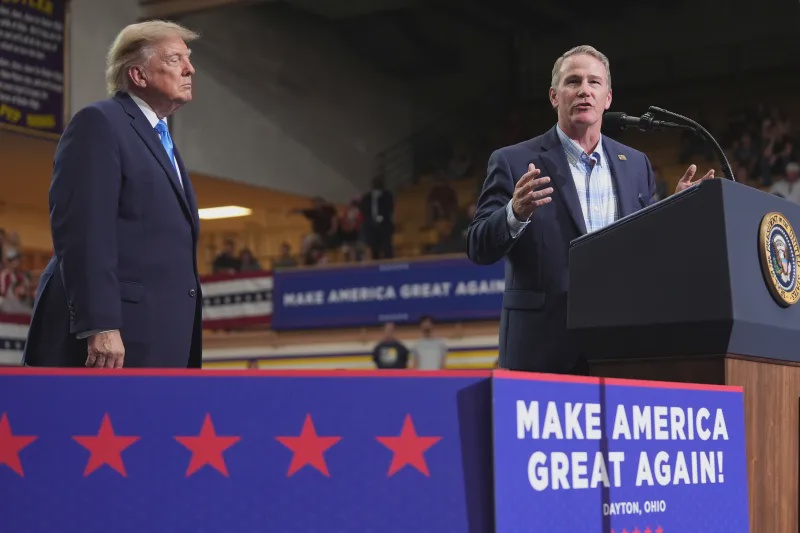
Trump said after the vote that Republicans would have won in a landslide had he been on the ballot, according to Northeastern. He has pledged to use his veto to block the Democratic agenda, the AP reported, setting Washington up for gridlock.
A Democratic Senate will also sharply limit Trump's ability to push through his priorities, including any plan to tilt the Supreme Court further to the right, because Supreme Court justices and federal judges need Senate confirmation.
House Minority Leader Hakeem Jeffries said before the election that a Democratic House would move within 100 hours to roll back parts of Trump's agenda, including restoring Affordable Care Act subsidies and reversing Medicaid cuts. If elected speaker, Jeffries would be the first Black speaker of the House.
Taiwan's Stalled $14 Billion Arms Package Faces New Pressure
For Taiwan, the most immediate question is a stalled arms sale. The New York Times reported that a package worth about $14 billion, the largest ever for Taiwan, was cleared by senior lawmakers in January but has still not been formally notified to Congress. Officials familiar with the matter said the White House ordered the delay to smooth talks between Trump and Chinese leader Xi Jinping. In May, the AP reported that acting Navy Secretary Hung Cao told a congressional hearing that the sale had been paused to ensure enough munitions for the Iran war.
That same month, eight senators from both parties wrote to Trump urging him to notify Congress quickly, stressing that U.S. support for Taiwan is not up for negotiation. The signatories included leading Democratic voices on foreign policy and defense: Jeanne Shaheen, Chris Coons, Elissa Slotkin, Tammy Duckworth, and Andy Kim. With control of both chambers, Democrats can use hearings and committee gavels to push back harder on any effort to trade Taiwan for a truce with Beijing on trade.
Not everyone expects a shift. Joshua Kurlantzick, a senior fellow at the Council on Foreign Relations, told Al Jazeera that many Asian governments do not anticipate major changes in U.S. policy while Trump is in office. James Guild, an assistant professor at Indonesian International Islamic University, warned that a lame duck Trump could become more forceful abroad, and that no one should be surprised if U.S. foreign policy stays erratic.
Bipartisan AI Chip Bills Could Move Faster
U.S. controls on AI chip sales to China are the other pressure point for Taiwan Semiconductor Manufacturing Co. (TSMC) and Taiwan's AI supply chain. Steven Okun, CEO of Singapore consultancy APAC Advisors, told Al Jazeera before the vote that the new Congress would pass tougher tech restrictions on China whatever the outcome, because both parties agree on the issue. He pointed to the Remote Access Security Act, the Chip Security Act, and the MATCH Act, which would require allies to mirror U.S. controls on chipmaking equipment.
Roll Call reported that three chip bills are already pending in the Senate. One, from Republican Sen. Tom Cotton, would require location tracking on advanced chips. Another, backed by Sens. Pete Ricketts and Chuck Schumer, would make allied equipment makers follow U.S. rules, a measure the Dutch government has opposed on behalf of ASML. A third, from Sens. Jim Banks and Elizabeth Warren, would write into law Trump's ban on selling the most advanced AI chips to adversaries. The bills had been riding on the National Defense Authorization Act (NDAA), which stalled until after the election.
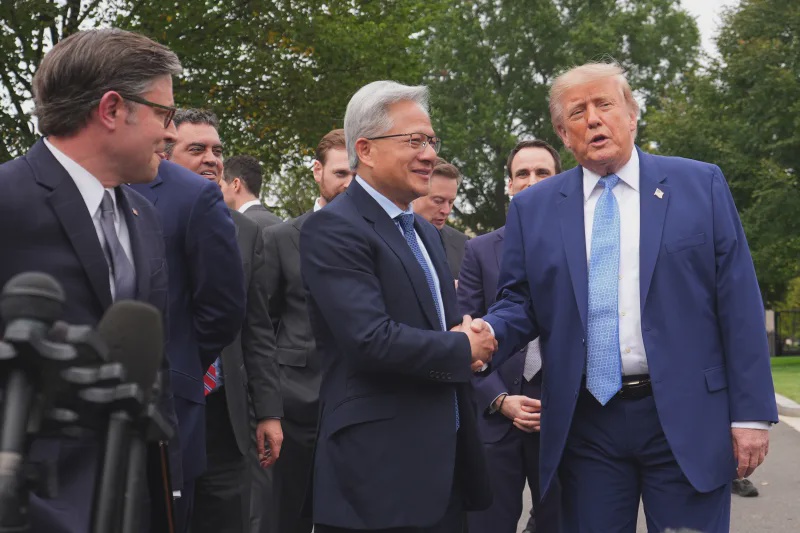
Democrats have long criticized the administration for loosening Nvidia and AMD sales to China. Schumer has accused Trump of handing China the technology it needs to win the AI race, and Warren has said Nvidia CEO Jensen Huang should not have a seat at the table during Xi's visit to the United States. White House spokesman Kush Desai has countered that the administration has imposed the strictest export controls in modern history.
With Democrats running Congress, export policy could shift from deals struck between the White House and companies to rules set in legislation. For Taiwanese chipmakers, that could mean even less certainty about shipments to China.
Data Center Backlash Threatens Taiwan's AI Server Orders
Fortune noted that Democratic control raises the odds of federal AI legislation and of investigations into major AI companies. But Trump opposes AI regulation and is likely to veto major bills, and overriding a veto requires two-thirds majorities in both chambers. That makes bipartisan measures such as the Frontier Act the likeliest to pass.
Data centers are a bigger worry. According to Fortune, at least 41 local ballot measures across the country dealt with data centers, including 21 in Ohio alone, 11 of which sought bans or moratoriums. In the second quarter of this year, at least 45 data center projects worth about $68 billion were held up by local opposition.
Markets moved early. South Korea's SBS reported that fears of slower AI growth and tighter data center rules under a Democratic Congress sent the KOSPI index down 3.6% on November 3, election day in the United States, with Samsung Electronics falling more than 4% and SK Hynix more than 5%. Kim Jae-seung, an analyst at Hyundai Motor Securities, said data center delays would squeeze profits and could cut demand for Korean memory chips over time.
Taiwan is a leading global supplier of AI servers and advanced chips. A slowdown in U.S. data center construction would hit order visibility directly for TSMC, Quanta Computer, Wistron, and others in the AI supply chain.
Tariff Relief Likely Waits for 2028
On tariffs, Okun was blunt: neither the tariffs nor the war will change. Stephen Olson, a visiting fellow at Singapore's ISEAS Yusof Ishak Institute, saw a glimmer of hope: a Democratic Congress might win some tariff exemptions, and voters' rejection of Trumpism could strengthen free traders in the Republican Party. But a deeper shift, he said, will probably have to wait until the 2028 presidential election.
The midterm result ties Trump's hands at home, but he keeps wide executive power over foreign policy, arms sales, and trade. For Taiwan, Congress will have a much louder voice on arms sales and chip controls. Whether a lame duck Trump turns more assertive and less predictable abroad is the biggest unknown of the next two years.
You've read it. Now join the conversation — follow us on X, Facebook and IG. Editor: Penny Wang