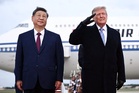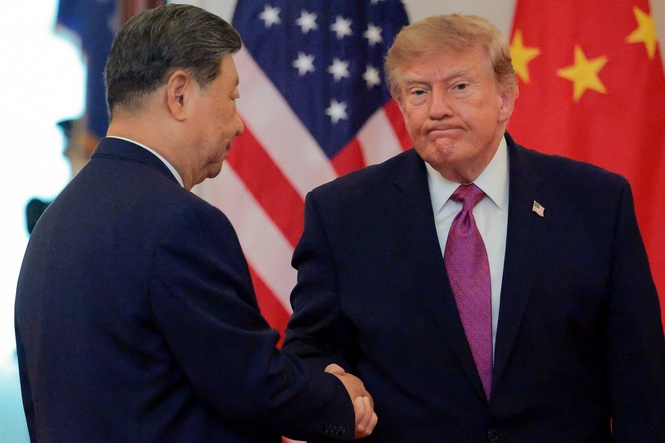
President Donald Trump has rolled out the red carpet for Xi Jinping amid ongoing tensions between the two superpowers on a range of issues from the future of AI to global trade.
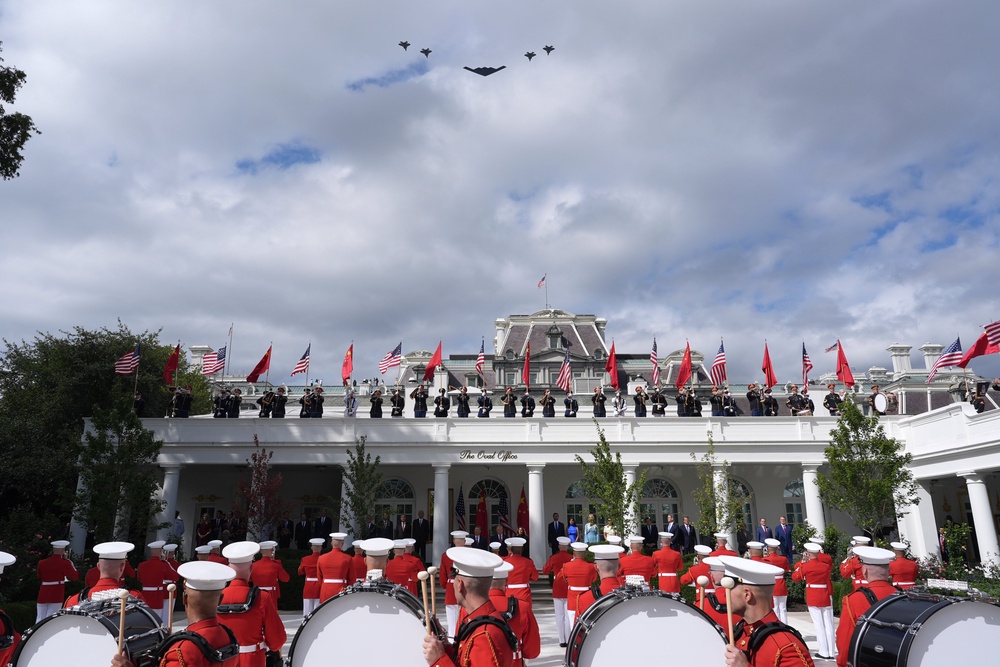
Xi’s first state visit to the US in over a decade got underway in Washington on Thursday with much fanfare, including a military ceremony, a flyover at the Rose Garden and Chinese flags waving from the Oval Office roof.
But the meeting between the leaders of the world’s two largest economies comes as Trump faces international backlash for inviting Russian President Vladimir Putin to Miami’s G20 gathering in December despite the ongoing war in Ukraine.
Trump, who has dubbed his relationship with Xi the ‘G2’, said their meeting would have an impact on the world for decades to come.
“During this visit, we will also discuss pressing issues concerning security, technology, and 'super intelligence’,” Trump said, using his alternative name for artificial intelligence.
“The decisions we make in these areas today can promote peace and prosperity for decades and decades to come.”
Xi will be treated to a state dinner Thursday evening involving tech CEOs including Apple’s Tim Cook, Amazon’s Jeff Bezos, Open AI’s Sam Altman, Tesla’s Elon Musk, Nvidia’s Jensen Huang and Alphabet’s Sundar Pichai.
But analysts cautioned that the intense competition between the two countries in AI is likely to limit the scope for anything beyond symbolic agreements.
Xi used his initial address to emphasise that the US has the “capability and responsibility to manage AI for good”.
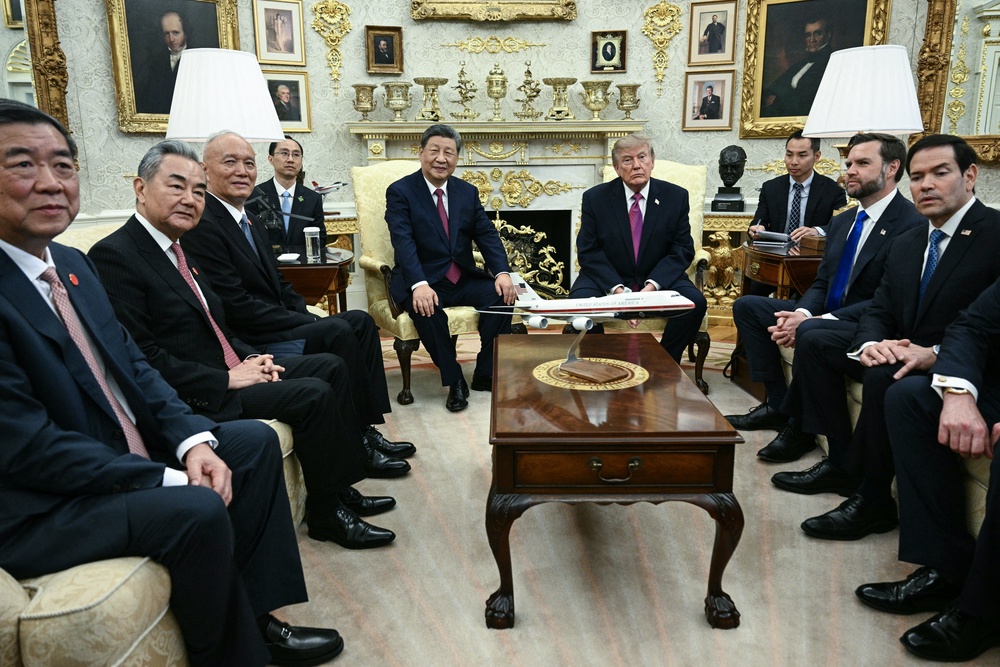
“China, US cooperation may not solve every problem in the world, but without our cooperation, it would be hard to solve many of the world's problems,” he said.
Xi voiced hope for a more stable relationship with the United States, saying Beijing and Washington should be “partners, not rivals” and that the “historical logic of peaceful coexistence” between the two countries had not changed.
The pair are expected to discuss the ongoing Iran war but there has been little sign China is willing to exert pressure on its ally to yield to US demands. Trump has been warned about the relationship between Tehran and Beijing as the war he started in February continues with no end in sight.
“The president needs to tell Xi Jinping that this is a dangerous alliance,” Jonathan Schanzer, executive director of the Foundation for Defence of Democracies, told Fox News ahead of the visit.
“The Chinese assistance to the Iranian regime has actually expanded on a number of fronts,” he warned, citing the provision of drone parts and motors, dual use chemicals, alleged assistance with targeting and an economic relationship.
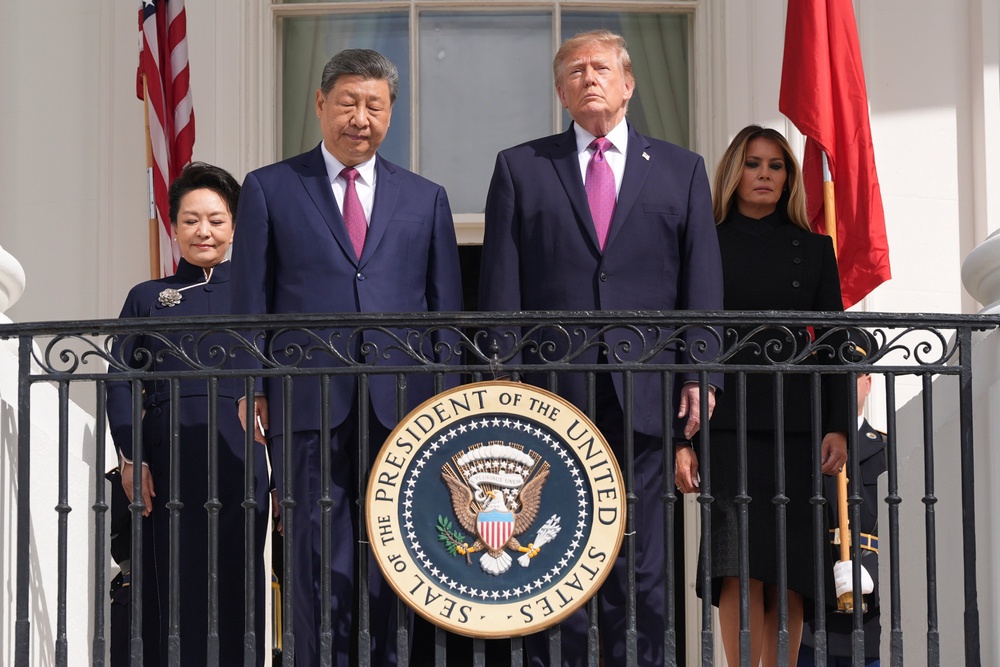
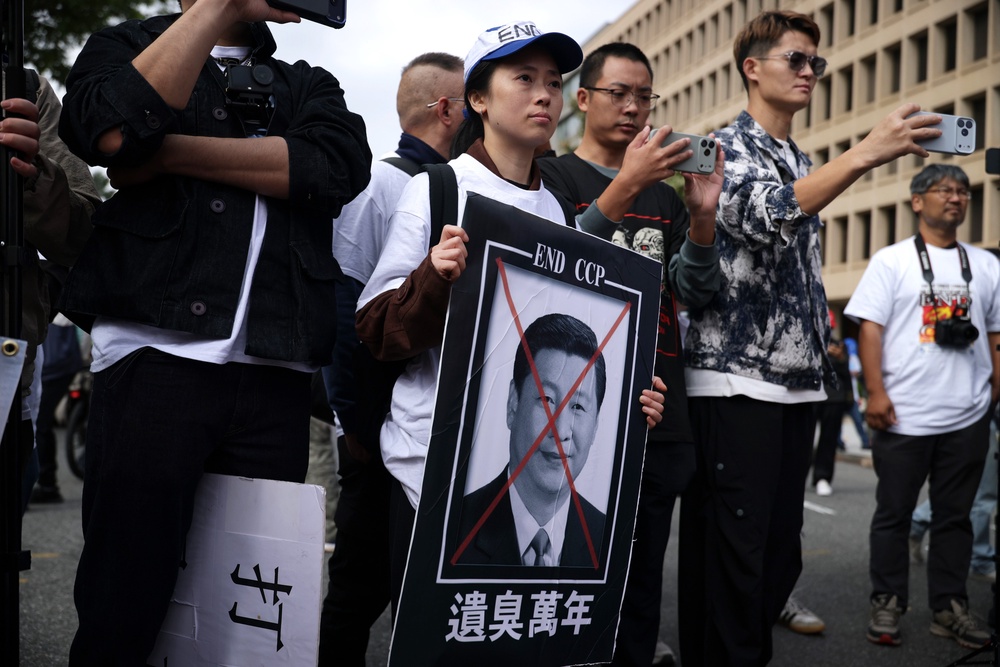
Disputes over Taiwan could remain the most contentious issue as Xi is expected to press Trump to halt arms sales to the democratically governed island claimed by China. Sources told Reuters said that Beijing is offering to help put pressure on Iran in return.
After their previous meeting earlier this year, Trump had said he was holding in abeyance an arms package to Taiwan worth some $14 billion and called it a “very good negotiating chip.”
Trump, known to be impressed with ceremony and symbolic gestures, has attempted to reciprocate the grand welcome he received when he made his own state visit to China in May.
On Wednesday evening he greeted Xi with a red carpet on the tarmac at Joint Base Andrews – the first time that a US president has welcomed a foreign leader in that manner since President Barack Obama met Pope Francis in 2015.
Xi’s visit comes at the end of busy week for international diplomacy in the US, with the UN General Assembly still taking place in New York.
Secretary of State Marco Rubio announced the Putin invite after meeting with Russia’s outspoken foreign secretary Sergey Lavrov on the sidelines of the event Wednesday, and soon faced international backlash.
“It's clearly, I think, the wrong path to normalise people who are starting wars, who are going against the UN charter, who are killing and giving orders to kill civilians," the EU’s representative for foreign affairs Kaja Kallas told Sky News in response.
The European Commission also issue thinly veiled criticism of the US invitation.
“Russia is escalating attacks on Ukrainian civilians as we speak. July and August were the deadliest months since the war started,” deputy chief spokesperson Olof Gill said.
“Since 2022, the EU has consistently and forcefully used G20 meetings to condemn Russia's full-scale invasion and to call for it to end.
“What I can say today is that this approach, from the European Union perspective, will continue irrespective of the participants at any G20 meeting.”