
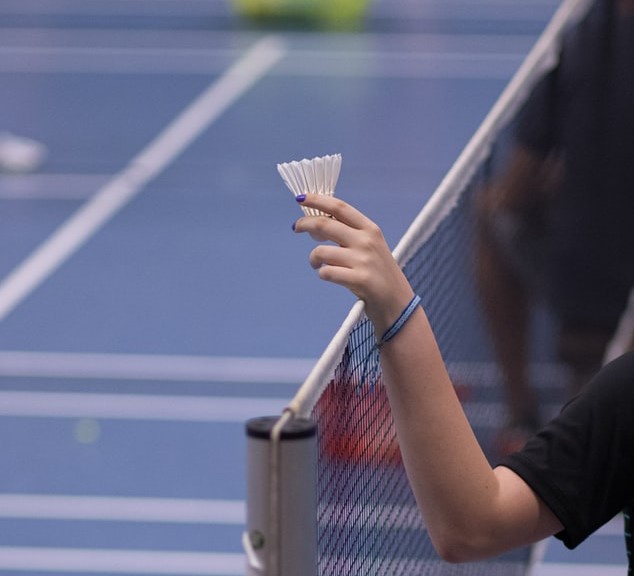
KUALA LUMPUR: Malaysia has long regarded badminton as a source of national pride. The notion comes with merit and results.
The national shuttlers have enjoyed podium finishes at almost every multi-sport event – from the Olympics to the SEA Games. In fact, 11 of the 15 Olympic medals won by Malaysia have come from badminton since it debuted as a full medal sport at the 1992 Summer Games.
The on-court successes over the decades, and across generations, have united people from all walks of life, regardless of race, religious beliefs, or political affiliation.
Yet the sport’s potential as a diplomatic instrument has been largely overlooked – and this is where sports diplomacy deserves greater attention.
Countries have integrated sports into their international development programmes, while some host global sporting events to elevate their profiles and showcase their culture to the world.
Malaysia experienced this first-hand through China’s ping-pong diplomacy in 1971. The Table Tennis Association of Malaysia had earlier that year announced it would hold trials, as the best players would compete in the Afro-Asian Friendship Invitational tournament in Beijing in November of the same year.
The competition was China’s way of reaching out to the world, as it had then struggled to communicate with other countries due to its communist ideology.
Former national table tennis athlete Soong Poh Wah shared his experience in Beijing with this author in 2014. Soong said he and his teammates initially thought it was all about sports, but soon realised it was a tournament that had, in a way, paved the way for greater things for both Malaysia and China.
This is where Malaysia can adopt a similar approach to attract more visitors and investments into the country.
The country’s comparative advantage is obvious. Badminton enjoys immense popularity among highly populated and mature markets around the world, particularly Indonesia, Denmark, China, India, Japan, and South Korea. Unlike sports with limited regional appeal, badminton provides Malaysia with a ready-made platform for engagement with some of its most important economic and strategic partners.
Badminton exchanges can become a regular feature of Malaysia’s bilateral diplomacy. Coaching clinics could accompany official visits. Joint youth training camps could be organised with Southeast Asian neighbours, especially new member Timor-Leste.
Malaysian coaches could be seconded to developing countries as part of technical cooperation programmes, much like how medical or agricultural experts are deployed under development assistance initiatives. These activities may seem modest, but diplomacy is often built through sustained people-to-people interactions rather than high-level meetings such as the Asean Summit alone.
The benefits extend beyond foreign policy.
International sporting exchanges contribute to education, tourism, and local businesses. Visiting athletes require accommodation, transport, and sports science support.
Universities can develop partnerships in sports medicine and performance analytics. Local equipment manufacturers will be able to gain access to new markets. Sports tourism – through tournaments, training camps, and coaching programmes – creates economic opportunities while enhancing Malaysia’s international visibility.
Sports also provide an alternative avenue for building trust among younger generations. The SEA Games have long demonstrated the region’s enthusiasm for sporting competition, but greater emphasis could be placed on collaborative programmes that continue between tournaments.
Malaysia can take the lead when it hosts the 2027 SEA Games, helping to foster a stronger regional identity among Asean member states.
Sports diplomacy also offers Malaysia an opportunity to exercise soft power. Unlike military or economic power, soft power rests on attraction and credibility. A country admired for its expertise, generosity, and cultural influence is often better positioned to build lasting partnerships.
Malaysia already possesses many of the ingredients. Its multicultural society, established sporting institutions, and internationally respected athletes provide a positive narrative that resonates beyond its borders. Former Malaysian athletes and coaches are recognised throughout the badminton world, making them natural ambassadors for the country.
However, soft power cannot be left to chance. It requires coordination between sporting bodies, the Youth and Sports Ministry, the Foreign Affairs Ministry, and tourism agencies. A national sports diplomacy strategy would help align these efforts with broader foreign policy objectives.
Critics may argue that sports diplomacy is merely symbolic. That is true, if it is merely done to tick boxes and lacks continuity.
One need only refer to the earlier-mentioned ping-pong diplomacy or the cricket diplomacy between India and Pakistan to realise that sports has repeatedly created opportunities for dialogue when conventional diplomacy faced obstacles.
Malaysia need not aspire to host the Olympic Games to benefit from sports diplomacy. Its greatest strength lies in leveraging what it already does well.
Badminton has given Malaysia moments of joy. The next challenge is to recognise that every shuttlecock exchanged across a net can also represent an exchange of goodwill, trust and cooperation. As such, badminton should be recognised as a strategic national asset.
If Malaysia is serious about enhancing its regional influence, badminton may prove to be one of its most effective diplomatic tools – able to build and cement relationships.