.png)
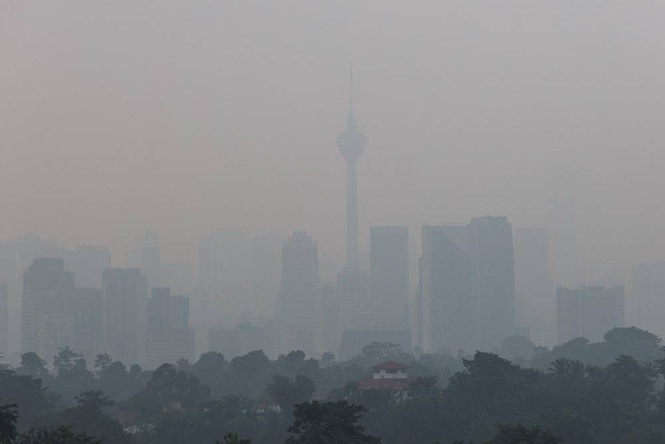
SHAH ALAM - More than two decades after Asean pledged to combat transboundary haze, environmental groups say Southeast Asia is still trapped in a cycle of smoke without accountability.
As another haze season blankets parts of the region, Greenpeace and Pantau Gambut are urging Putrajaya to enact a Clean Air Act that would allow Malaysia to hold its own citizens and companies accountable for overseas operations linked to fires, arguing that responsibility should not stop at national borders when pollution does not.
The call comes as a new report highlights the widespread impact of this year's haze episode.
Between August and Oct 1, haze affected Sarawak for 55 days, Sabah for 16 days, and Johor and Kuala Lumpur for 13 days each. Singapore recorded five haze days during the same period, while smoke was also detected over Brunei and the Philippines.
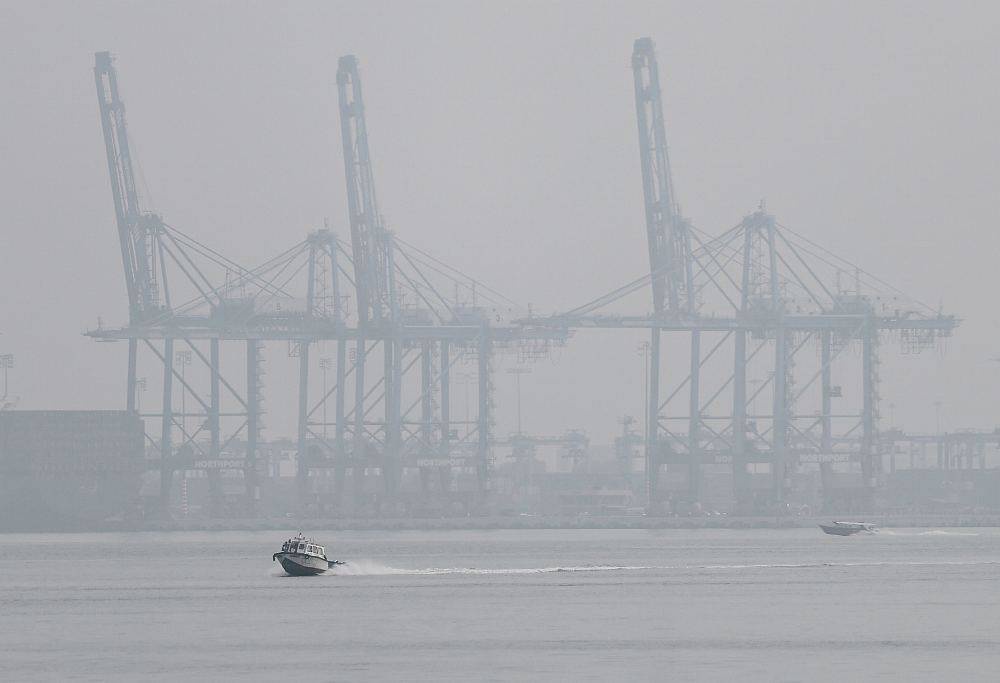
The health consequences were also significant. Health Minister Datuk Seri Dr Dzulkefly Ahmad said on Aug 23 that asthma cases surged by 259 per cent and upper respiratory tract infections (URTI) rose by 124 per cent between epidemiological weeks 32 and 33.
Asthma cases increased from 61 to 219, while URTI cases climbed from 1,637 to 3,674.
The report also cited a 2022 study estimating that long-term exposure to fine particulate matter (PM2.5) from peat fires in Sumatra and Kalimantan is linked to about 33,100 premature adult deaths and 2,900 infant deaths annually.
According to Greenpeace and Pantau Gambut, the Asean Agreement on Transboundary Haze Pollution (AATHP) is not short of legal principles.
"The problem is not the absence of legal principles," the report said.
It pointed to Article 3 of the agreement, which requires countries to ensure activities within their jurisdiction do not harm the environment or public health of neighbouring states and to take precautionary measures against such risks.
What is missing, the report argued, are mechanisms that translate those principles into prevention, attribution of responsibility, corporate accountability and redress for victims.
Rather than focusing solely on who started a fire, the groups said investigations should examine the broader chain of responsibility, including land governance, peatland drainage, concession management and state oversight.
The key questions, they argued, are "who failed to prevent them and who must be held responsible for their impacts".
The report proposes a framework that begins with evidence gathering and attribution before moving to assessments of legal obligations, damages, restoration measures and remedies for affected communities.
"If damage can move across borders, the responsibility to prevent and remedy it must also be able to work across borders," it said.
Among its recommendations are regional fact-finding mechanisms, stronger transboundary environmental impact assessments and greater access to information and justice for affected communities.
The report also cited the 2025 Asean Declaration on the Right to a Safe, Clean, Healthy and Sustainable Environment, as well as international legal precedents including the 2010 Pulp Mills and 2018 Costa Rica v Nicaragua cases, to argue that transboundary environmental harm should be treated as a matter of legal accountability rather than diplomacy alone.
For Malaysia, the groups endorsed a recommendation by the Human Rights Commission of Malaysia (Suhakam) in its 2024 report Silent Enemy for a comprehensive Clean Air Act covering transboundary pollution.
Such legislation, they said, could hold Malaysian citizens and businesses accountable when their overseas operations contribute to haze and would reinforce public confidence that environmental responsibility extends beyond national borders.
The report noted that Malaysia has previously acknowledged the possibility of cross-border environmental legislation and has recently considered introducing a dedicated law on transboundary haze.
Datuk Seri Anwar Ibrahim told reporters in early September that Asean ministers must look seriously at the existing mechanisms for tackling transboundary haze, saying there is room for improvement because the haze affects lives, particularly those of children and babies.
He said Malaysia would give Indonesia space to act against any Malaysian company found responsible and "will not defend them".
The report argued that Malaysian-linked companies remain part of the broader picture.
It cited Kuala Lumpur Kepong (KLK) Group, alleging that its Indonesian subsidiary PT Menteng Jaya Sawit Perdana was among the top 20 oil palm entities by haze source points this year, recording 19 source points over six days between August and Oct 1.
Greenpeace also noted that the same entity was identified in a 2019 report as having fires detected within its concession area.
The report stressed that it does not accuse foreign companies of causing the fires. Rather, it seeks to improve ownership transparency and trace responsibility through corporate structures. It also noted that haze source points are satellite detections of likely fire activity and do not constitute findings on who started a fire.
Singapore's Transboundary Haze Pollution Act, enacted in 2014, was cited as an example of legislation aimed at addressing cross-border pollution.
However, the report noted that no company has been fined or prosecuted under the law to date.
The groups urged Singapore to make greater use of the legislation and strengthen disclosure requirements for listed companies.
At the regional level, they called for environmental rights to be incorporated into Asean's human rights framework and for the haze agreement to be strengthened with binding standards for both governments and businesses.
"Regional pollution requires regional accountability," Greenpeace said.