The success of any Umno–Pas partnership should not be evaluated solely through the concept of Malay unity. Malaysia is a plural society.
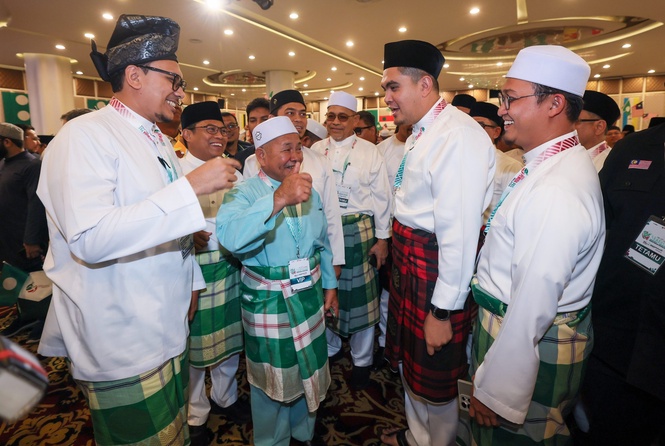
THE RECENT attendance of Umno Youth Chief Datuk Dr Muhamad Akmal Saleh and a delegation of Umno Youth leaders at the Pas Youth Muktamar represents an important development in Malaysian politics.
His presence, accompanied by 25 Umno Youth members, was publicly associated with the idea of strengthening Malay-Muslim unity. Although it is premature to conclude that a formal Umno–Pas electoral coalition has been established, the development suggests a growing willingness between two historically influential Malay-Muslim political parties to rebuild political cooperation.
From a political-stability perspective, closer cooperation between Umno and Pas could reduce fragmentation within the Malay electorate.
Political fragmentation often produces intense electoral competition, unstable alliances and frequent political realignments.
A clearer understanding between major political parties could therefore create greater predictability in government formation and policy direction. For businesses, investors and citizens, political predictability is important because stable institutions and effective governance are closely associated with sustainable economic development.
The World Bank similarly emphasises the importance of political stability, government effectiveness, regulatory quality and rule of law in shaping development outcomes.
However, the success of any Umno–Pas partnership should not be evaluated solely through the concept of Malay unity. Malaysia is a plural society. Therefore, a sustainable political partnership must ultimately develop into a broader concept of national unity.
This is particularly important for Chinese, Indian, Christian, Hindu, Buddhist and other non-Malay and non-Muslim communities. An Umno–Pas partnership may initially create concerns among some of these communities regarding cultural rights, religious freedom, educational opportunities and economic participation.
Such concerns should not simply be dismissed. Instead, they provide an opportunity for both parties to demonstrate that strengthening Malay-Muslim political cooperation does not require marginalising other Malaysian communities.
The Federal Constitution provides an important foundation for such an approach. Article 8 establishes equality before the law, while Article 11 provides constitutional protection for the practice of religion.
Consequently, an Umno–Pas political understanding could strengthen rather than weaken national stability if both parties clearly commit themselves to constitutional governance and reassure non-Malays that their legitimate rights, livelihoods and cultural identities will continue to be protected.
Economically, the partnership should also move beyond ethnic competition towards shared prosperity. Malaysia’s development experience demonstrates that economic policy and social harmony are closely interconnected in a multiethnic society.
Research has long argued that economic development in Malaysia must address social disparities while ensuring that different communities perceive themselves as participants in national growth.
Malaysia is also a highly open economy in which trade and investment remain significant sources of employment and income. Political moderation and social stability therefore have direct economic value.
For non-Malays in particular, a constructive Umno–Pas partnership could become meaningful if it guarantees fair opportunities for SMEs, protects vernacular and community educational interests within the constitutional framework, encourages interethnic business cooperation and establishes meaningful consultation with representatives of different communities.
Most importantly, Umno and Pas should avoid framing political cooperation as a victory of one ethnic or religious community over another. Recent Malaysian research suggests that interethnic interaction can moderate ethnonationalist political attitudes, demonstrating the importance of meaningful engagement between communities.
Ultimately, an Umno–Pas partnership has the potential to contribute to Malaysia’s stability, but its success will depend on the political philosophy behind it.
Malay-Muslim unity may provide the foundation for cooperation, but Malaysian unity must be its ultimate destination. If the partnership embraces moderation, constitutionalism, economic inclusiveness and genuine protection of minorities, it could develop beyond an electoral arrangement into a platform for political stability and shared national prosperity.
Afi Roshezry Abu Bakar
Adi Wira Mohd Zin
Universiti Tunku Abdul Rahman (Kampar Campus)
The views expressed in this article are his own and do not necessarily reflect those of theSun.