.png)
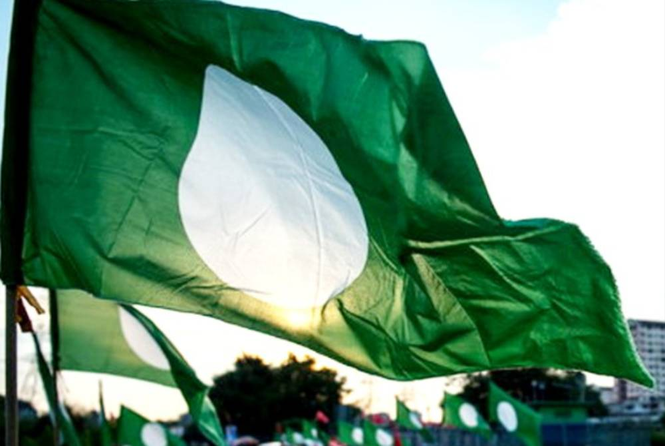
SHAH ALAM — The 72nd Pas Muktamar, which begins tomorrow (Friday), comes at a pivotal moment for the Islamic party as it seeks to consolidate its position as the country's largest opposition force and sharpen its strategy ahead of the next general election.
While Pas remains outside the federal government, it dominates Perikatan Nasional (PN), controls four states — Kelantan, Terengganu, Kedah and Perlis — and commands the largest bloc of Malay-Muslim support among opposition parties.
This year's gathering is expected to attract particular attention following Pas' invitation to Umno leaders, reviving questions over the future of Malay-Muslim political cooperation and whether Pas should continue placing its long-term hopes in PN.
Umno has confirmed that secretary-general Datuk Dr Asyraf Wajdi Dusuki and the Kelantan Umno leadership will attend the 72nd Pas Muktamar. Umno Youth chief Datuk Dr Muhamad Akmal Saleh has also confirmed his attendance at the Pas Youth muktamar.
It will be only the second recent Pas muktamar attended by a top Umno leader, after Umno deputy president Datuk Seri Mohamad Hasan attended the party's gathering in Pahang in 2019.
The invitation has inevitably cast a spotlight on Pas' relationship with Bersatu, once the other major pillar of PN. Pas ended its political cooperation with Bersatu in June, while party president Tan Sri Abdul Hadi Awang has indicated that the door to reconciliation is closed.
Against this backdrop, political observers expect the muktamar to provide an important platform for PAS to assess its strengths and weaknesses following a series of state elections and chart its direction towards the 16th General Election (GE16).
Pas leaders have in recent months appeared more open to engaging with Umno leaders, fuelling speculation that the party may be reassessing its strategic options ahead of GE16.
The issue is unlikely to be formally debated as a policy motion, but it is expected to feature prominently in discussions among delegates and party leaders.
The experience of Muafakat Nasional continues to resonate among sections of both Pas and Umno, particularly among those who believe Malay-Muslim political unity remains an important electoral objective.
But for Pas, the bigger question goes beyond any immediate alliance. It is about what kind of political force the party wants to become.
Does it remain primarily a movement focused on consolidating its traditional support base, or does it evolve into a broader national force capable of winning power at the federal level?
That broader ambition brings a host of domestic challenges into focus, from the economy and state governance to leadership regeneration and the party's ability to reach beyond its traditional voter base.
The rising cost of living and the economy are expected to be among the key issues in the debates.
Pas leaders have consistently criticised the unity government over inflation, food prices, taxation policies and household financial pressures. Delegates are likely to discuss how the party can develop a more comprehensive economic narrative beyond its traditional emphasis on governance and Islamic policies.
The performance of Pas-led state governments is also likely to come under scrutiny.
As Pas seeks to convince voters that it is ready to lead at the federal level, delegates are expected to highlight administrative achievements while examining how to attract investment, create jobs and improve public services in the four states under its control.
Leadership succession and regeneration will also be important issues.
Although Pas has largely avoided the factional battles that have affected other political parties, it faces growing pressure to develop a new generation of leaders capable of appealing to younger and more urban voters.
Youth participation is expected to feature strongly, particularly as Malaysia's electoral landscape continues to evolve following the implementation of Undi18 and automatic voter registration.
Pas must balance its traditional support base with efforts to broaden its appeal among first-time voters and professionals if it is to expand beyond its existing electoral strongholds.
The party also faces the challenge of reaching non-Malay and non-Muslim communities.
While Pas has sought to expand its outreach through its supporters' wing and other programmes, questions remain over whether it can win sufficient support across diverse voter groups to form a federal government.
All these issues point to the same question: whether Pas can move from being a dominant opposition party to a credible government-in-waiting.
The debates and policy resolutions at this year's muktamar may offer important clues.
As delegates converge for the annual gathering, the defining question facing Pas is no longer whether it can win elections in its strongholds, but whether it can turn that electoral influence into a credible roadmap for national leadership.

