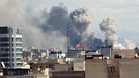
FAO chief economist says global commodity market disruption from the Strait of Hormuz crisis could take months to stabilise, impacting energy and food security.
HAMILTON: The chief economist of the United Nations’ Food and Agriculture Organisation has warned that stabilising global commodity markets after the Strait of Hormuz crisis could take months.
FAO Chief Economist Maximo Torero said the conflict has triggered one of the most rapid and severe disruptions to global commodity flows in recent times.
He noted that traffic through the strategic strait collapsed to 90% within days.
The route normally carries 20 million barrels of oil per day, representing 35% of the world’s crude oil.
It also handles one-fifth of global LNG and up to 30% of international fertiliser trade.
Torero outlined a stark timeline of consequences based on the crisis’s duration.
“If everything is resolved in the next two weeks or so, the markets will absorb it,” he said during a virtual briefing.
This scenario would minimise risks to global food security in the next planting season.
He warned a crisis lasting three to six months would impact not only food security but all sectors through energy costs.
Countries heavily reliant on remittances from Gulf workers are particularly vulnerable.
Nepal, Jordan, Lebanon, Pakistan, Egypt and Sri Lanka face significant GDP risks.
Workers in the region will lose their jobs and be unable to send remittances, Torero said.
He singled out Türkiye and Jordan as high-risk due to their crop calendars and import dependency.
Lebanon also faces compounding difficulties from the situation.
Torero urged for a swift resolution, stressing markets have enough food to absorb a short-term shock.
“But we have to be realistic; if this continues for a longer period of time, the situation will be significantly worrisome,” he noted.
Responding to a question, he warned of a catastrophic combination if a strong El Niño occurs during the ongoing conflict.
The climate effect plus rising input costs would exacerbate the situation significantly.