The modern global healthcare landscape is increasingly fracturing along the lines of accessibility, trust, and desperation. From the underground medical rings found in highly developed Western metropolises to the unregulated informal networks operating within rapidly expanding economic hubs, the desperation for affordable care remains a powerful driver of illicit industries. In Malaysia, where public healthcare is globally lauded for its affordability, a parallel, unseen reality is quietly taking root.
For the average middle-class or working-class resident living in burgeoning suburban developments, a neighbourhood private clinic is an undisputed sanctuary of trust. It is a place where framed medical degrees line the walls and white coats represent an absolute barrier against disease. However, a jarring enforcement action has shattered this sense of domestic security, pulling back the curtain on a deeply troubling trend of systemic vulnerability and institutional exploitation.
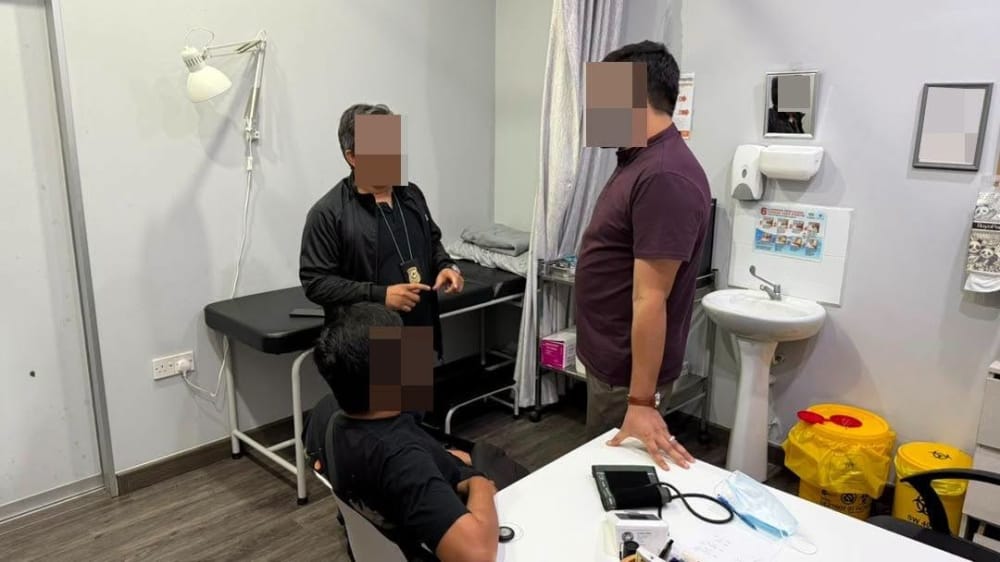
On June 25, 2026, a meticulously planned raid disrupted the quiet rhythms of Subang Bestari in Selangor. Operating at 11:52 am, elite officers from the Intelligence and Special Operations Division of the Putrajaya Immigration Department headquarters targeted a local private clinic. The target of their month-long intelligence investigation was not merely a visa overstayer hiding in the shadows, but a Pakistani national who had seamlessly assumed the role of a practicing medical doctor.
This individual, who lacked even basic legal travel documents or a valid passport to reside in Malaysia, had been diagnosing illnesses, managing clinical consultations, and prescribing pharmaceutical interventions for eight long months. The arrest sent shockwaves through the immediate community, raising crucial sociological and institutional questions about the hidden mechanisms of Malaysia's underground health economy.
The Anatomy of an Institutional Deception
The Subang Bestari bust exposes a sophisticated, multi-layered framework of deception that successfully bypassed the conventional regulatory oversight of the country's medical boards. According to operational disclosures by the Immigration Department of Malaysia, the clinic’s illicit business model relied entirely on identity theft and bureaucratic camouflage. To build an illusion of legitimacy and gain the complete trust of vulnerable local patients, the clinic had prominently displayed stolen credentials.
Among the critical items seized by immigration enforcement officers were an authentic Annual Practising Certificate (APC) and official medical qualification documents belonging to a completely different, legally registered local practitioner. The suspect and his employers had weaponised a genuine practitioner's identity to construct a shield of administrative innocence, rendering the facility practically indistinguishable from a legitimate neighborhood clinic.
Beyond the blatant falsification of medical credentials, the raid unmasked an even broader underground network. Initial investigation records suggest that the clinic itself was covertly managed and financed by another foreign national who possessed no legal authorization to operate or invest within the Malaysian medical sector. The arrested Pakistani national was merely the frontline actor, an affordable piece of labor hired to run the daily clinical consultations.
To ensure continuous cash flow and maintain a steady stream of patrons, the clinic had established a highly lucrative micro-economy based on the sale of convenience. The establishment systematically issued official Medical Certificates (MCs) to walk-in clients without conducting any physical health assessments or diagnostic exams. The uniform price for these fabricated document clearances was fixed at a flat, cut-rate fee of RM20 per customer.
By offering cheap, transactional administrative relief, the business embedded itself within the local labor community, trading medical ethics for immediate, consistent revenue. When the raid concluded, officers filled evidence bags with specialized clinical apparatus, custom-made name stamps, business transaction logs, and internal corporate records linked directly to the Companies Commission of Malaysia (SSM).
A Structural Trend in the Shadows
The incident in Subang Bestari cannot be dismissed as an isolated case of a desperate individual testing the boundaries of the law. Viewed through a broader macro-analytical lens, this arrest represents the continuation of a deeply worrying structural trend across the nation. The Immigration Department explicitly highlighted that this particular raid marks the fourth major case detected since 2024 involving foreign nationals impersonating medical practitioners or running unauthorized medical practices.
Sociologists and public policy analysts argue that the recurring nature of these syndicates points to a systemic demand within specific demographics. The proliferation of illegal clinics is often driven by the intersection of two distinct populations: undocumented migrant workers who are locked out of the formal healthcare system due to fear of deportation, and lower-income locals who are priced out of legitimate, high-end private healthcare but require rapid, low-cost medical documentation.
From an institutional standpoint, the ease with which a clinic can operate for nearly a year using a stolen APC suggests gaps in routine field enforcement. While the Ministry of Health (MOH) maintains rigid, world-class standards for clinic registrations and annual renewals, the day-to-day physical verification of who is actually holding the stethoscope remains a monumental challenge.
In dense suburban areas where private practices open in rapid succession, syndicates exploit the administrative lag between digital registration and physical inspections. The integration of stolen local corporate identities and genuine medical certifications enables these illegal operations to blend effortlessly into the background, invisible until a concentrated investigative effort uncovers the truth.
Socio-Cultural Implications and the Price of Deception
The social hazards of this underground market extend far beyond immigration violations and document forgery. The true danger lies in the quiet, unquantifiable risks posed to public health. When an untrained individual treats chronic conditions, misdiagnoses infectious diseases, or indiscriminately prescribes antibiotics, the entire community suffers.
Subang Bestari, like many suburban industrial areas in Selangor, houses a dense mix of working-class families and industrial laborers. In these communities, a missed diagnosis of a highly contagious condition or the improper management of cardiovascular ailments can lead to tragic outcomes. The fact that patients willingly accepted care without verifying credentials shows how deeply Malaysians rely on the baseline assumption that our medical spaces are secure and self-policing.
Furthermore, this issue forces a difficult conversation regarding the cultural and economic pressures surrounding the workplace. The rampant demand for RM20 medical certificates reflects a highly transactional corporate environment where taking sick leave is often met with bureaucratic resistance, pushing employees to seek out cheap and questionable shortcuts.
By catering to this demand, the fake clinic shifted from a health provider to a corporate loophole provider. As the state intensifies its investigations, the legal focus is widening. The authorities have already issued an official appearance notice to a local Malaysian woman, signaling that the network of local enablers, landlords, and administrative proxies will face accountability under Section 6(1)(c) of the Immigration Act 1959/63.
What do you think? I’d love to hear your opinion in the comments section.
The dismantling of the Subang Bestari medical ring is an undeniable victory for the state's enforcement divisions, but it serves as an eerie warning for the future. True security cannot be achieved through reactive raids alone. It requires an active, collective effort involving regulatory medical bodies, local community leaders, and everyday citizens.
We must move toward a more integrated verification model, where the validity of an attending physician's practising certificate can be easily confirmed by a patient via a public digital interface at the point of care. Protecting our communities means ensuring that the clinics in our neighborhoods remain absolute sanctuaries of healing, entirely free from fraud.
This incident challenges us to re-evaluate our relationship with the neighborhood institutions we take for granted. It forces us to ask how well we truly know the businesses operating right on our doorsteps. The next time you walk into a local clinic, the framed certificate on the wall shouldn't just be viewed as background decoration it stands as the vital line of defense protecting public health from underground syndicates. Do you feel our local clinics are thoroughly vetted, or is it time for stricter, more visible verification checks before we sit in the patient's chair? Share your thoughts below.
AM World (tameer.work88@gmail.com) is a content creator under the Newswav Creator programme, where you get to express yourself, be a citizen journalist, and at the same time monetize your content & reach millions of users on Newswav. Log in to creator.newswav.com and become a Newswav Creator now!
The User Content (as defined on Newswav Terms of Use) above including the views expressed and media (pictures, videos, citations etc) were submitted & posted by the author. Newswav is solely an aggregation platform that hosts the User Content. If you have any questions about the content, copyright or other issues of the work, please contact creator@newswav.com.