The United States and Iran have reached an agreement intended to pave the way for an end to their war after weeks of negotiations, according to mediator Pakistan and US President Donald Trump.
"Following intensive talks, we are pleased to announce that the Peace Deal between the United States of America and Islamic Republic of Iran has been REACHED," Pakistani Prime Minister Shehbaz Sharif wrote on X.
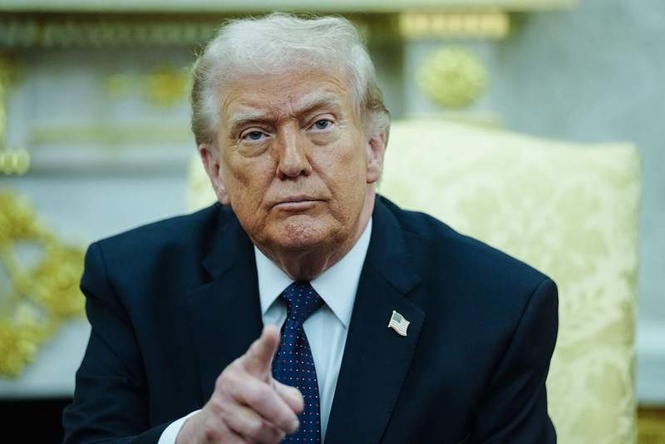
Shortly afterwards, Trump also confirmed the conclusion of an agreement with Iran.
"I hereby fully authorize the toll free opening of the Strait of Hormuz, and, simultaneously herewith, authorize the immediate removal of the United States Naval blockade," Trump wrote on his Truth Social platform.
"Ships of the World, start your engines. Let the oil flow!" the US president added.
Sharif said both sides had committed to an immediate and permanent end to military operations on all fronts, including in Lebanon. The official signing ceremony is to take place in Switzerland on Friday, according to Sharif.
Iranian Deputy Foreign Minister Kazem Gharibabadi also said the text of the framework agreement had been finalized, according to the Tasnim news agency.
No further details on the content of the agreement were initially announced.
The framework agreement marks only an interim step, though an important one, with further key issues in the conflict between the two countries, including the nuclear dispute, to be negotiated in detail during further talks.
Israel and Hezbollah attacks put deal at risk
The deal had once again appeared to be hanging by a thread after renewed exchanges of fire between Israel and the Lebanese Hezbollah militia.
A Hezbollah attack on northern Israel was followed by an Israeli counter-attack on suburbs of the Lebanese capital Beirut on Sunday afternoon. Trump then warned Israel and called on all sides to show restraint.
The strike near Beirut should not have taken place, "particularly on a special day when we are so close to a Peace Deal with Iran," Trump wrote. He had originally held out the prospect that a framework agreement to end the war between the US and Iran could be signed on Sunday, his 80th birthday.
The US and Israel are usually close allies. The two countries had jointly launched the war against Iran on February 28. A ceasefire has formally been in place since April, though there have been repeated attacks by both sides.
Following the Israeli strikes near Beirut, Iran had called into question a possible agreement on a framework deal with the United States.
Iran's Islamic Revolutionary Guard Corps (IRGC) threatened Israel with counter-attacks. The Israeli military said in the late afternoon that it was preparing for the possible bombardment of Israeli territory in the coming hours.
A key condition for Iran in any agreement with the US was an end to military operations on all fronts, including in Lebanon. Tehran had repeatedly stressed that it would not be willing to continue the diplomatic process unless that demand was met.
Framework agreement to pave way for deeper talks
The framework agreement is intended to serve as a starting point for deeper talks between Washington and Tehran.
According to reports, in addition to reopening the Strait of Hormuz, the agreement would extend the fragile and repeatedly broken ceasefire by 60 days and launch negotiations on Iran's nuclear programme.
The US and Israel had repeatedly justified their war against Iran by saying that the arch-enemy of the Jewish state must not be allowed to obtain nuclear weapons.
It remains unclear whether the planned follow-up talks after the framework agreement will lead to an agreement on Iran's disputed nuclear programme.