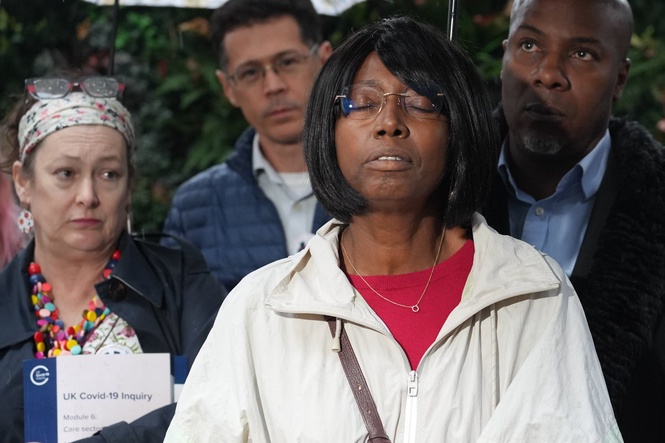
The latest report from the UK Covid-19 inquiry, published yesterday, recounts the emotional and physical strain on those living and working in the care sector during the pandemic. Grieving relatives, unpaid carers, frontline workers and many others gave evidence that was visceral and, at times, harrowing. The inquiry's sixth report lays bare the devastating impact the pandemic had on adult social care. The picture it paints is shocking.
Residents were cut off from those they loved. Visitors were prevented from helping others with the daily essentials: washing, dressing and eating.
Families said final goodbyes over iPad screens or through windows, loved ones separated by a pane of glass.
Careworkers wore bin bags, painters’ overalls and festival ponchos for protection from infection. Many staff were left traumatised and suffered burnout.
That impact was particularly acute for the half a million or so people living in our care homes. The known vulnerability of care home residents meant there was a pressing and obvious need to prevent the deadly and highly infectious virus from entering and spreading like wildfire through their homes. But it did enter and with tragic consequences. Between March 2020 and July 2022, there were more than 43,000 recorded deaths involving Covid-19 in care homes.
The inquiry’s report addresses the claim made at the time that a “protective ring” had been thrown around our care homes “right from the start” of the pandemic, in order to protect those living and working in care. That claim was unfounded. Indeed, quite the opposite was true.
Understanding what went wrong is vital, but the true value of this report – and the UK inquiry overall – is in what happens next.
The inquiry makes a number of recommendations which governments across the UK must implement urgently. Enacting these recommendations will ensure the sector is better equipped to respond to the next pandemic. They should not await the publication of Baroness Casey’s report on wider reform of the adult social care sector in England. The UK’s four governments must overhaul pandemic planning to establish clear responsibilities, robust guidelines for safely isolating care home residents and real-time systems to track deaths across social care.
The Covid-19 pandemic exposed and exacerbated the underlying fragility of the adult social care workforce. There were at least 1.5 million paid care workers and a further 5.8 million unpaid carers during the pandemic – they are the true backbone of our care system. In evidence, care workers repeatedly told us they felt entirely overlooked and undervalued.
Unpaid carers in particular were forced to provide more complex care, for longer hours, with little to no respite. They put their own lives at risk to show compassion to the dying. Many suffered extreme stress and exhaustion, leaving a long-lasting impact on their own physical and mental health. The support made available to them came too late.
The inquiry has recommended that England immediately establish a voluntary care workforce register – mirroring models in Scotland, Wales, and Northern Ireland that proved invaluable during the crisis. This must sit alongside financial support schemes, so care staff can afford to self-isolate without facing economic hardship.
During the pandemic, care workers lacked the skills to ensure highly sensitive discussions about end-of-life care were handled in a thoughtful and compassionate way. Mandatory end-of-life care training must be established.
Last week, inquiry chair, Baroness Hallett, wrote to the prime minister urging him to treat pandemic preparedness as a priority. She says that users and providers of adult social care services deserve better and they deserve better now.
The chair could not have been clearer yesterday: the recommendations contained within the inquiry’s latest report must be acted upon now before the next pandemic strikes.
It is not a question of if another pandemic will hit the UK, but when. The inquiry’s social care report highlights failures that were the direct result of an absence of proper pandemic planning for the adult social care sector. Change is needed. We owe it to those who died, those who cared for them, and to bereaved families, many of whom remain grief-stricken and wracked by a guilt that they do not deserve to carry.
Read MoreThe unforgivable Covid shortcomings that left our care homes defenceless
Changes to the driving licence are a war on young motorists like me
Why I’m right to be seizing empty homes
Harry has chosen to heal the rift in his family – by picking a fight with his family
Shabana Mahmood faces a mutiny on immigration
Andy Burnham’s North Sea gas gamble is greener than you think