Melting glaciers may seem far from Malaysia, but they reflect a wider climate crisis already being felt through floods, heat and extreme weather.
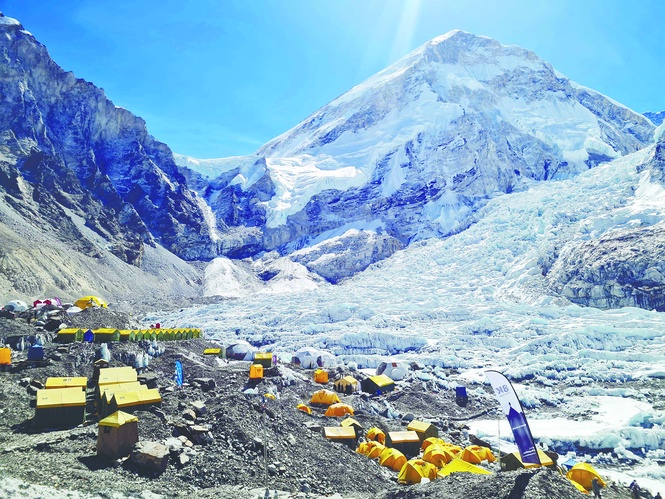
THERE is something almost magical about a glacier. A vast sheet of ice sitting quietly against a backdrop of towering mountains. White peaks stretching into the distance. Blue ice glowing under the sunlight. Rivers flowing from ancient snow.
We look at such pictures and think: Beautiful. We rarely think: Fragile. That is perhaps the problem. We have become so accustomed to admiring nature for its beauty that we forget to respect its power.
A glacier does not disappear overnight in some dramatic Hollywood scene. It melts, retreats and shrinks, slowly enough for us to carry on with our lives but steadily enough to leave behind a message that is becoming harder to ignore.
And glaciers are not alone. Across the world, nature has been giving us reminders in increasingly frightening ways – floods swallowing homes, wildfires devouring forests, landslides burying roads, storms becoming more destructive and heat becoming more difficult to escape.
Nature can be breathtaking but it can also be terrifying. And perhaps the scariest part is that we continue to behave as though these two things have nothing to do with each other.
For Malaysians, glaciers may feel like a world away. We do not wake up worrying about an enormous wall of ice collapsing outside our homes. But we do know floods. We know what it feels like when rain refuses to stop and drains can no longer cope.
We know the anxiety of watching water rise outside our houses, moving cars to higher ground and wondering whether the electricity will be cut.
We know landslides. We know heat. We know what happens when a once-in-a-blue-moon weather event starts feeling less and less unusual.
Climate change can sound like a distant, complicated phrase discussed at international conferences, surrounded by graphs, targets and acronyms. But strip away all the jargon and it becomes remarkably simple.
It is about the world we are leaving behind for our children. That is where this conversation should become personal. Because my generation can complain about the weather, roll our eyes at another flood warning and joke about how Malaysia has gone from “hot” to “very hot”.
Our children do not get to choose the planet they inherit. They will inherit whatever we leave behind.
And no, I am not suggesting that every flood, storm or landslide can simply be blamed on climate change. Nature has always had its extremes. But neither should we use nature as an excuse to avoid looking at the role human activity plays in changing the environment around us.
We cut down forests and then act surprised when hills become unstable. We cover land with concrete and then wonder where the rainwater is supposed to go. We consume, throw away and consume some more while expecting someone else to deal with the consequences.
We want development, and rightly so. We want better homes, roads, jobs and lives. But development without responsibility eventually sends us the bill. And nature has never been particularly good at accepting instalment payments.
Perhaps that is why the disappearing glaciers should matter even to those of us living thousands of kilometres away. They are not merely beautiful landscapes losing their ice. They are part of a much bigger story, one in which the choices we make in one place can have consequences far beyond our own backyards.
We cannot stop a glacier from melting simply by feeling sad about the photographs. We cannot control the weather. We cannot command the sea to stay where it is, tell a river not to overflow or order a mountain not to give way.
But we can control some of what happens before nature reaches that point. We can demand better planning. We can protect forests and green spaces. We can stop treating rivers and drains as convenient dumping grounds.
We can consume more responsibly. We can question development that comes at an unacceptable environmental cost. And, perhaps most importantly, we can stop treating environmental responsibility as someone else’s problem. Because Mother Nature does not care whether we are rich or poor, famous or ordinary, living in a condominium or a kampung. When nature changes, everyone feels it. That is the strange contradiction about the natural world.
The same mountains that make us stop and stare can crumble. The same rivers that look beautiful in photographs can become raging currents. The same rain we desperately wait for during a dry spell can become a disaster when it comes all at once.
Nature gives us beauty without asking for anything in return. But nature also has limits. And perhaps we have been testing those limits for far too long.
So, the next time we see a photograph of a magnificent glacier, let us admire it but let us also pause, look beyond the blue ice and snow-capped peaks. Because sometimes beauty is not merely something to admire. Sometimes it is a warning.
The question is whether we are wise enough to listen before Mother Nature stops whispering and starts shouting.
Hashini Kavishtri Kannan is the news editor at theSun.
Comments: letters@thesundaily.com