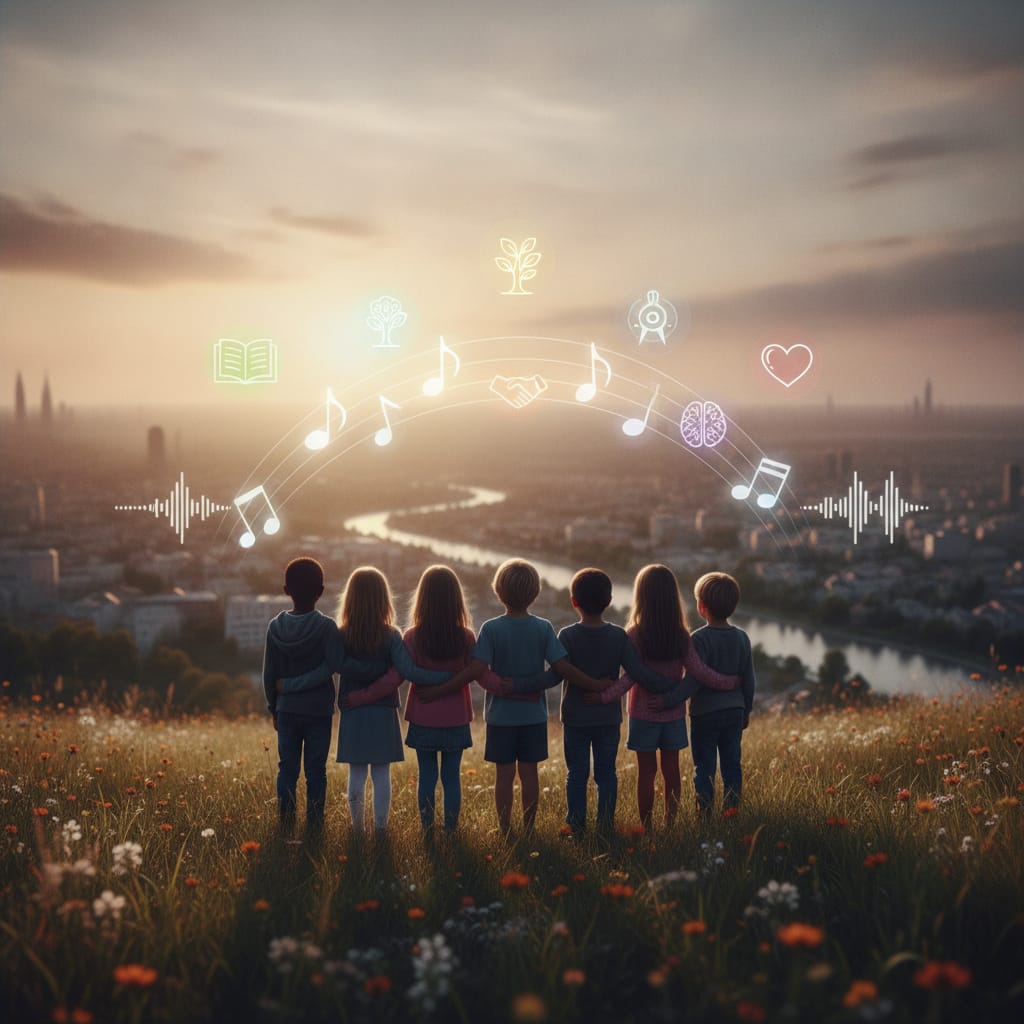
Six Songs, Six Life Lessons and the Values That Shaped Generations
By Dr. Amarjeet Singh @ AJ
WHEN SONGS WERE MORE THAN MUSIC
“For He's a Jolly Good Fellow!”
How many of us remember singing those words during our school days?
We sang for friends, teachers, sporting champions and classmates celebrating achievements. There were no smartphones recording every moment, no social media likes and no expensive celebrations.
Just students standing together, clapping, laughing and celebrating someone else's happiness.
For those of us who attended St. Paul's Institution, Seremban, and other La Salle schools, education extended beyond classrooms, examinations and textbooks.
We had our school anthem, alma mater, school colours, traditions, discipline, sports and, above all, brotherhood.
Our teachers did more than deliver lessons. They helped shape our character, teaching responsibility, humility, courage, loyalty and respect.
We learned to win with dignity, lose gracefully, appreciate others and stand together regardless of race, religion or family background.
Today, as technology transforms education and society, I wonder whether we are losing something precious.
Are we developing educated individuals or merely producing examination results?
Let us revisit six familiar songs from different school, cultural and community traditions. Not all were official Lasallian songs, but their messages reflect values many of us associate with our upbringing.
1. FOR HE'S A JOLLY GOOD FELLOW — CELEBRATING OTHERS
This familiar celebratory song predates the Second World War but remained popular across generations, including during wartime and subsequent school celebrations.
Its message was wonderfully simple.
Someone had achieved something meaningful, and everyone celebrated.
Perhaps a teacher was retiring. A schoolmate had won a competition. A sports team had returned victorious. Someone was celebrating a birthday.
The achievement belonged to one person, but the happiness belonged to everyone.
We were learning to appreciate another person's success without jealousy.
Compare that with today's culture of constant comparison.
Someone receives a promotion, and others question whether it was deserved.
Someone purchases a new car, and others immediately compare its value.
Someone succeeds, and instead of congratulating them, people search for weaknesses.
When did appreciation become so difficult?
When did another person's happiness become a threat to our self-worth?
That simple song taught an important lesson.
Another person's success does not diminish our own value.
Imagine teaching every child to celebrate classmates who improve academically, demonstrate kindness, overcome difficulties or help others.
Not merely those who finish first.
Would that not create a healthier generation?
2. AULD LANG SYNE — NEVER FORGET YOUR ROOTS
Auld Lang Syne, associated with Scottish poet Robert Burns, reminds us of old friendships, shared experiences and the passage of time.
For former schoolmates, its meaning becomes increasingly powerful with age.
Remember the friend who shared his lunch?
The classmate who helped you understand mathematics?
The teacher who refused to give up on you?
The teammate who stood beside you after losing an important match?
At school, some children came from wealthy families while others had very little.
Some arrived in cars. Others walked, cycled or travelled by bus.
Yet we wore the same school colours and represented the same institution.
Decades later, something remarkable happens during reunions.
Doctors, businessmen, engineers, teachers, retirees and former athletes suddenly become schoolboys again.
We remember nicknames, mischievous incidents, strict teachers and unforgettable sporting moments.
Titles and social status become secondary.
Friendship takes centre stage.
Today, children may have hundreds of online connections. But how many relationships will survive thirty or forty years?
Technology makes communication easier, but meaningful friendship still requires loyalty, effort and sincerity.
A thousand online followers cannot automatically replace one dependable friend.
The lesson of Auld Lang Syne is gratitude.
Never forget those who walked beside you before you became successful.
3. YOU'LL NEVER WALK ALONE — BROTHERHOOD DURING ADVERSITY
Originally written for the 1945 musical Carousel, You'll Never Walk Alone later became synonymous with Liverpool Football Club.
Its message extends far beyond football.
It represents hope, courage, resilience and standing together through difficult times.
This is what genuine brotherhood means.
Not merely celebrating together when everything is going well.
But remaining present when someone struggles.
When a friend loses employment.
When a former classmate becomes seriously ill.
When a family experiences tragedy.
When someone faces financial hardship.
Where are the friends then?
Where is the brotherhood?
Many alumni associations organise impressive dinners and reunions.
But brotherhood should extend beyond photographs, speeches and annual gatherings.
Successful alumni can mentor younger graduates.
Professionals can provide career guidance.
Business owners can create opportunities.
Former students can support struggling classmates and their families.
Brotherhood is not measured by how loudly we celebrate together, but by how firmly we stand together during adversity.
Children must understand that life will involve disappointment, rejection and failure.
Resilience matters.
But so does knowing when to ask for help.
Strength is not always about standing alone.
Sometimes the greatest courage is admitting vulnerability.
And sometimes the greatest friendship is helping another person stand again.
4. WE SHALL OVERCOME — COURAGE AND COLLECTIVE DETERMINATION
We Shall Overcome became internationally recognised through labour movements and the American civil rights movement.
It represents hope, determination and the belief that collective effort can overcome injustice and adversity.
What a powerful message for young people.
Failing an examination does not mean failing in life.
Losing a competition does not mean lacking ability.
Coming from a disadvantaged background does not determine one's future.
And being different should never justify exclusion.
School sports taught many of us these lessons.
We trained harder after defeat.
We encouraged weaker teammates.
We learned that discipline, preparation and perseverance could improve performance.
But courage was not simply about winning.
Sometimes it meant admitting mistakes.
Sometimes it meant accepting criticism.
Sometimes it meant defending a classmate facing unfair treatment.
Today's children face academic pressure, cyberbullying, social comparison and uncertainty about their futures.
They need more than motivational slogans.
They need experiences that develop confidence, moral courage and perseverance.
Education should teach children not merely how to succeed, but how to recover when things go wrong.
And when difficulties affect an entire community, they should understand the strength of collective action.
We overcome more when we refuse to abandon one another.
5. HE'S GOT THE WHOLE WORLD IN HIS HANDS — FAITH AND HUMAN DIGNITY
This traditional African American spiritual carries a message of faith, reassurance and belonging.
For generations, faith-based schools used music to encourage reflection, gratitude, compassion and responsibility.
Within the Lasallian educational tradition, service and concern for others are important principles.
Yet these broader human values can be appreciated across religious boundaries.
Malaysia is a multicultural nation.
Our classrooms brought together children from different races, religions and economic backgrounds.
We shared meals, played sports, visited one another's homes and celebrated different cultural occasions.
We discovered that friendship did not require everyone to worship, speak or live identically.
Respect does not require abandoning our beliefs. It requires recognising the dignity of others.
Today, children can access information about almost every culture and religion instantly.
But information alone does not produce understanding.
Understanding requires interaction, listening and humility.
A school should teach that wealth, race, religion and academic achievement do not determine a person's human worth.
True education should help children become confident without arrogance, faithful without hostility and successful without losing compassion.
6. WHEN THE SAINTS GO MARCHING IN — THE JOY OF BELONGING
When the Saints Go Marching In has roots in African American gospel traditions and became internationally popular through jazz, particularly in New Orleans.
Its joyful rhythm encourages communal participation.
And that reminds us of something important.
Not every school experience requires an examination.
Not every lesson needs a certificate.
Sometimes children simply need to sing, laugh, participate and enjoy being together.
Remember school sports days?
House competitions?
Marching practices?
School concerts?
The excitement of representing your school and hearing classmates cheering from the sidelines?
These experiences built confidence, teamwork and identity.
A student may forget an examination answer after forty years but still remember a school anthem.
Why?
Because meaningful experiences connect knowledge with emotion.
Schools should not merely fill young minds with information. They should fill young lives with experiences worth remembering.
Music, sports, drama and community activities help children discover talents that examinations may never reveal.
Every child deserves opportunities to belong and contribute.
HAVE WE REPLACED CHARACTER WITH CERTIFICATES?
Have today's children lost these values?
I do not believe young people are inherently less respectful or compassionate than previous generations.
Many demonstrate remarkable creativity, social awareness and concern for others.
But their environment has changed.
We increasingly measure educational success through grades, rankings, qualifications and career prospects.
Parents worry about examination results.
Schools face performance pressures.
Students compete for recognition.
Meanwhile, character development can become something discussed during assemblies rather than consistently practised.
We cannot simply blame technology.
Technology is a tool.
The deeper question concerns adult behaviour.
Do we praise kindness as enthusiastically as academic achievement?
Do we teach children to apologise?
Do we encourage them to help struggling classmates?
Do we demonstrate respect when disagreeing with others?
If parents insult teachers, how can children learn respect?
If managers humiliate employees, how can young people learn compassion?
If society celebrates wealth more than integrity, why should children believe character matters?
Perhaps our children have not lost these values. Perhaps adults have become less consistent in teaching and demonstrating them.
THE LASALLIAN LEGACY MUST LIVE ON
St. John Baptist de La Salle's educational vision emphasised community, service and education, particularly for those facing disadvantage.
For generations of Malaysian students, La Salle schools became places where friendships crossed social and cultural boundaries.
At St. Paul's Institution, Seremban, the motto Virtute et Labore — virtue and labour — reminds us that achievement should be accompanied by character and effort.
But traditions cannot survive through nostalgia alone.
Schools must make them meaningful.
Alumni should return to mentor students.
Teachers should be empowered to develop character alongside academic ability.
Parents should recognise that education involves more than examinations.
And school communities should encourage singing, sportsmanship, service, teamwork and intergenerational friendships.
An alma mater should be more than a song remembered during reunions.
It should represent values practised throughout life.
SIX SONGS, SIX LESSONS FOR LIFE
These six songs offer lessons worth passing to every generation.
- For He's a Jolly Good Fellow: Celebrate others without jealousy.
- Auld Lang Syne: Remember friendships and practise gratitude.
- You'll Never Walk Alone: Stand beside people during hardship.
- We Shall Overcome: Develop courage, hope and perseverance.
- He's Got the Whole World in His Hands: Practise faith, humility and respect.
- When the Saints Go Marching In: Celebrate community and the joy of belonging.
Six songs. Six values.
Lessons no examination certificate can fully measure.
BEFORE THE LAST SCHOOL BELL RINGS
One day, every student will leave the school gates for the final time.
The classrooms will belong to someone else.
Teachers will retire.
Uniforms will be put away.
Textbooks will gather dust.
But friendships, memories and values can remain for decades.
Some of us are now parents or grandparents.
Some have become professionals, business leaders, coaches and community servants.
Some have experienced extraordinary success.
Others have faced painful struggles.
Yet when old schoolmates meet, we can still remember standing shoulder to shoulder, singing together.
Perhaps that was among the greatest gifts our schools gave us.
Not simply knowledge, but belonging.
Not merely competition, but appreciation.
Not only ambition, but responsibility.
And not just education, but character.
We sang together. We stood together. We grew together.
The question is whether we are prepared to give the next generation the same opportunity.
Because children do not automatically inherit traditions.
They inherit what adults choose to teach, practise and preserve.
We may leave our schools, but we must never allow the values of our schools to leave us.
And perhaps, forty years from now, our children will stand together at a reunion, remember their school days and sing with genuine affection.
Not because someone instructed them to.
But because the brotherhood still lives within them.
Dr. Amarjeet Singh @ AJ
Reflections on Education, Brotherhood, Character and the Lasallian Legacy.
“A school can produce thousands of graduates. Its greatest achievement is producing generations of decent human beings.”
Amarjeet Singh Sran (amarjeetsinghsran5@gmail.com) is a content creator under the Newswav Creator programme, where you get to express yourself, be a citizen journalist, and at the same time monetize your content & reach millions of users on Newswav. Log in to creator.newswav.com and become a Newswav Creator now!
The User Content (as defined on Newswav Terms of Use) above including the views expressed and media (pictures, videos, citations etc) were submitted & posted by the author. Newswav is solely an aggregation platform that hosts the User Content. If you have any questions about the content, copyright or other issues of the work, please contact creator@newswav.com.