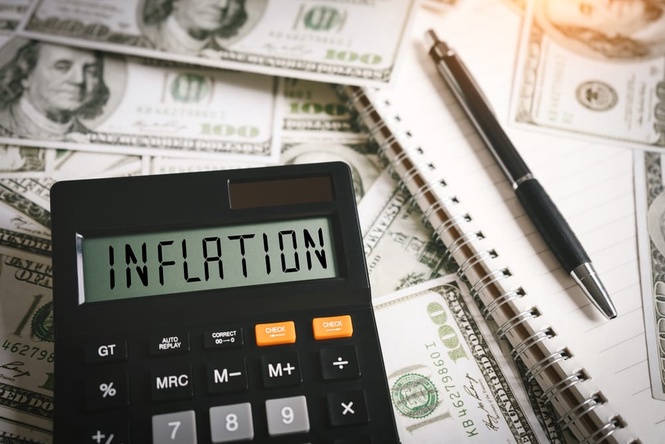
A $100,000 savings balance can look reassuring for years. The number stays right there on the bank statement, looking respectable and untouched. Unfortunately, the things that money buys have other plans.
At an average annual inflation rate of 3%, $100,000 would lose roughly 45% of its purchasing power over 20 years. The account might still show six figures, but those dollars would cover considerably less than they do today. That creates an awkward financial situation: someone can save responsibly, avoid unnecessary spending, and still lose ground without withdrawing a penny.
The real trouble isn’t that inflation suddenly makes $100,000 disappear. It’s that the price of maintaining the same lifestyle keeps moving while the savings balance stands still.
The Number That Changes Everything Is $180,600
Consider what happens if prices rise by 3% every year while the $100,000 stays in a savings account without earning interest. The first year might not look especially dramatic. Something that costs $100 today would cost $103. By the fifth year, however, that same purchase would cost about $116.
Keep the pattern going for two decades, and the cumulative increase becomes much harder to shrug off. A collection of goods and services that costs $100,000 today would cost approximately $180,600 in 20 years. The original savings balance hasn’t changed, but maintaining the same lifestyle now requires considerably more money.
This is the sneaky part of compound inflation. Each year’s price increase builds on the higher prices from previous years. Inflation doesn’t simply add another $3,000 to the original cost every year. The percentage applies to an increasingly expensive collection of goods and services.
The mathematics works in reverse, too. After 20 years of steady 3% inflation, today’s $100,000 would have purchasing power equivalent to approximately $55,400. Someone could withdraw that entire balance and still have a substantial amount of money. Unfortunately, that money wouldn’t accomplish nearly as much.
Why a Comfortable Savings Balance Can Become Misleading
Bank statements encourage people to focus on the dollar amount. A balance of $100,000 feels like a substantial financial cushion, particularly when someone has spent years building it. There’s something satisfying about watching the number grow, or at least stay put. But a savings balance and purchasing power tell different stories. The first measures how many dollars someone owns. The second measures what those dollars can actually accomplish.
Think about a household that keeps $100,000 in cash for future living expenses. Twenty years later, that household might still have $100,000 available. Yet groceries, utilities, insurance, home repairs, and other everyday expenses could consume much more of it.
This doesn’t mean cash savings have no purpose. Money for emergencies, upcoming purchases, and unexpected bills needs accessibility. Nobody wants to sell investments during an emergency simply because the checking account looks thin.
The problem arises when someone treats a large cash balance as a complete long-term financial strategy. A pile of money can look impressive while quietly losing its ability to support future spending.
Inflation Doesn’t Raise Every Price by 3%
There’s another wrinkle that makes the calculation more personal. The 3% figure represents a hypothetical average annual inflation rate, not a promise that every household expense will increase at exactly that pace.
The Bureau of Labor Statistics uses the Consumer Price Index (CPI) to track average price changes across a representative basket of consumer goods and services. That basket includes categories such as housing, food, transportation, and medical care.
Individual households have different spending patterns. A homeowner with a fixed-rate mortgage might experience rising grocery and insurance bills without seeing the same increase in monthly principal and interest payments. A renter could face a very different housing-cost experience.
Age and lifestyle also influence the results. Someone who spends heavily on health care might experience a different personal cost increase than someone whose largest expenses involve transportation and entertainment.
That makes the $55,400 figure a useful illustration, not a prediction of anyone’s exact financial future. Actual inflation will fluctuate, and personal expenses won’t necessarily follow the national average.
The Savings Account Needs a Job, Too
Inflation creates an uncomfortable comparison between money that sits still and money that earns a return. A savings account paying interest can help offset the erosion, although the advertised interest rate doesn’t tell the whole story.
Suppose a savings account earns 2% annually while inflation averages 3%. The balance grows, but its purchasing power still declines. After accounting for inflation, the approximate real return is negative 1% before taxes.
Taxes can make the difference even less favorable because interest earnings generally count as taxable income. The account holder might see a higher balance while losing some spending power. A useful way to evaluate savings is to compare the after-tax return with inflation. That doesn’t mean everyone should chase higher returns by taking unnecessary risks. Cash serves a different purpose from retirement investments, and liquidity has genuine value.
The better approach depends on when someone expects to use the money. Funds needed soon have different priorities from money intended to support retirement decades later.
The Difference Between Growing Money and Preserving Its Value
For someone planning decades ahead, inflation changes the way financial progress should look. Saving $100,000 is an accomplishment. Keeping that money useful over the next 20 years requires another layer of planning.
Investments offer one possible way to address the problem. Stocks, bonds, and other assets can generate returns that help offset rising prices. However, none guarantees a particular outcome, and investments carry risks that ordinary savings accounts do not. The distinction between nominal and real returns helps clarify the situation. A nominal return measures how much an investment grows in dollar terms. A real return subtracts inflation to show how much purchasing power the investment actually gained.
For example, an investment earning 6% annually while inflation averages 3% produces an approximate real return of 3% before taxes and fees. That’s considerably more useful information than simply celebrating the investment’s growth.
People approaching retirement also need to consider the timing of withdrawals. Money that supports living expenses over several decades faces a different challenge from money someone plans to spend next year. A retirement budget that ignores rising prices can look perfectly reasonable on paper and become increasingly uncomfortable in practice.
Your Future $100,000 Needs More Than a Familiar Number
A 3% inflation rate doesn’t sound particularly frightening. That’s precisely why the long-term calculation deserves a place in financial planning conversations. Small annual increases can produce substantial changes when they compound for decades.
The hypothetical $100,000 balance illustrates an uncomfortable reality. Preserving the number isn’t the same as preserving the lifestyle that money can support. Anyone saving for retirement, building an emergency fund, or setting aside money for future expenses benefits from recognizing the difference.
Inflation won’t follow a perfectly predictable path, and nobody can promise what prices will do over the next 20 years. Still, planning around the possibility of rising costs makes more sense than assuming today’s purchasing power will stick around indefinitely.
Would you rather keep $100,000 safely in cash or pursue investments that could help it outpace inflation? Where would you draw the line between protecting your money and growing it?
You May Also Like…
5 Bills That Quietly Got More Expensive This Year While Everyone Was Watching Inflation
Could Your Social Security Plans Collapse If The Economy Shifts Again This Winter?
The “Couch Economy” Is Changing How Americans Spend Their Money
FTC Freezes Civil Penalty Amounts for 2026 After Government Shutdown Disrupted Inflation Data
Does Inflation Hurt First-Time Investors?
The post What a 3% Inflation Rate Could Do to $100,000 Over 20 Years appeared first on The Free Financial Advisor.