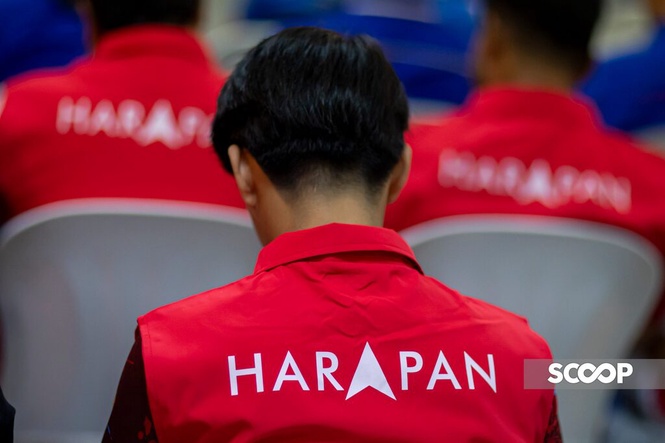
KUALA LUMPUR — After electoral defeats in four state elections in a row, Pakatan Harapan (PH) must confront its own shortcomings beyond machinery weaknesses and blaming racial and religious rhetoric by its opponents, analysts said
Its setbacks in state elections for Sabah, Johor, Negeri Sembilan, and most recently Melaka, show that the government coalition has yet to resolve core internal issues, such as an increasingly weak political identity and poor communication to the public.
Weak political identity
Political analyst Dr G Manimaran said PH’s identity crisis is in part, due to its inability to present a united front with Umno, its unity government partner, resulting in Umno and PH parties openly criticising one another.
“This is supposed to be the best opportunity for all the parties to say that we are a unity government, we can implement a manifesto,” he told Scoop.
Universiti Malaya’s Datuk Prof Dr Awang Azman Awang Pawi said where PH once had a clear and consistent reformist identity in the past, this is no longer as strong as before due to its failure to keep all of its reform promises after coming to power.
“Perhaps PH's most significant mistake is assuming that its historical reformist credentials remain sufficient to sustain public loyalty. Its cooperation with former political rivals and inconsistent reform messaging have weakened the clarity of its political identity.
“The deeper problem is not simply that PH's opponents have become stronger, but that PH itself has become less clearly differentiated, less organisationally effective and less persuasive to undecided voters,’ said Awang Azman.
Muddled messaging on reforms
While PH figures in the unity government tout the administration’s achievements during election campaigns as reasons to support its candidates, the reality is more mixed for the electorate, the analysts also said.
Universiti Teknologi Malaysia political analyst Dr Mazlan Ali said that some reforms, while perhaps well-intended from the economic or federal revenue standpoint, had caused unhappiness in some segments.
“This includes the Chinese community's discontent over the e-invoicing system and limited opportunities for small and medium-sized enterprises (SMEs), while other segments of the electorate remain frustrated with the slow pace of the administration's reform agenda,” Mazlan said.
Awang Azman said PH was also overlooking voters’ everyday concerns by placing too much emphasis on national achievements.
“PH must understand that voters do not necessarily reject the Madani agenda; they may simply remain unconvinced that its promises have sufficiently transformed their lives.”
He said investments and national growth figures meant little to households struggling with living costs, stagnant incomes and employment uncertainty.
Awang Azman added that the coalition had also failed to translate federal incumbency into electoral confidence at state level, where voters assessed local leadership, development and stability.
Additionally, despite reforms to the economy and fuel subsidies, PH has not performed as well on education issues, and on concerns felt by minority communities, added Manimaran.
He cited as examples, the Education Ministry’s on-then-off policy proposal to reduce the number of hours for mother tongue classes from 12 to 10, temple issues, and small businesses.
Navigating Umno and Malay support
The analysts agreed that PH needs to address Malay concerns without alienating its multiracial support base.
For Mazlan, this includes urging DAP to adopt a more moderate approach on issues that are sensitive for Malays. He urged PH to “recalibrate its approach” by first of all, better understanding Malay sentiments.
“Conduct more targeted research into Malay sentiments to effectively counter the 'Malay-Muslim' narrative championed by UMNO and PAS,” Mazlan said.
Similarly, political analyst Dr Azmi Hassan from Akademi Nusantara pointed out PH’s missteps in openly blaming its unity government partner, Umno, over Tabung Haji mismanagement issues, as well as open displeasure over former prime minister Datuk Seri Najib Razak’s house arrest.
“We know Pakatan Harapan is not happy, but they don't have to show it blatantly, as if they are not happy with the Yang di-Pertuan Agong's decision,” Azmi said.
Civil liberties and unanswered criticism
Assistant Professor of political science at the International Islamic University Malaysia, Dr Lau Zhe Wei said civil society had concerns over PH’s handling of civil rights such as the freedom of expression, as seen in the many cases of individuals being questioned by police over their social media posts.
Lau also said some segments of society still feel that the government has not answered satisfactorily on the “corporate mafia” allegations involving the Malaysian Anti-Corruption Commission.
“These issues have undermined confidence among voters who expected stronger institutional reforms from PH,” he said.
New strategy before GE16
Short of hoping that disagreements on seat allocations between BN and PN could give PH an advantage, there are things PH can still work on in the remainder of the unity government’s term, which automatically expires in December 2027, if a snap poll isn’t called before then.
Manimaran said PKR, which is PH’s lynchpin party, must rejuvenate itself with new faces in the leadership.
“Anwar can still be party's supreme leader but PH needs a new poster boy for the upcoming elections,” he said.
Awang Azman said PH needed to rebuild its grassroots networks, develop credible local leaders and pursue measurable reforms while addressing Malay-Muslim concerns without alienating its multiracial support base.
He said PH could no longer expect voters to support it based on its past reformist reputation.
“The electorate is increasingly judging the coalition not by what it once promised to change, but by what it has actually changed while exercising power." - November 16, 2026
The post What’s ailing Pakatan? Analysts look at problem areas after string of electoral defeats appeared first on Scoop.