LONG before I knew what linguistics was, I had already fallen in love with Regine Velasquez-Alcasid. I was in my second year of high school when her voice captured my imagination. I was astonished by its power, the heights she could reach, and the beauty of notes she seemed able to hold forever. I had no language for that astonishment. I simply wanted to listen again.
And I have been listening ever since. Years later, I became a linguist. Regine’s songs, meanwhile, followed me into my professional life. They have played through countless evenings of reading, researching and writing academic papers, through the frustration of unfinished manuscripts and the relief of finally completing them. The voice I loved as a teenager still keeps the scholar I have become company.
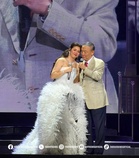
Watching “Finale,” her farewell to major solo concerts, made me realize how much of my life had unfolded with her music nearby. I went to celebrate her artistry and found myself remembering my own journey. Moved by that experience, I want to use this column to reflect on her music through the lens of linguistics — not to explain away its magic, but to understand more deeply how a voice can mean so much.
My favorite Regine song has always been “Dadalhin.” I love songs that tell stories, and this one takes us from the promise of love to the devastation of its loss. A future once imagined together is carried away, like a dream surrendered to the wind.
What fascinates me is how much that small story asks listeners to do. In narrative discourse, words do not merely report events; they invite us to build a world, anticipate what might happen, and revise those expectations when the story turns. “Dadalhin” gives us a future to imagine before taking it away. The wind is more than a pretty image. It gives an otherwise invisible loss a direction and movement: something precious has gone somewhere we cannot follow.
Then Regine sings those words, and the story becomes more than what is written on the page. Her astonishing vocal range remains one of the greatest reasons I admire her. I love the exhilarating ascent toward her high notes, the strength of her sustained phrases, and her control as she moves from intimacy to grandeur. I still feel the same wonder I felt in high school. Those extraordinary notes are not incidental to the pleasure of listening. They are central to it.
Linguistics offers a useful insight here. In ordinary conversation, the words we choose are only part of what we communicate. Prosody — our pitch, rhythm, emphasis and pauses — can make the same sentence sound like a promise, a plea or a farewell. Singing operates differently from speech, but it, too, lets the voice shape our understanding of words. When Regine lengthens a syllable, intensifies a phrase or lets her voice soften, she can make a familiar line feel newly urgent or tender. Her breathtaking range gives her an extraordinary palette for doing this. Vocal virtuosity and storytelling become inseparable.
There is another subtle relationship between language and song. In speech, we generally expect words to move forward and make way for the next words. A singer can hold a single vowel long after its lexical meaning is already clear. For those few seconds, we are no longer waiting to learn what the word means. We are hearing what the voice can make us feel through it. Regine’s sustained notes are thrilling partly because they turn a fleeting syllable into an event of its own.
Yet the meaning of a performance does not belong to the singer alone. Listeners bring their histories to it. The “Dadalhin” I hear today is not quite the song I heard when I was younger. Its lyrics and melody have remained the same, but I have traveled, worked, loved, celebrated achievements and lived through disappointments. The song has not changed; the person interpreting it has. That is one of the most remarkable things about meaning: it is made again whenever words meet a new moment in someone’s life.
At “Finale,” this became especially clear. A concert communicates through more than sound. The singer’s presence, the audience’s responses and the significance of the occasion all shape what familiar songs mean. Hearing Regine’s magnificent voice in person was thrilling. Hearing it at a concert marking the close of an era in her performing life made the experience something else as well: a meeting of the present with decades of remembered listening.
Her voice itself has acquired a meaning beyond any particular song. We can recognize a person by a voice, but recognition is only the beginning. A familiar accent may bring us home in an instant; a particular way of speaking may recall someone we miss. Regine’s unmistakable sound similarly carries associations built over years of performances, recordings and shared admiration. For many Filipinos, it evokes an era of popular music and an ideal of vocal excellence. For each listener, it can also open a more private archive of memories.
Mine contains the high school student awestruck by those seemingly impossible notes, the younger scholar imagining a future, and the professor writing late at night with Regine singing in the background. Her voice connects these versions of myself. What I can now examine through linguistics, I had already experienced long before I knew the discipline existed: sounds become meaningful not only because of what they express, but because of the lives in which they are heard. Perhaps that is why “Finale” moved me so deeply. I was celebrating Regine’s extraordinary gift, but I was also recognizing how faithfully her music had accompanied my own becoming.
Thank you, my Songbird, for the magnificent high notes that still leave me breathless, for “Dadalhin” and the stories it has allowed me to inhabit, and for a voice that has kept me company from adolescence to this very moment. A final curtain may fall on the grand solo concert stage. But a voice that has become part of how we remember our lives does not fall silent. We hear it again, and somewhere within the song, we hear ourselves.
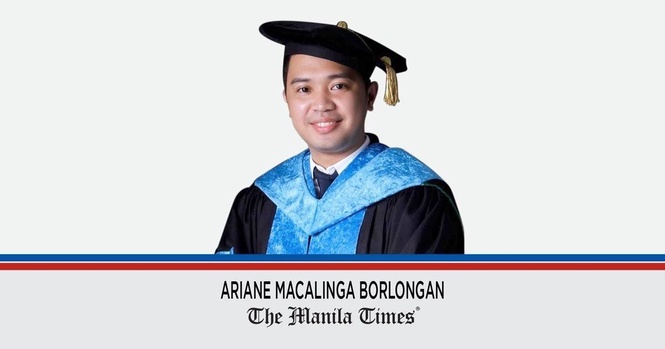
Ariane Macalinga Borlongan is a public intellectual, language scholar and migrant advocate. He is one of the leading researchers on English in the Philippines and one of the pioneers of migration linguistics. He is the youngest to earn a doctorate in linguistics, at age 23, from De La Salle University, and has had several teaching and research positions in Germany, Japan, Malaysia, the Philippines, Poland and Singapore. He is currently associate professor of sociolinguistics at the Tokyo University of Foreign Studies.