

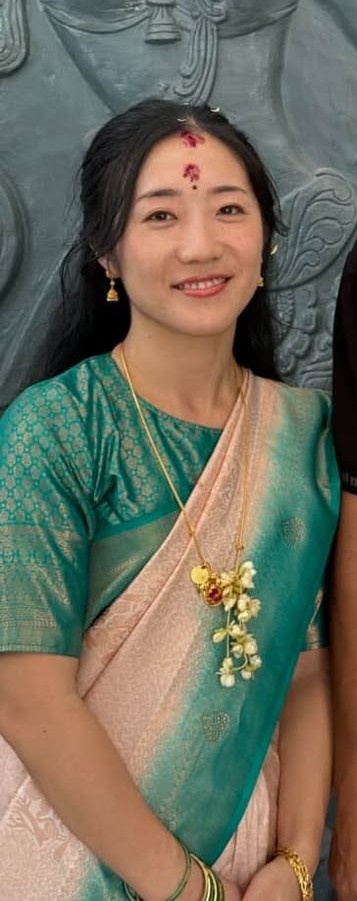
Holding up a photograph of herself dressed in traditional Indian attire, Rie Sakai, 35, looks back on those early days.
“I was scolded a little for holding the coconut the wrong way,” she says with a smile.
The photo was taken at her wedding ceremony in Perak, at the family home of her husband, an Indian-Malaysian.
Now in her seventh year living in Malaysia, Rie first arrived before the pandemic as a corporate expatriate dispatched by a Japanese semiconductor-related company.
In migration research, the distinction between ’expatriate’ and ‘migrant’ is not always clear-cut. Expatriates are often associated with temporary overseas assignments and an expectation of return, while migration is more broadly associated with longer-term movement and settlement.
“Working overseas had always been my dream,” she recalls.
Originally from Shiga Prefecture, Rie developed an interest in life abroad after participating in an exchange program with a sister school in China during junior high school.
She later enrolled in a university specializing in foreign studies, majoring in Chinese language.
She also joined a student organization that provided tour guidance to foreign visitors, steadily building connections across nationalities and cultures.
After graduation, she joined a local company in her hometown.
She was primarily engaged in production management and, in addition to that role, was occasionally assigned to handle business and reception duties for the company’s overseas offices in China and Malaysia.
However, opportunities to work directly with those overseas branches were limited, leaving her frustrated.
“That’s when I began to strongly aspire to become an expatriate,” she said.
Malaysia remains a major destination for Japanese professionals. As of October 2024, 8,739 Japanese expatriates were recorded in the country, making Japan the fourth-largest nationality among the major expatriate groups cited by the government.
Once people cross borders and begin building lives in a new place, new encounters inevitably follow.
Rie married a Malaysian colleague of Indian descent and is now the mother of two children.
Malaysia was initially a temporary step in her career, with the word expatriate carrying a tone of temporality, even a sense of privilege.
But when one builds a family and begins to think about a child’s future, the stay can no longer be described simply as a fixed-term assignment.
Having moved beyond the role of ‘corporate expatriate,’ Rie now lives as a Japanese wife, a Japanese mother, and an individual rooted in everyday life in Malaysia.
A System Designed Around Men

Overseas assignments can open new career paths, but women remain underrepresented among Japanese corporate expatriates. Photo: Pixels
Rie says the road to becoming an expatriate was not straightforward.
At her former company in Japan, traditional hierarchies and seniority systems remained strong, and opportunities for overseas assignments were more commonly given to men.
Malaysia hosts more than 1,600 Japanese-affiliated companies, according to JETRO.
More than 20,000 Japanese nationals reside in Malaysia, and around 174,000 live across ASEAN member states.
Private sector surveys indicate that company-dispatched expatriates remain predominantly male.
According to a survey of 221 Japanese affiliated companies, only about 19% reported dispatching women as expatriates.
Even at major general trading companies, the proportion of female expatriates stood at about 9% as of April 2025.
Although the figure has been gradually increasing, overseas postings remain largely male-centered.
Research in international human resource management suggests that the difficulty women face in being selected for overseas assignments is not rooted in differences in ability, but rather in preconceived notions about women’s adaptability to foreign environments and assumptions about family responsibilities.
Despite the growing presence of Japanese families abroad, corporate expatriate systems remain largely structured around male breadwinners.
“Hearing about my male colleagues being sent abroad made me want to gain that experience myself,” Rie said.
In her sixth year at the company, she even considered changing jobs to pursue an overseas career.
When her company announced an opening for a Malaysia posting, she volunteered and secured a position in production management.
Yet even abroad, corporate culture felt familiar.
“The president was Japanese, and I was the only woman among older Japanese male colleagues. I constantly felt pressure,” she recalls.
From Expatriate to Japanese Wife
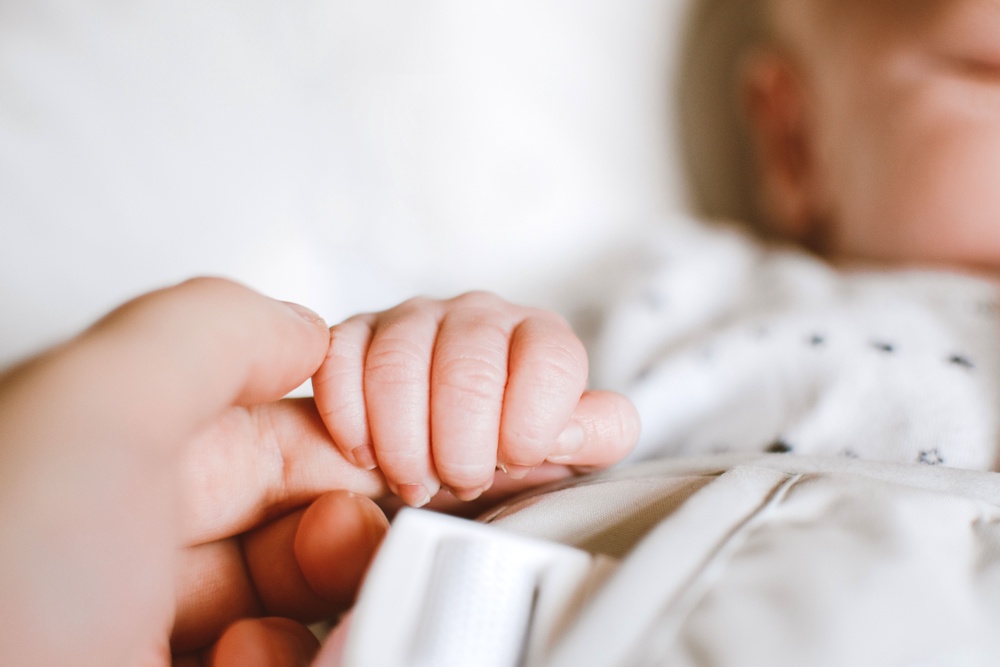
Overseas assignments can open new career paths, but women remain underrepresented among Japanese corporate expatriates. Photo: Pixels
The turning point came with pregnancy.
Although she once considered returning to work after maternity leave, her employment ended when the leave period expired.
“If I had been a male expatriate who married a local woman, I probably would not have had to quit.
“I could have continued working as an expatriate,” she said.
Her dream of building an international career paused at the intersection of gender expectations and motherhood.
Her visa status also changed to a spouse visa, requiring additional employment authorization.
Securing work would now depend not only on her qualifications but also on institutional support.
“Right now, my children are small, so I want to focus on raising them. But continuing my career would also benefit them in the long run. That’s the difficult part, ” she reflected.
A policy report by the Japanese firm Novita found that nearly 70% of expatriate spouses leave their jobs when their partner is posted overseas.
Despite the rise of dual-income households in Japan, expatriate systems often assume that one partner will interrupt their career.
Rie was not the accompanying spouse, she was the expatriate herself.
Yet pregnancy and visa changes ultimately disrupted her professional trajectory in similar ways.
Cultural Walls and Isolation

Cooking with her mother-in-law became one way for Rie to connect across language and cultural differences. Photo: Pixels
After the birth of her first child, Rie says she struggled emotionally for more than six months.
“My in-laws value traditional customs deeply. I experienced culture shock many times,” she recalls.
At the same time, she found those customs fascinating and expressed gratitude for the care her in-laws showed toward her and her children.
Conversations flowed in her husband’s native language. As the only Japanese person in the room, she often felt isolated.
Yet she also tried to carve out small ways to connect.
“I sometimes help my mother-in-law in the kitchen.
“Cooking together became our way of communicating. It was actually enjoyable, and I discovered many new things,” she added.
Still, uncertainty lingered beneath the surface.
Through her student years and experience as an expatriate, Rie had interacted with people from diverse backgrounds.
Yet in her married life, she encountered many moments of cultural difference.
She came to realize that true understanding does not come from exposure alone, but from living together, sharing daily life, where people can begin to truly connect.
It was a realization that reshaped how she understood life across cultures.
Finding a Place of Her Own

Through Instagram, Rie connected with others navigating similar experiences across cultures. Photo: Migrant TImes
Instead of withdrawing, Rie began sharing aspects of Indian-Malaysian culture on Instagram.
“I did not know many Japanese women married to Indian-Malaysian men. I wanted to connect with others in similar situations,” Rie said.
Japan’s Vital Statistics for 2024, released by the Ministry of Health, Labour and Welfare, show that 18,475 marriages registered in Japan involved one foreign national spouse, accounting for about 3.9% of all marriages.
“Now I receive messages from people in Japan and overseas who are in similar positions,” she said.
Those connections helped ease her sense of isolation.
A Mother’s Decision
As her children grow up in Malaysia, Rie hopes to keep their future choices open. Photo: Migrant Times
Her children, now five and two, are expected to attend local schools.
They are exposed daily to English, Japanese, Bahasa, Chinese, and Indian languages.
“I want them to be able to live anywhere in the world. Supporting them is my priority now, ” Rie said.
Eventually, her children may face decisions about nationality.
In Japan, individuals with multiple nationalities must choose one nationality by age 22.
According to media reports citing government estimates, approximately 890,000 people in Japan may fall under the nationality selection framework, though the government does not fully track compliance.
Such institutional ambiguity can shape long-term family planning.
“If my children want to study in Japan, it’s my role as a parent to prepare that environment for them,” she said thoughtfully.
From Assignment to Anchored Life

Anchored LifeWhat began as a temporary posting has become everyday life in Malaysia for Rie and her family. Photo: Migrant Times
Rie’s life in Malaysia began as a temporary corporate posting.
But through marriage, childbirth, and the gradual process of adapting to everyday life, that premise slowly began to change.
Today, the center of gravity in her life has shifted away from a company assignment and toward the place where her family and daily life unfold.
She is no longer simply an expatriate on assignment.
Instead, she lives as a resident whose life is rooted not in a company, but in family and community.
As globalization advances, both companies and people increasingly move across borders.
Along the way, encounters between people, and the relationships that grow from them, become almost inevitable.
Sometimes those encounters reshape the direction of an individual’s life.
What began as an overseas posting has gradually become a life rooted in family and community.

.jpeg?width=1200&auto=webp&trim=0%2C0%2C0%2C0)