THE most important victory in Muslim Mindanao will come when losing an election no longer becomes a reason to reach for a gun.
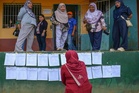
On Oct. 30, the first elected parliament of the Bangsamoro Autonomous Region in Muslim Mindanao (BARMM) assumed office. Its members elected Abdulraof Macacua as chief minister, giving the former interim leader a mandate derived from representatives chosen by voters last September.
For a country accustomed to elections, another legislature taking office might seem unremarkable. But in a region where generations have experienced displacement, bereavement and war, it represents a profound possibility: that power can be contested without destroying the communities it is supposed to serve.
But understanding this achievement requires remembering why the fighting even began in the first place.
The issue has often been reduced to a Muslim rebellion against a predominantly Christian country. That explanation obscures the truth more than it reveals it.
Long before the Philippine Republic, Muslim communities in the south already had their own political institutions, trading relationships and traditions of government. Colonial conquest, subsequent settlement and land policies altered their relationship with their homeland. Customary ownership collided with legal systems that many communities neither understood nor controlled.
Land, identity and political exclusion became inseparable. Religious difference sharpened the divide, but religion alone cannot explain it.
The modern armed struggle gathered momentum around the 1968 Jabidah controversy and the communal violence that followed. The Moro National Liberation Front emerged as a principal revolutionary organization. The Moro Islamic Liberation Front later developed as a separate movement.
What followed was no straight road to peace.
The 1976 Tripoli Agreement established autonomy as an alternative to separation, but disputes over implementation persisted. The 1987 Constitution provided for autonomous regions in Muslim Mindanao and the Cordilleras. The Autonomous Region in Muslim Mindanao (ARMM) was established in 1989. President Fidel Ramos’ government concluded a peace agreement with the MNLF in 1996, yet conflict with the MILF continued.
As defense secretary during the 2000 campaign against MILF camps, including Camp Abubakar, I saw this conflict from the government’s security perspective. I emphasized that the campaign was not a religious war; that distinction remains essential. Treating an entire faith or people as the enemy makes a political settlement harder to imagine, let alone understand.
The eventual settlement required years of negotiation: the 2012 Framework Agreement, the 2014 Comprehensive Agreement on the Bangsamoro, and the Bangsamoro Organic Law enacted in 2018. Ratification in 2019 established BARMM. This year’s elections carried that process into representative parliamentary government.
Truly, no administration can claim sole authorship over it, as peace was assembled across several presidencies and through persistence, compromise and painful reversals.
But what changed in the Philippine body politic?
The state gradually accepted that military action could not resolve every grievance underlying an armed movement. A durable settlement required recognition, political participation and meaningful self-government.
The revolutionary leadership, in turn, accepted the difficult bargain of pursuing its aspirations within the Philippine constitutional order, where authority would eventually depend on voters.
Our political system also demonstrated an ability to accommodate differences. BARMM has a parliamentary government within a presidential republic. Its fiscal arrangements, including an automatically appropriated block grant, give autonomy a firmer foundation. National unity became spacious enough to permit a different regional arrangement.
And while that is an achievement, it’s also an unfinished promise.
A parliamentary chamber does not automatically dissolve political dynasties. A former combatant does not automatically become an effective administrator. Greater control over public money does not guarantee honest expenditure.
BARMM faces weaknesses familiar throughout the Philippines: patronage, clan rivalries, private armed groups, uneven public services, and institutions vulnerable to powerful personalities.
The danger is that autonomy may bring government closer to the people while leaving power concentrated in a few hands.
The answer must be visible in ordinary life. Are teachers present? Are medicines available? Can farmers reach markets? Can a citizen obtain a service without approaching a patron?
Peace must also reach those whose grievances might otherwise disappear beneath the celebration: displaced families, women, settler communities, and the non-Muslim Indigenous peoples whose ancestral-domain rights require protection.
The normalization process remains unfinished. Decommissioning, livelihoods, community security, land justice and the dismantling of private armed groups must advance together. A former fighter needs a credible civilian future. His neighbors need confidence that the law protects everyone.
Can BARMM overcome the weaknesses of the national government? The answer is not simple. It cannot do so alone. Manila must honor its commitments, sustain dependable funding, and resist treating regional autonomy as an instrument of political convenience. BARMM must demonstrate that self-government means public accountability and reliability.
Neither government should be allowed to use the failures of the other as an excuse.
Asean can help, although we should distinguish the organization from its member countries. Indonesia helped the MNLF peace process. Malaysia facilitated the MILF negotiations. Malaysia, Brunei and Indonesia contributed to international monitoring. These relationships can support agreed peace mechanisms, professional training and stronger institutions. Through the Brunei-Indonesia-Malaysia-Philippines East Asean Growth Area, our neighbors can also help expand markets, transport links and lawful commerce.
But Asean cannot supply integrity where leaders refuse it, or trust where commitments are repeatedly broken.
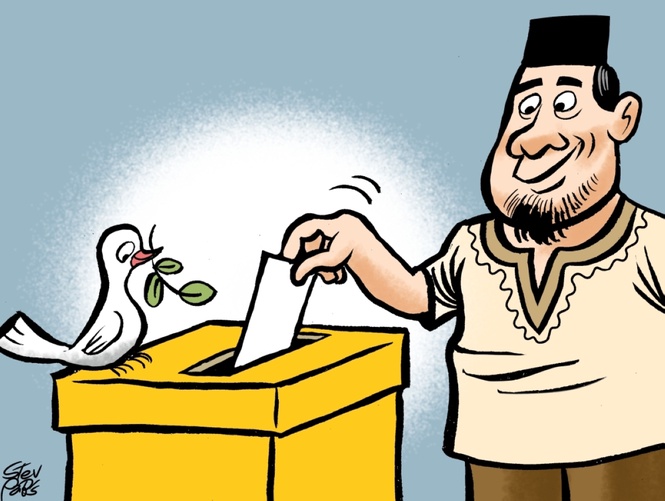
The BARMM experiment will succeed when citizens can change their leaders without taking up arms and improve their lives without seeking a powerful patron.
The ballot has opened a door. But a good government must give people a strong reason to keep walking through it.