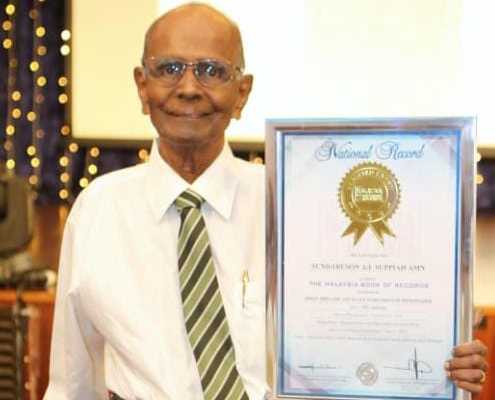
M.Krishnamoorthy
A media coach, adjunct professor and author
On 31 January 2024, Malaysians will proudly welcome Johor Sultan Ibrahim ibni Almarhum Sultan Iskandar as the new King.
When all things go wrong in the nation, it is the King who will protect the people.
His Majesty King Sultan Ibrahim Iskandar Sultan Iskandar has transcended his role as a model ruler of Johor State and will be the King of Malaysia.
One of his priorities is to unify our multicultural communities and be the catalyst that brings Malaysians together as one people and one nation
“It is inspiring for me that the Johor Sultan will be the next Yang di- Pertuan Agong,” said retired Judge, Court of Appeal Malaysia Datuk Hamid Sultan Abu Backer. In the early 1970s, Hamid Sultan recalled how he prepared “Mee Sayur” (vegetarian mee) for Sultan Ismail Sultan Ibrahim.
“To my mind,” said the learned judge, the Malay rulers, through the King, is constitutionally empowered to participate in the country's administration when necessary. Arguments of constitutional jurists and pundits attempting to say otherwise are unsustainable within the framework of our Constitution.
“For that reason, I welcome Prime Minister Datuk Seri Anwar Ibrahim’s statement that he is prepared to consider the views and suggestions of the incoming King,” said the Professor for Arbitration and Dispute Resolution at MAHSA University.
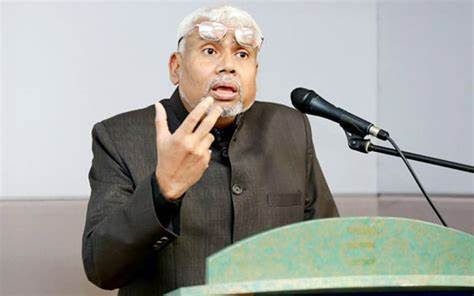
“In my view,” Hamid Sultan said, “endemic corruption, misconduct by politicians designed to create disunity, division and hatred, and the liberal misuse of racial and religious rhetoric for political one-upmanship may entitle the rulers to proclaim emergency.”
Therefore, Hamid Sultan said, it would be wrong to interpret the Constitution in a way that reduces it to being a mere rubber stamp for executive action and advice.
Hamid Sultan has fond memories of the Johor Sultanate growing up, where his father managed the famous Islamic Capitol Restaurant at Jalan Meldrum in Johor Bahru, close to the Palace in the 1920s. At the time, this area comprised many members of both the Chinese and Indian business communities.
“My father had set up his restaurant at Jalan Segget in the early 1920s, partly sharing it with the primary tenant, a Chinese coffee shop. Their fellowship was so close that my father readily agreed to vacate the premises when the coffee shop owner’s son qualified as a lawyer and wanted to set up his law firm at the unit.
“At the time, the two businessmen were harmoniously operating their respective businesses under the watchful eyes of the Southern Palace, which was just a walking distance from the shop.
Today, it would be unthinkable for a Chinese and a Muslim man selling their traditional food in the same shophouse to also reside on its upper floor, but that was how it was then.
Hamid Sultan’s grandfather, an Indian Muslim from Thopputhurai in Tamil Nadu, India, was already in Johor before the First World War. He was employed by the royal family households of Muar and Batu Pahat, towns that also saw the Chinese and Indians prospering under the Johor rulers.
“In my younger days, it was not unusual to witness members of the Kerabat Johor, the state’s military officers and politicians, regularly patronising my father’s restaurant.
“In fact, on one occasion, I was playfully helping prepare various mee dishes when the sultan himself showed up. His secretary ordered a “mee sayur”, and my father rushed to attend to them. The Sultan, however, signalled for him to let me continue.
“It was also relatively routine to see the Sultan, without any security detail, visiting an aquarium opposite the restaurant. Those in the vicinity would keep their distance as a mark of respect. It occurred to me then that the sultan was quite comfortable being in the presence of his subjects.
“Back then, (#BackInTime) life was simple and people-friendly, the Sultan-like now. The public, in turn, had immense respect and gave him their undivided loyalty.
“I also witnessed several politicians, often referred to as “cikgu” (teacher), then bring with them forms and documents to brief and assist the public in their application for citizenship. I was too young to understand these niceties then, but I recall my father assuring applicants that the Malay rulers would always protect us and ensure our safety.”
End of last year, Hamid Sultan, in his commentary in Freemalaysiatoday, wrote:
“If not for the rulers agreeing to give away some of their rights to administer the country and honour the residents with citizenship, many of us would have been displaced in an unfriendly environment.
“Over the years, my father’s mantra that the Malay rulers would protect us became etched in my mind. It eventually became the cornerstone of several judgments in which I expounded on the supremacy of the rulers, whom I consider to be the fourth pillar of government.
“My analysis of the Federal Constitution has led me to conclude that our founding fathers only gave the traditional three pillars – the executive, the legislature and the judiciary – a licence to administer the country. As I understand it, the final say has always remained with the rulers.”
Hamid Sultan has been an Adjunct Professor at the International Islamic University Malaysia and Multimedia University, Malaysia (MMU). He is also a Panel Advisor of the Islamic Science University of Malaysia (USIM), barrister, and Fellow of the Chartered Institute of Arbitrators (London). His doctoral thesis was on Civil Procedure and Justice.
“Therefore, I believe it would be wrong to interpret the constitution in a way that reduces the rulers to merely being a rubber stamp for executive action and advice. Many provisions say otherwise, assigning the rulers the positive role of sustaining the rule of law.”
For example, Hamid Sultan added: “Although Article 40(1) requires the King to act on the Cabinet's or its representative's advice, he is not obliged to act immediately and is entitled to ask for additional information. The constitution also gives the king the sole discretion when appointing the prime minister under Article 40(2), as well as in several other actions.
“Article 38 gives broad powers to the Conference of Rulers in several essential aspects of the country’s administration listed there. In criminal matters, the power of pardon and the final say on sentences are vested entirely with the rulers.
“Article 181 preserves the rulers’ prerogative powers. In my view, these powers may be used to sustain the rule of law if it is violated by any of the three pillars of government. Both the army and the key to Parliament are also placed under the rulers.
Finally, Hamid Sultan added the absolute power to proclaim an emergency as per Article 150, which is the hallmark of the Malay rulers’ supremacy.
Over the years, I have noticed that the traditional three pillars – the executive, legislature, and judiciary – have not acted as per their oaths of office, which require them to preserve, protect and defend the Federal Constitution.
That omission has allowed corruption and corrupt practices to flourish, undermining social justice and the rule of law and resulting in the doctrine of separation of powers becoming a myth in this country.
Freelance Writer M. Krishnamoorthy (www.imkrishna.net) is a media coach, adjunct professor and undercover journalist. He has freelanced with Bernama, NST, The Star, and Malaysiakini. He also freelances as a fixer/coordinator for CNN, BBC, German and Australian Television networks and the New York Times. As an undercover journalist, he has highlighted society's concerns.
M. Krishnamoorthy is a content creator under the Newswav Creator programme, where you get to express yourself, be a citizen journalist, and at the same time monetize your content & reach millions of users on Newswav. Log in to creator.newswav.com and become a Newswav Creator now!
The User Content (as defined on Newswav Terms of Use) above including the views expressed and media (pictures, videos, citations etc) were submitted & posted by the author. Newswav is solely an aggregation platform that hosts the User Content. If you have any questions about the content, copyright or other issues of the work, please contact Newswav.