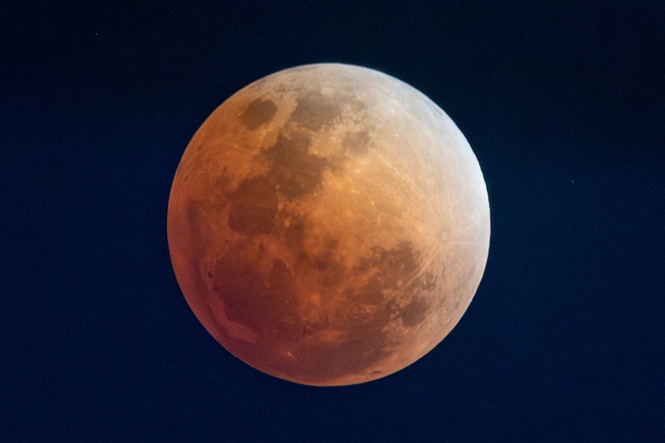
- Almost the entire Moon will be covered Thursday night into Friday, with 96% of its surface obscured in what will be an especially deep partial eclipse.
- Most viewers across North and South America, with the exception of Alaska and the northernmost parts of Canada, will be able to see the lunar eclipse from start to finish.
- The eclipse will begin at 10.33pm ET (7.33pm PT) and reach its peak at 12.01am ET (9.01pm PT).
- With nearly the entire Moon passing into Earth’s shadow, much of its surface could take on the reddish-orange hue often associated with a “blood moon.”
- Unlike a solar eclipse, a lunar eclipse is completely safe to watch with the naked eye, so no special glasses are needed.