.jpg)
By Mihar Dias (C) Copyright May 2024
The recent revelations about Tun Dr. Mahathir Mohamad's tenure as Prime Minister of Malaysia have sparked significant debate.
In a candid interview with CNBC, Mahathir asserted that he meticulously avoided involving his family in government business to fend off accusations of nepotism.
While he acknowledged the presence of corruption during his terms, he vehemently denied any personal involvement, a stance that raises critical questions about his legacy and the broader implications for Malaysian politics.
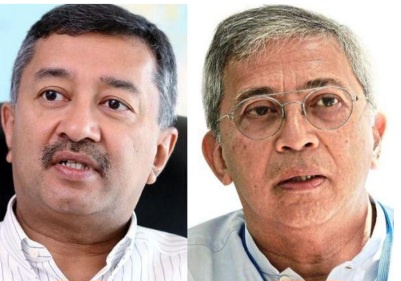
Mahathir’s claim to have shielded his family from government business is commendable in principle. However, the ongoing investigation by the Malaysian Anti-Corruption Commission (MACC) into the assets of his sons, Mirzan and Tan Sri Mokhzani, introduces a complex narrative.
The MACC's probe, focusing on asset declarations dating back to 1981, underscores the enduring challenge of addressing potential conflicts of interest and corruption, even decades later.
Mahathir's assertion that he and his family have "nothing to hide" will be put to the test as the investigation progresses.
This situation highlights a fundamental issue in governance: the balance between power and accountability. Mahathir's long tenure in Malaysian politics is marked by significant achievements, but also by controversies that continue to reverberate.
Mahathir's insistence on his family's non-involvement in government business may have been a proactive measure against nepotism, yet the substantial wealth accumulated by his sons has inevitably drawn scrutiny.
The MACC’s demands for asset declarations are not merely procedural; they symbolise a broader quest for transparency and integrity in Malaysian politics. For decades, the nexus between political power and personal wealth has been a contentious issue, often leading to public distrust.
By compelling prominent political figures and their families to disclose their assets, the MACC is reinforcing a culture of accountability that is essential for democratic integrity.
Mahathir’s response to the MACC’s investigation has been one of cooperation, albeit with an acknowledgement of the difficulties in tracing decades-old assets.
This cooperative stance is crucial, as it sets a precedent for other political figures facing similar scrutiny.
However, the effectiveness of this process hinges on the thoroughness and impartiality of the MACC’s investigation. Public confidence will depend on the transparency of the findings and the willingness of all parties involved to comply fully with legal requirements.
The implications of this investigation extend beyond Mahathir and his family. It serves as a litmus test for Malaysia’s commitment to eradicating corruption and fostering a transparent political environment.
If the MACC can navigate this high-profile case with integrity and diligence, it will bolster its credibility and reinforce the principle that no individual, regardless of their stature, is above the law.
Furthermore, this situation raises pertinent questions about the mechanisms in place to prevent conflicts of interest in government. While Mahathir's personal efforts to avoid nepotism are notable, institutional safeguards must be robust enough to prevent such conflicts independently of individual leaders' actions. Strengthening these mechanisms will be crucial for ensuring that future administrations can operate transparently and ethically.
In conclusion, Mahathir’s legacy is a tapestry of both monumental contributions and enduring controversies. The ongoing MACC investigation is a pivotal moment that could redefine public perception of his tenure and, more broadly, the culture of accountability in Malaysian politics. As the nation watches closely, the hope is that this process will reinforce the principles of transparency and integrity that are essential for a thriving democracy. But it's also a story of father and sons. A family affair!
Mihar Dias is a content creator under the Newswav Creator programme, where you get to express yourself, be a citizen journalist, and at the same time monetize your content & reach millions of users on Newswav. Log in to creator.newswav.com and become a Newswav Creator now!
The User Content (as defined on Newswav Terms of Use) above including the views expressed and media (pictures, videos, citations etc) were submitted & posted by the author. Newswav is solely an aggregation platform that hosts the User Content. If you have any questions about the content, copyright or other issues of the work, please contact Newswav.
