By Mihar Dias October 2026
The limits of intelligence when emotion takes over
In my decades as a management consultant, I have encountered enough intelligent people doing remarkably stupid things to question whether intelligence is the reliable safeguard against bad judgement we imagine it to be.
I have met highly educated executives who made decisions that would embarrass a schoolboy, experienced managers who ignored obvious warning signs, and accomplished professionals who appeared to have temporarily misplaced the very intelligence that brought them success.
Three incidents remain particularly memorable: a jade turtle, RM6 million and a herd of Scottish Frisian cows in Kedah.
They have little in common except that they demonstrate a peculiar human weakness. Intelligence gives us the capacity to think. Unfortunately, it does not guarantee that we will use it when we need it most.
The Jade Turtle of Good Fortune
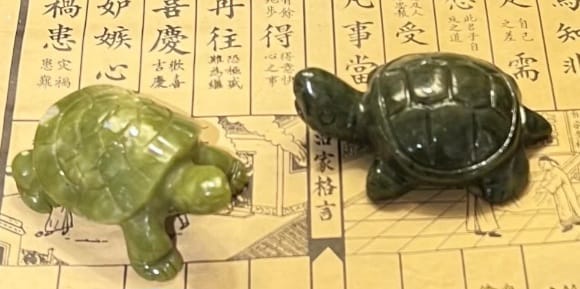
During my years with an American consulting group, our regional president arrived at our Taiwan office carrying an unusually large three-legged turtle carved from what he described as the finest jade.
Whenever he went on a sales call, he would turn the turtle to face the direction of his journey. This, he explained, would bring him good fortune.
We laughed. Here was a senior executive responsible for regional business, negotiating contracts, managing people and making commercial decisions, yet he appeared to believe that the direction in which a jade turtle faced could influence his sales results.
The embarrassing part was that he returned from his trips with business. His sales calls produced results, and the turtle acquired a reputation as a commercially successful travelling companion.
Perhaps we had laughed too soon.
Or perhaps not.
The turtle might have given him confidence. A salesperson who believes himself fortunate may approach a client with greater enthusiasm and persistence. But we had no evidence that the ornament caused his success. Preparation, experience and salesmanship were rather more plausible explanations.
The human mind, however, loves a good story. When the sales call succeeds, the turtle gets the credit. When it fails, perhaps the client was difficult or the turtle was facing the wrong direction.
We remember what confirms our beliefs and conveniently forget what contradicts them. Even intelligent people can turn coincidence into evidence when the explanation pleases them.
There is nothing particularly harmful about carrying a lucky charm, provided one does not expect it to replace hard work. Unfortunately, human beings have a remarkable capacity to confuse feeling fortunate with being competent.
Sometimes, even a jade turtle gets promoted.
RM6 Million and the Dream of Doubling It
My second story was less amusing.
I knew of an exceptionally intelligent town planner who had accumulated RM6 million in savings. Then came an opportunity to double his money.
He placed his entire fortune in a Ponzi scheme.
He lost every penny.
How could an intelligent professional make such a catastrophic mistake?
Perhaps the promise was irresistible. Why settle for RM6 million when RM12 million seemed within reach? We cannot know precisely what persuaded him, but the episode illustrates how the prospect of extraordinary rewards can silence ordinary caution.
A Ponzi scheme uses money from new participants to pay earlier investors, creating the illusion of profitable returns without a sustainable underlying business. Eventually, when new money stops flowing in, the arrangement collapses.
No university degree can make an unsustainable scheme sustainable.
The town planner may have been brilliant at designing cities, but professional competence in one field does not automatically confer financial wisdom in another. We sometimes assume that because we have made good decisions in our careers, our judgement must be equally dependable everywhere.
It is a comforting assumption, and a dangerous one.
Greed need not mean wanting to become fabulously wealthy. Sometimes it is simply the desire to have more than we already possess, even when we have more than enough to live comfortably.
The prospect of doubling RM6 million may have been intoxicating. The possibility of losing everything was probably less pleasant to contemplate.
That is how emotion distorts judgement. The imagined reward becomes vivid, while the potential disaster remains an inconvenient abstraction.
And the more intelligent we consider ourselves, the easier it may be to construct convincing explanations for taking risks we would otherwise recognise as foolish.
Before investing, ask who generates the returns, how they are sustained and what happens if the investment fails. If you cannot explain how an investment makes money, you may not understand what you are buying.
Risking your entire fortune on an enticing promise is not courage. It is gambling with your future while congratulating yourself on your cleverness.
Scottish Cows in the Kedah Jungle
My third story involved a project to produce more locally sourced milk by bringing Frisian dairy cattle from Scotland to Kedah, near the Thai border.
The objective sounded sensible. Why depend on imported dairy products when we could produce our own?
Unfortunately, cows do not read project proposals.
The cattle had been bred in a cooler climate. In tropical heat and humidity, they required suitable conditions to maintain their health and productivity. Heat stress can reduce feed intake, impair fertility and lower milk production.
Cooling systems had to be introduced, adding substantial infrastructure and operating costs. What looked promising on paper became an expensive lesson in the importance of understanding local conditions.
Eventually, the project failed.
Years later, when I discussed the misadventure with the veterinarian involved, he described the whole affair as pure “bullshit”.
Coming from a veterinarian discussing a failed cattle project, the choice of words was particularly appropriate.
But the lesson was serious. A worthy objective does not guarantee a viable project. Importing productive cattle is one thing; maintaining them economically in a different climate is another.
The questions that mattered were whether the animals could thrive, how much it would cost to keep them productive, and whether the milk they produced justified the investment.
The ribbon-cutting ceremony is easy to imagine. The electricity bills for cooling the cows are less exciting.
This is a familiar management failure. Decision-makers fall in love with an idea and overlook the assumptions that must hold for it to work. They celebrate the promise before calculating the cost of delivering it.
Intelligence may help us understand how a system works. Wisdom requires us to ask whether it makes sense under actual operating conditions.
When Intelligence Becomes Its Own Enemy
A jade turtle, RM6 million and Scottish cows in Kedah: three different stories, but each exposes the gap between knowing how to think and being willing to think critically.
We are not dispassionate calculating machines. Our hopes, fears, ambitions and prejudices accompany us into every important decision.
An investor wants to believe that the promised fortune is real. A manager wants his ambitious project to succeed. A successful executive wants to believe that his instincts are infallible.
Once emotionally committed, we begin defending our decisions rather than examining them. We search for supporting evidence, minimise warning signs and explain away failure.
Worse, intelligence can become our accomplice. Instead of using it to discover that we are wrong, we use it to produce increasingly sophisticated arguments for remaining wrong.
We become clever at defending a mistake rather than correcting it.
Success can make matters worse. A brilliant surgeon may be a poor investor; an accomplished academic may fall for a fraud; a successful entrepreneur may misunderstand agricultural economics.
Intelligence is not a universal certificate of competence. Knowledge is specialised, and wisdom includes recognising what we do not know.
Before making an important decision, ask five questions:
1. What evidence supports my decision? Separate facts from assumptions and attractive promises.
2. What would make me change my mind? If nothing could, you may be defending a belief rather than testing it.
3. What am I emotionally invested in? Are you pursuing a sound opportunity or trying to feel clever, admired or vindicated?
4. What happens if I am wrong? Calculate the downside before celebrating the potential reward.
5. Who can challenge my thinking? Seek independent advice from someone with the expertise and courage to disagree.
These questions cannot eliminate mistakes. But they may prevent us from turning an avoidable error into an expensive disaster.
The Person in the Mirror
After decades studying human behaviour and advising organisations, I have learned not to worship intelligence.
We attribute wisdom to professional titles, assume wealth demonstrates financial judgement, and mistake past success for a guarantee of future competence. Life repeatedly exposes the absurdity of these assumptions.
We laugh at other people's mistakes because they look obvious from a safe distance. Our own mistakes, however, arrive disguised as opportunities, convictions and perfectly reasonable explanations.
The person most capable of misleading us may not be a dishonest salesman, an unscrupulous promoter or a manipulative colleague.
Sometimes it is the person in the mirror, using intelligence to persuade us that what we desperately want to believe must be true.
Intelligence helps us find answers. Wisdom teaches us to question them.
And perhaps the most intelligent thing we can do is acknowledge that, regardless of our qualifications, achievements or years of experience, we remain perfectly capable of doing something spectacularly stupid.
The challenge is not to prove that we are too intelligent to make mistakes. It is to recognise one before it costs us our fortune, our career or our peace of mind.
After all, the human brain is a remarkable instrument. Unfortunately, its owner does not always read the instruction manual.
Mihar Dias (mihardias@gmail.com) is a content creator under the Newswav Creator programme, where you get to express yourself, be a citizen journalist, and at the same time monetize your content & reach millions of users on Newswav. Log in to creator.newswav.com and become a Newswav Creator now!
The User Content (as defined on Newswav Terms of Use) above including the views expressed and media (pictures, videos, citations etc) were submitted & posted by the author. Newswav is solely an aggregation platform that hosts the User Content. If you have any questions about the content, copyright or other issues of the work, please contact creator@newswav.com.