Rewinding the clock can prove to be a humbling experience. The ambiguity and anticipation of pre-season guessing games – the inevitable pattern of predictions leading up to day one – can either prove to be a massive feather in the cap come the end of the season (cc. 2025 title prediction) or an article/video to write off.
Yet as this year’s Formula 1 season draws to a close, it is most certainly the latter.
All seven of Sky Sports’ experts? Wrong. BBC pundits? Wrong. Yours truly? Wrong. And not just wrong: barely a soul mentioned Kimi Antonelli above George Russell in the 2026 F1 championship stakes. Some bookies, in and around February testing, had the Italian as low as seventh-favourite.
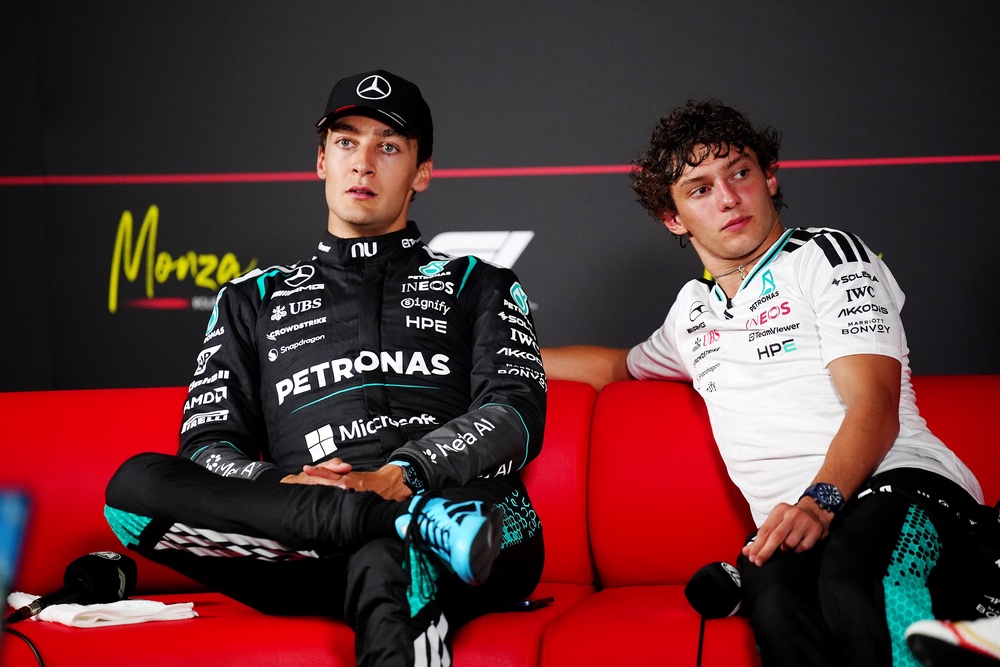
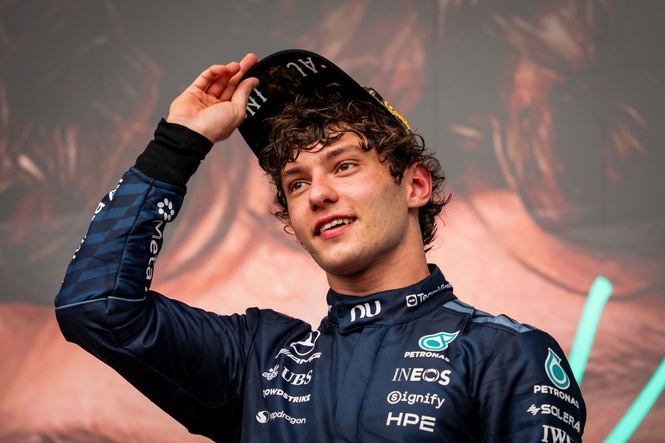
Fast-forward eight months and Antonelli has a 123-point lead with 125 left on the table. Barring an extremely unlikely scenario – the 20-year-old finishing ninth or lower and Russell or Lewis Hamilton winning the race – Antonelli will be world champion this Sunday under the bright blue skies of Mexico City. If it doesn’t happen this weekend, it’ll happen next week in São Paulo.
In essence, barring a season-ending injury, the crowning of Formula 1’s youngest-ever world champion is simply a foregone conclusion. Ironically, Antonelli actually missed media duties on Thursday due to a viral illness, though Mercedes expect him to be fit and ready for practice on Friday.
And while it has seemed inevitable for some time, particularly after his wondrous back-to-front triumph at his home grand prix in Monza last month, it is worth recalling just how unfathomable Antonelli’s title triumph had seemed; both at the start of the year and within the wider schism of the sport in the last two decades.
Because while he is totally bereft of confidence right now, Russell was anything but at the season-opener in Australia. When it became apparent that Mercedes, as fancied, had the most complete car in this new era of regulations, Russell stormed to pole position and victory at Albert Park. Antonelli, meanwhile, crashed in practice but recovered to finish second on raceday.
Russell’s 2025 season, too, only accentuated the likelihood of an inaugural world championship. While witnessing friend, rival and compatriot Lando Norris clinch the title in the quickest car, Russell won two grands prix in sub-standard machinery and finished fourth, best of the rest outside the title contenders. Antonelli, meanwhile, endured a sorry European summer – one full of crashes, mistakes and high emotions – and finished the year in seventh, 159 points behind his teammate.
So what we’re talking about now, with five rounds remaining this season, is an incomprehensible points swing. Antonelli’s sheer speed (which we always knew) has been coupled with a composure and maturity beyond his 20 years. He has won nine grands prix while Russell has won just three. It has been nothing short of a trouncing; an unexpected trouncing at that.
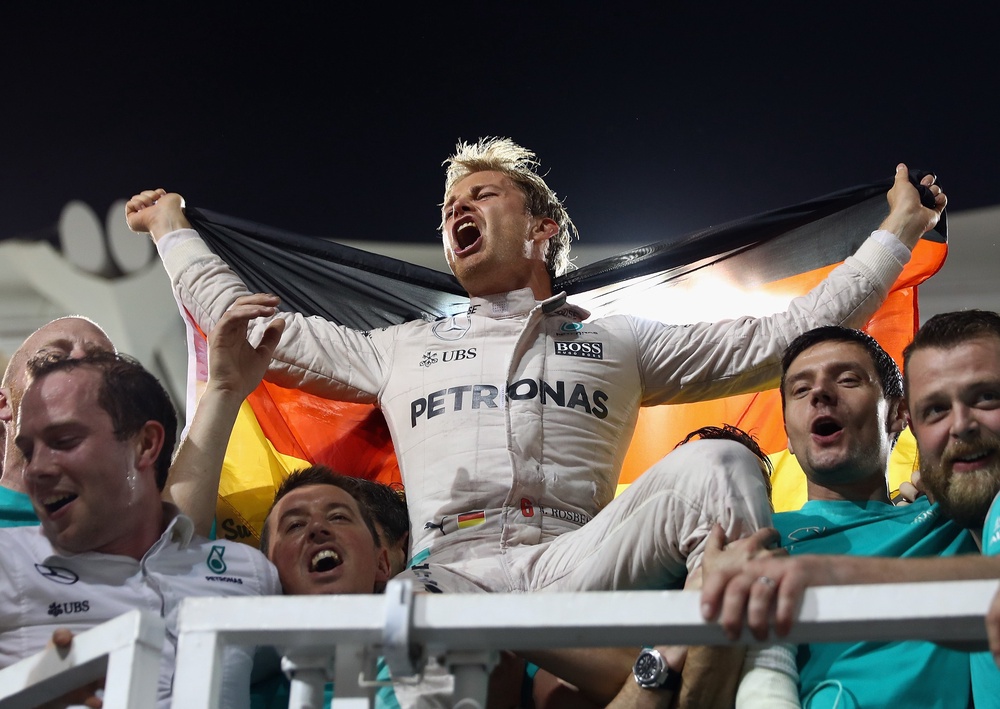
Looking beyond Max Verstappen’s four Red Bull triumphs, the most recent comparison in Silver Arrow race-suits was Hamilton’s partnership with Valtteri Bottas from 2017-2020. Bottas finished behind his teammate every year, with a closest margin of 58 points in 2017. And while Russell is obviously no Hamilton, there is no doubt that Russell was christened the team’s No 1 driver at the start of the year. You have to go back to 2016 – and Nico Rosberg’s tense final-race victory over Hamilton – for a so-called ‘No 2 driver’ to win the championship.
F1 world champions since Button’s 2009 triumph
Sebastian Vettel – 2010, 2011, 2012, 2013
Lewis Hamilton – 2014, 2015, 2017, 2018, 2019, 2020
Nico Rosberg – 2016
Max Verstappen – 2021, 2022, 2023, 2024
Lando Norris – 2025
And yet even Rosberg’s dramatic triumph, going shoulder-to-shoulder with Hamilton in a manner many anticipated this year, was less surprising than Antonelli’s title this year. By 2016, Rosberg was a seasoned veteran of the sport, racing in his 11th consecutive Formula 1 season with 14 victories behind him. Antonelli, meanwhile, is in his second season (incidentally, the Italian is about to become only the third driver to win the title in his second season after Hamilton and Jacques Villeneuve) and only won his first race at round two in China.
Before Rosberg’s victory and Hamilton’s first two titles with Mercedes, there was Sebastian Vettel’s four-peat. There is an argument that his first victory, 2010, was a seismic shock and, granted, he was probably only third or fourth-favourite at the start of the campaign. But, as made famous by David Coulthard’s viral pre-season prediction on the BBC in the face of laughter from his co-pundits, Vettel was an obvious contender after a late surge in 2009, where he finished just 11 points off eventual winner Jenson Button.
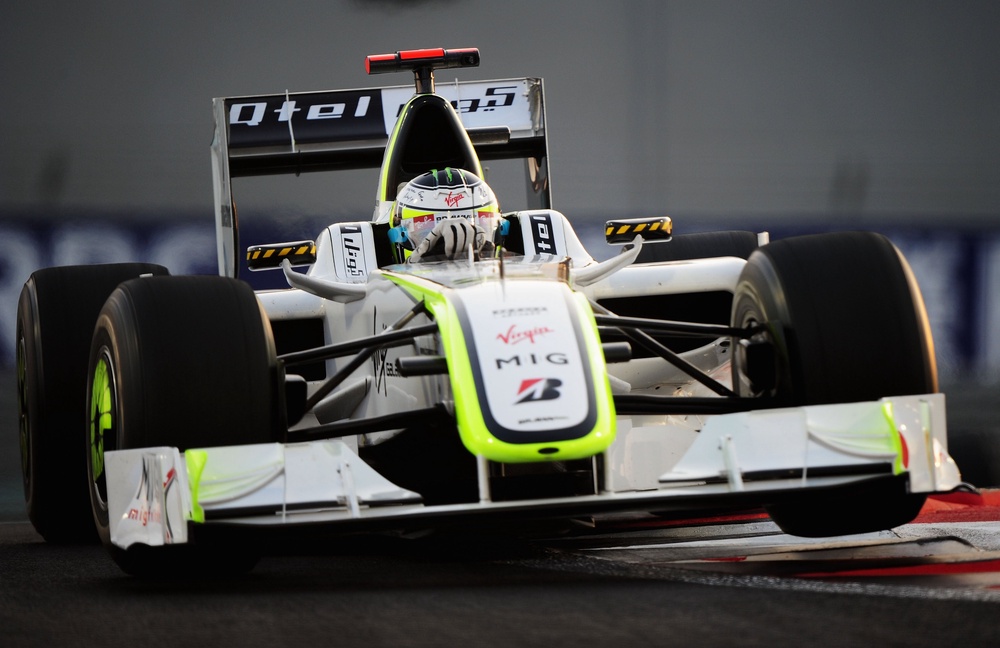
For me, Button’s 2009 triumph – at the wheel of a one-year-only Brawn rocketship – will always be one of the sport’s great stories. A team that was set to go out of business in the off-season then launched themselves to the front of the grid, courtesy of the much-maligned but ingeniously clever double diffuser. Button was the beneficiary of that slice of fortune, in a scenario that nobody could have foreseen before that year’s first pre-season test. Granted, post-testing, the dumbfounded glances across the paddock were a sign of things to come.
Button himself, as a pundit for Sky Sports this year, has spoken glowingly about Antonelli’s equanimity in the heat of battle this year. Unlike the Briton, Antonelli has not suffered a dip in the second half of the season. The Italian is over the hills and far away now. Yet let’s not forget just how startling a prospect this all seemed at the start.
Lewis Hamilton says he is ‘built differently’ and vows to go on defying doubters
How Kimi Antonelli can win 2026 F1 title in Mexico City without even finishing race
Daniel Ricciardo reflects on his 'humiliating' Formula 1 exit
‘You’ve never had anyone like me’: Hamilton rejects F1 theory with firm statement
George Russell says disappointing season will not define his career
Kimi Antonelli absent from Mexican Grand Prix media day ahead of F1 title coronation