
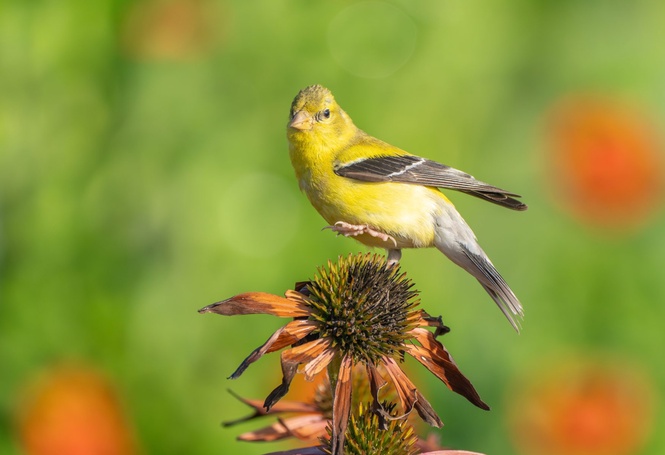
By November, many flower beds look like they’ve reached the end of their usefulness. Coneflowers have turned brown, black-eyed Susans have lost their bright petals, and sunflower stalks stand awkwardly above the rest of the garden. For homeowners who prefer a tidy yard, cutting everything down and tossing it into a yard waste bag feels like the obvious next step. But those dried flowers may be providing something valuable to birds preparing for winter. What looks like dead garden debris to us can actually be a natural food source that costs nothing to maintain.
Dead Flowers Can Become Natural Bird Feeders
Once a flower finishes blooming, its job isn’t necessarily over. Many flowering plants produce seeds that remain attached to their dried flower heads well into autumn and winter. The University of New Hampshire Extension explains that standing perennial seed heads provide food for birds during colder months when other resources may become scarce. Finches, sparrows, chickadees, juncos, and other birds may forage among the remaining seeds and surrounding plant debris. Cutting these plants down immediately after flowering can remove a convenient food source just when wildlife begins preparing for harsher conditions.
Goldfinches Have a Particular Interest in Coneflowers
Coneflowers are popular for their colorful summer blooms, but their usefulness continues long after the petals disappear. Their distinctive central cones contain seeds that can attract American goldfinches and other seed-eating birds. Penn State Extension specifically identifies purple coneflowers as valuable winter food sources for goldfinches. Watching these small yellow birds balance on dried flower heads can become one of the most entertaining parts of a winter garden. Leaving the stems standing also saves gardeners the work of removing plants that still have something to offer.
Black-Eyed Susans Are Worth Keeping Around
Black-eyed Susans are another example of flowers that continue benefiting wildlife after their colorful petals fade. Their dark central seed heads can remain standing through autumn, providing opportunities for birds to forage. The North Carolina Extension Gardener Plant Toolbox specifically advises leaving black-eyed Susan seed heads in place as a winter food source. These hardy perennials also provide seasonal interest when their dried stems contrast with frost or snow. Instead of treating every brown flower as an eyesore, consider whether it could support wildlife for another few months.
Sunflowers Can Feed Birds Without a Store-Bought Feeder
Sunflowers are well known for producing seeds that appeal to many backyard birds. When the flower heads mature, leaving some seeds available can provide a natural feeding opportunity for visiting wildlife. Conserving Carolina identifies sunflowers, coneflowers, and black-eyed Susans as useful plants for birds and other animals during colder months. Gardeners who normally harvest every sunflower head might consider leaving a few standing specifically for wildlife. It’s a simple way to share part of the garden’s harvest without purchasing additional supplies.
Birds May Also Search Beneath the Dead Plants
The benefits of leaving flowers standing aren’t limited to seeds still attached to the stems. As plants mature, some seeds fall to the soil surface and become available to birds that prefer feeding on the ground. Sparrows and juncos, for example, may search through fallen plant material for food during colder weather. Removing every dried stem and clearing all surrounding debris can reduce these natural foraging opportunities. Maintaining a reasonably undisturbed garden area gives birds more places to search without requiring homeowners to create a separate feeding station.
The Stems Can Shelter Insects Birds May Eat
Dead flower stalks can also serve a purpose beyond holding seeds. Some native bees and other insects use hollow or pithy plant stems for nesting, while additional insects shelter among standing vegetation and leaf litter. Those insects form part of the food web that supports many birds, particularly when breeding season arrives and protein-rich food becomes important for raising young. Removing every stem and leaf during fall cleanup can eliminate some of those overwintering habitats. Leaving healthy plant material in place helps preserve a more complete garden ecosystem rather than focusing exclusively on the seeds birds consume.
A Less-Tidy Garden Can Save Money
Bird-friendly gardening doesn’t necessarily require expensive feeders, specialty seed blends, or elaborate landscaping projects. If your existing flowers already produce seeds, allowing some of them to mature creates a food source without another purchase. Suppose you normally spend an illustrative $15 per month on supplemental birdseed during four winter months. Reducing those purchases by half would save $30, although the actual savings depend on bird activity and how much natural food your garden provides. Dried flowers won’t replace every feeding need, but they can contribute to a lower-cost approach to attracting backyard wildlife.
You Don’t Have to Leave Every Plant Standing
Creating a wildlife-friendly garden doesn’t mean abandoning all maintenance until spring. Plants with serious disease problems may need to be removed to reduce the chance of pathogens surviving and affecting future growth. The University of New Hampshire Extension recommends prioritizing the removal of diseased top growth while preserving healthy seed-bearing plants when practical. Gardeners should also manage invasive species and unwanted self-seeding plants rather than allowing them to spread indiscriminately. A selective cleanup approach protects useful habitat without ignoring legitimate plant-health concerns.
Make the Garden Look Intentional Instead of Neglected
Some homeowners hesitate to leave dead flowers standing because they worry the yard will look messy. One solution is to maintain clean paths, defined bed edges, and a few deliberately trimmed areas while allowing seed-bearing perennials to remain upright. Tall grasses, evergreen shrubs, and attractive seed heads can provide structure and contrast throughout winter. You might also leave a wildlife-friendly section toward the back of the garden while maintaining a more formal appearance near the entrance. This approach can make the landscape feel cared for without removing every natural resource birds could use.
Spring Cleanup Doesn’t Have to Happen All at Once
When temperatures begin warming, it’s tempting to remove every remaining stalk immediately. However, some beneficial insects may still be sheltering in plant stems or leaf litter during early spring. Waiting until local conditions are suitable for cleanup can give more overwintering wildlife an opportunity to emerge. Where practical, gardeners can leave selected stems standing or place cut material loosely in a sheltered area rather than immediately shredding everything. The goal is to balance new plant growth, garden appearance, and the needs of wildlife that may still be using last year’s vegetation.
Let Next Year’s Flowers Do Double Duty
If you’re planning a new flower bed, consider choosing plants that provide both attractive blooms and useful seeds. Native coneflowers, suitable black-eyed Susans, and regionally appropriate sunflowers can support pollinators during the growing season and seed-eating birds afterward. Select species suited to your local climate, soil conditions, and available space rather than assuming every wildlife plant will thrive everywhere. Grouping several seed-producing flowers together can also create a more noticeable natural feeding area. With thoughtful planting, one garden bed can provide color in summer and wildlife benefits long after flowering ends.
Sometimes the Best Gardening Job Is the One You Skip
Dead flowers aren’t always useless debris waiting to be thrown away. Their seeds can help feed birds, their stems can shelter insects, and their presence can add structure to an otherwise bare winter landscape. Leaving selected healthy plants standing also reduces fall cleanup work and may lower spending on supplemental birdseed. Instead of cutting everything to the ground, look for coneflowers, black-eyed Susans, sunflowers, and other seed-bearing plants worth preserving.
Do you leave your dead flowers standing for the birds, or do you prefer to clean out your flower beds before winter?
The post Why Some Birds Depend on the Dead Flowers Gardeners Throw Away appeared first on Frugal Gardening.