Last year, Saudi Arabia was named by economics organisation OECD as the fastest-growing tourist destination since the pandemic. It was not so long ago that the country did not allow the average leisure tourist across its borders, but then Saudi Arabia drastically changed its economic strategy and has spent the past half-decade developing ultra-luxury hotel resorts, launching a new airline and pursuing cultural and heritage gigaprojects.
Everything was on track for the country to become the next UAE, a major player in leisure tourism, luring visitors to the Middle East’s advanced infrastructure, shiny new developments and exclusive hotels on uninhabited islands.
This year has proved to be anything but stable for the travel industry. First, the outbreak of war between Israel, the US and Iran in February shook the international tourism market, grounding flights and cancelling holidays in the Middle East. Saudi Arabia became a target for Iranian forces, who fired at oil refineries, military bases and airports.
Then direct military conflict resumed in July between the Iran-aligned Houthi rebel military group and the governments of Yemen and Saudi Arabia. The kingdom suffered its deadliest attack in more than a decade, with Houthi missiles and drones striking the King Khalid International Airport in the capital, Riyadh, killing at least 13 people in October.
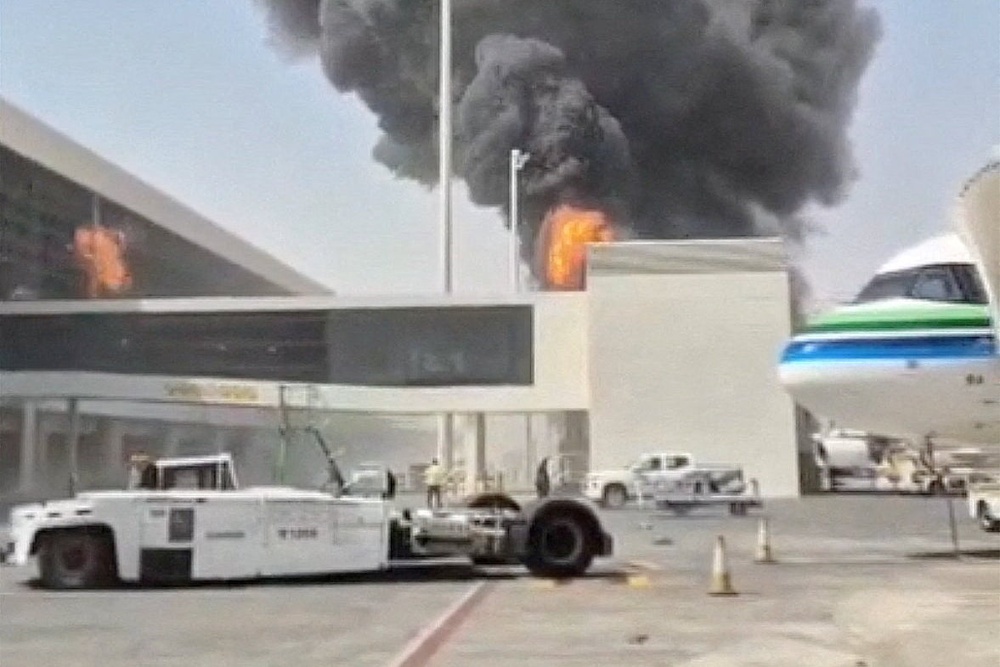
Further attacks followed, prompting the UK government on 17 October to advise British citizens against all but essential travel to almost the entirety of Saudi Arabia, except within 10km of the Yemen border, where it advises against all travel. The US government launched a similar warning – a level three “reconsider travel” advisory – and ordered non-emergency US government staff to leave Saudi Arabia.
While the country has decided to partially reopen Riyadh’s airport, it remains to be seen how the attacks on civilian airports, as well as the wider unrest in the region, will impact tourism numbers.
Tourism growth
Saudi Arabia has significantly expanded its tourism market since the pandemic, with institutions like the UN recognising the country as one of the fastest-growing tourism destinations in the G20.
OECD also said this year that Saudi Arabia has seen the biggest uptick in tourist arrivals compared to pre-pandemic levels, increasing by 67 per cent since 2019.
Inbound tourists visiting Saudi Arabia in 2025 were recorded as 29.3 million, a slight dip from the year before but a significant increase from pre-pandemic levels.
Religious travel still dominates the sector. Almost half of inbound tourists visited for religious reasons in 2025, as many Muslims worldwide take a sacred journey to Mecca each year.
Around 24 per cent of this number were leisure tourists, a reasonable share given that Saudi Arabia launched visas for “casual tourists” – those who are not business or religious visitors – only seven years ago.
The kingdom’s top tourist markets remain within Asia, with Pakistan visitors making up the largest share.
Nevertheless, European celebrities had started to embrace luxury trips to Saudi Arabia before the unrest unfolded this year, including Boris Johnson’s family visiting St Regis Red Sea Resort last summer and Cristiano Ronaldo buying two private villas at Nujuma, a Ritz-Carlton Reserve Residence at the end of 2025.
Saudi Arabia’s tourism ministry is also marketing the country as an alternative to overcrowded destinations, pointing to Venice and Barcelona, saying it offers fresh potential for holidays and trips with room for large-scale development.
The tourism sector contributed five per cent of GDP to Saudi Arabia’s economy in 2025, up from three per cent in 2019, and the government says it is aiming to reach 10 per cent by 2030.
However, statistics from the first quarter of 2026 already show the impact that regional volatility had on inbound tourism numbers, which dropped 13 per cent in this period compared to 2025.
A report by Saudi Arabia’s Ministry for Tourism argues that domestic tourism, which rose by 16 per cent year-on-year in the first quarter, highlighted the sector’s “resilience” despite the “temporary softness in international arrivals”.
Analysis from nonprofit research organisation, the Centre for Strategic and International Studies (CSIS), suggested that the 2026 US-Iran war has likely cemented the idea that the country needs to diversify its economy, heightening the urgency for investment in tourism.
These reports were composed before the recent Houthi attacks, which triggered travel advisories, including from the UK.
Airlines
This summer, Saudi Arabia made it easier to visit the country with the introduction of a second flag carrier, Riyadh Air, that launched this summer with UK flights between Manchester, London and Riyadh.
Riyadh’s King Khalid International airport temporarily closed after attacks in October, but has since reopened, despite threats from Yemen’s Iran-aligned Houthis to continue targeting the hub, which they branded a "military target".
About 86 per cent of scheduled flights at Riyadh's King Khalid International airport, or 4,071 out of 4,736, were cancelled between 8 and 25 October, according Reuters’ evaluation of the latest data from aviation analytics firm Cirium.
Before the Houthi escalation, the US-Iran war caused major airlines to pull flights from Riyadh. Virgin Atlantic announced in April that it was scrapping its London flight to Riyadh only a year after the launch of the new route. British Airways also suspended flights to the capital until 3 November.
In light of the attack on Riyadh’s airport, other airlines have suspended flights to the city into late October and November, including Lufthansa, Qatar Airways and Air France.
Vision 2030
Saudi Arabia’s development plan to diversify its economy away from oil by the end of the decade is under serious threat after the escalation of attacks.
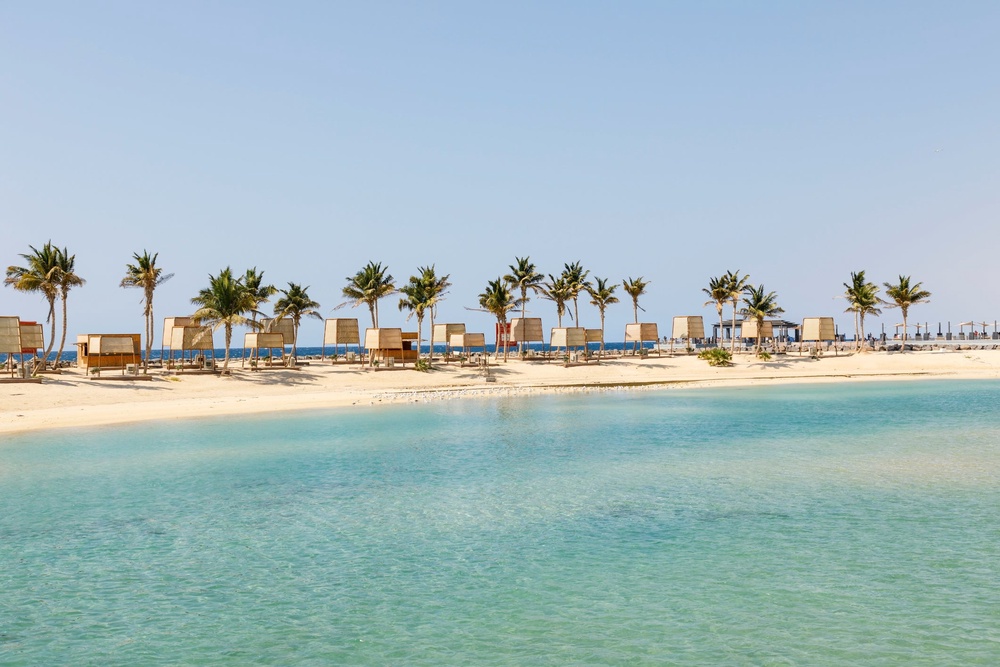
One of Vision 2030’s projects was to elevate the Red Sea region into a luxury, eco-focused tourism destination. Home to pristine beaches, vast sand dunes and untouched islands, over 50 global hotel brands have already opened up properties in the past five years, including ultra-luxury Six Senses and St. Regis hotels. The country is also developing its own wellness resort, Amaala, catering to the high-end travel market.
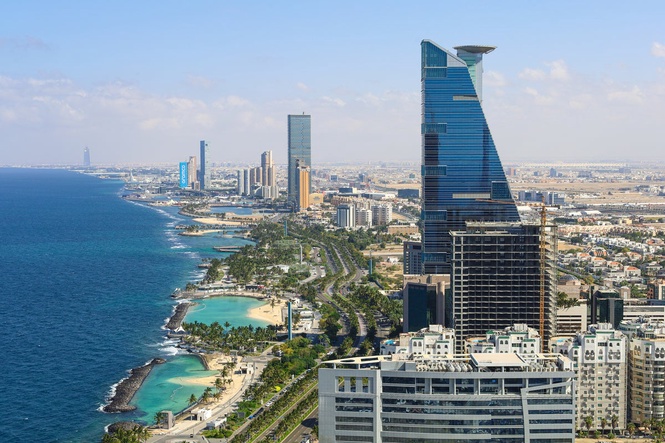
Saudi Arabia’s Ministry of Tourism said private investors are also involved in projects beyond the Red Sea, such as developing the AlUla heritage site, Jeddah’s urban waterfront and mountain retreats in Aseer. Roughly 50 per cent of all incoming keys in the Kingdom are being delivered through private investment.
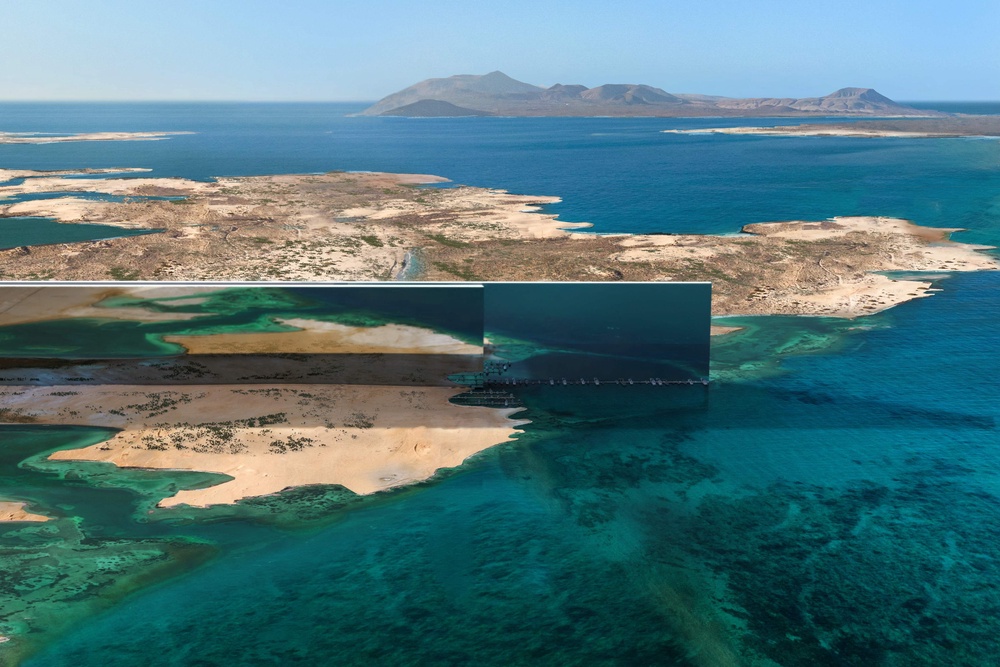
The country’s sovereign wealth Public Investment Fund (PIF) is also being used in gigaprojects, such as enhancing historic Unesco site Diriyah or constructing new cities from scratch, including Qiddiya, touted to be the country’s main entertainment destination, and the futuristic Neom urban development.
Yet projects like these were already starting to show cracks before the war. The construction of one Neom project called The Line, a 170km-long megacity housed within mirrored skyscrapers, has been scaled back. Other Neom enterprises have also been reined in, such as a Trojena ski resort.
Alice Gower, an expert on geopolitics and Middle East security at Azure Strategy, told The Independent that the war and the Houthi attack escalation will have served as a “serious blow” to Vision 2030 as costs rise and the region starts to lose its emerging reputation as a safe place to invest or visit.
Nevertheless, she expects that the government will continue with the project regardless to “signal that they remain open for business”.
“Cancelling these would also hand Iran and the Houthis a psychological victory by demonstrating the impact of their attacks,” she said.
Read more: The Saudi megaprojects at risk of collapse as war with Houthis escalates