_1652931074_9592.jpg)
SAIC-GM-Wuling (Wuling) and Tan Chong Group will work on bringing EV battery assembly to Malaysia, as per the strategic agreement they signed at the 2026 China-ASEAN Expo.
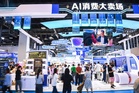
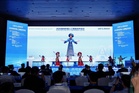
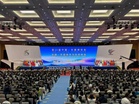
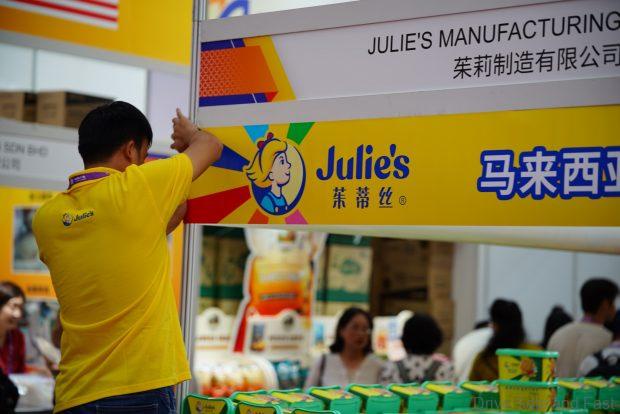
Earlier this week, we were at the 2026 China-ASEAN Expo in Nanning, Guangxi. This was an atypical event for us. Far from an auto show, the conference featured SMEs from all across the ASEAN markets as well as players from Guangxi’s own ecosystem, big and small. While it was refreshing to see familiar brands like Julie’s in a relatively remote part of China, the highlight was the Wuling booth and the little conference they held in the afternoon, which pertained to the brand’s activities in Malaysia.
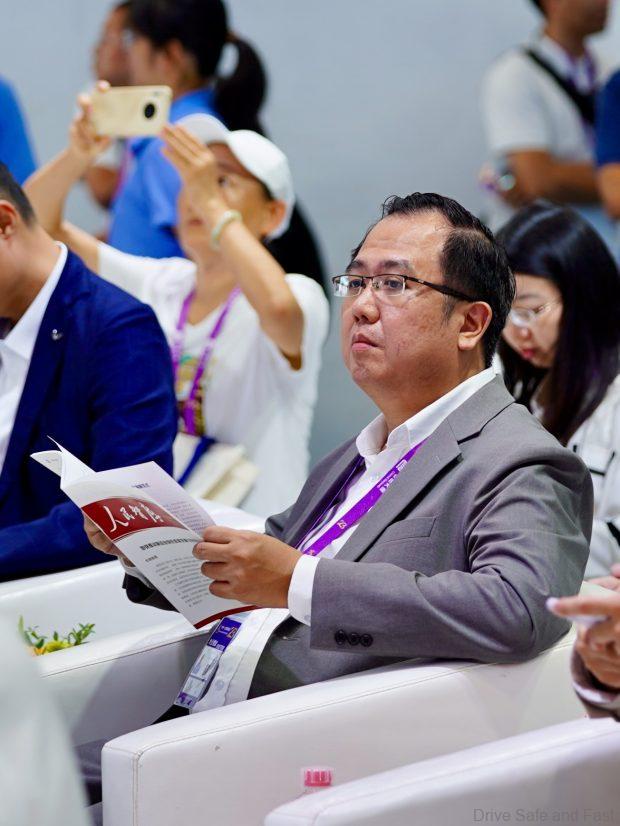
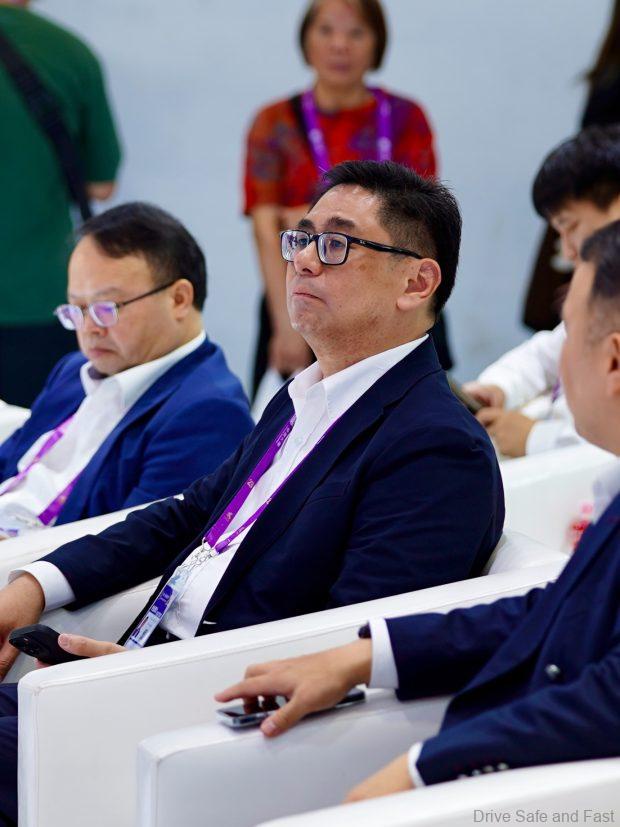
Present at the event were senior members of the Tan Chong Group: Wan Wei Sun, Head of Business, TQ Manufacturing, and Daniel Ho Wai Ming, Group CEO, Tan Chong Motor Holdings. They were there to put into effect the next phase of TQ Wuling’s business development in Malaysia, which was to locally assemble Wuling’s proprietary Magic battery.
What we heard was that the TQ Wuling Bingo has already achieved something like 60% localization of components (translated in real time from a speech given by a senior Wuling representative). This might mean that electric vehicles like the TQ Wuling Bingo and the upcoming PortaEV van are the most ‘locally-sourced’ alternative energy vehicles in the country, possibly even ahead of EVs from national brands. And with the local assembly of the Magic Battery, it’s clear that Edaran Tan Chong Motors are pushing their commitment to further TQ Wuling product introductions.
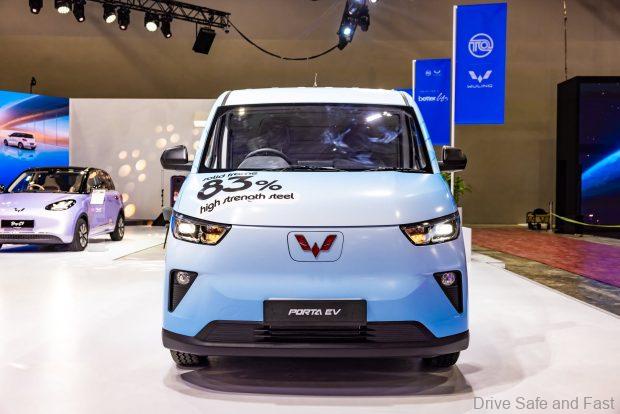
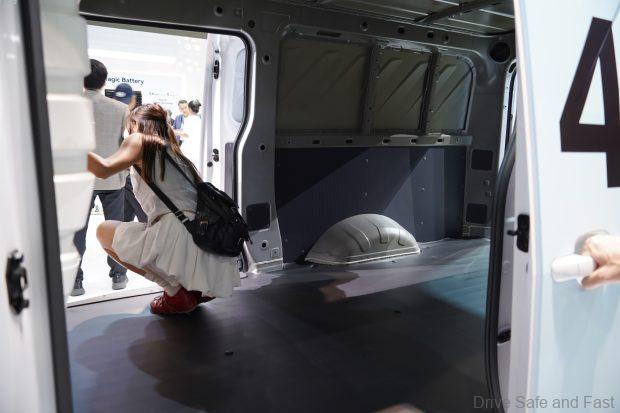
Wuling also confirmed that Malaysian engineering muscle from Tan Chong Group were behind the unique dual sliding doors of the Porta EV, as the model is available in China with just one sliding door.
As for the batteries, Malaysian business publications indicate Saike REPT Power Battery System will be who Tan Chong Group works with to bring this battery tech supply chain into Malaysia.
Wuling’s Global Strategy
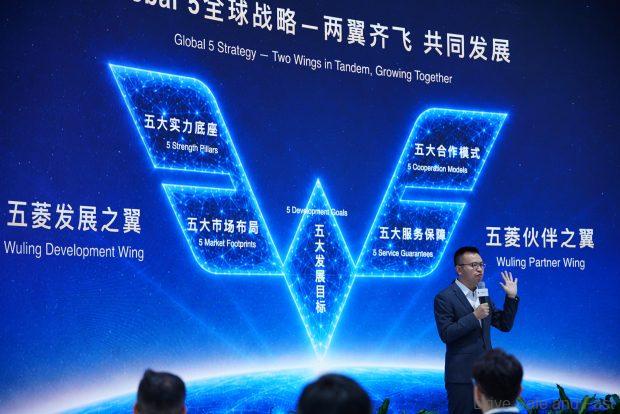
At the press conference, Wuling also took the opportunity to introduce their new G5 Strategy, which encompasses 5 Strength Pillars, 5 Cooperation Models, 5 Market Layouts, 5 Service Guarantees, and 5 Development Goals. By the way, Wuling’s obsession with the number 5 should be acknowledged here. It stems from the brand’s 5-diamond logo, which resembles the letter ‘W’, but also pays homage to the 3-diamond Mitsubishi logo. Wuling’s first vehicle was a licensed Mitsubishi Minicab.
How Wuling Enters A Market
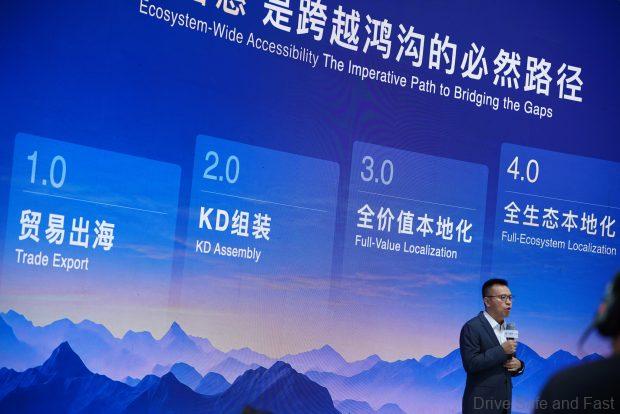
Like any other car brand, the first stage for Wuling in any new market is to simply export vehicles there. This is followed by knock-down assembly and to be honest, not every Chinese car maker is keen to carry out knock-down (KD) assembly. Most prioritize the cost and scale benefits of simple export trade, with local assembly being very superficial in nature. Wuling has exported 1.6 million vehicles to over 120 markets over the last 31 years and has a proper road map to help navigate each market’s localization requirements legitimately.
Wuling’s Goals For ASEAN
It feels as if every Chinese car brand enters the market with the expectation of being number 1, or at least number 1 right after the non-national brands. While it’s admirable to strive for such lofty goals, realistically there can only be one number one. Wuling’s ambitions seem to be more subjective, but perhaps more grounded in reality. They want to be ASEAN’s most deeply localized brand, and ASEAN consumers’ most favorite brand. They’d also like to be ASEAN’s preferred green ride-hailing and green logistics partner. And they’d like to have full-domain ASEAN service network development. Oh, and it would be icing on the cake if they could also define NEV industry standards. I think some of those goals were there to hit that magic number 5.
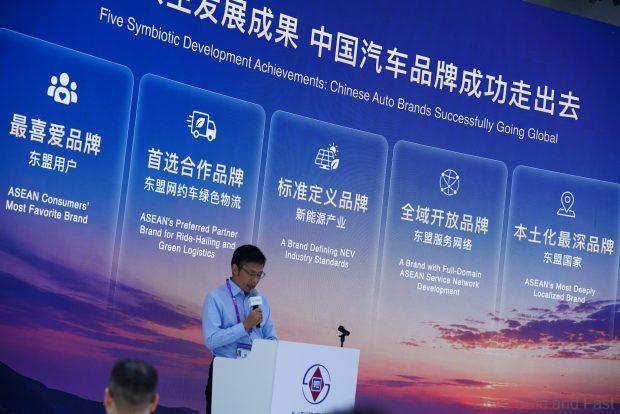
The goals around deep localization and green ride-hailing and logistics are very achievable, though. Both require no-nonsense EVs that do the job for a reasonable cost, and they’ve got the know-how and products to make it work in South East Asia. A partner like Edaran Tan Chong can carry out localization to a huge degree, and they’ve proven invaluable in Grab’s Almera fleet rollout prior to the Bezza’s launch. Perhaps the green revolution in Malaysia’s ride-hailing industry will be a TQ Wuling priority. Without a clear support structure from the Malaysian government, it’s going to be an uphill battle.
The post Wuling & Tan Chong Working On Magic Battery Assembly In Malaysia first appeared on DSF.my.