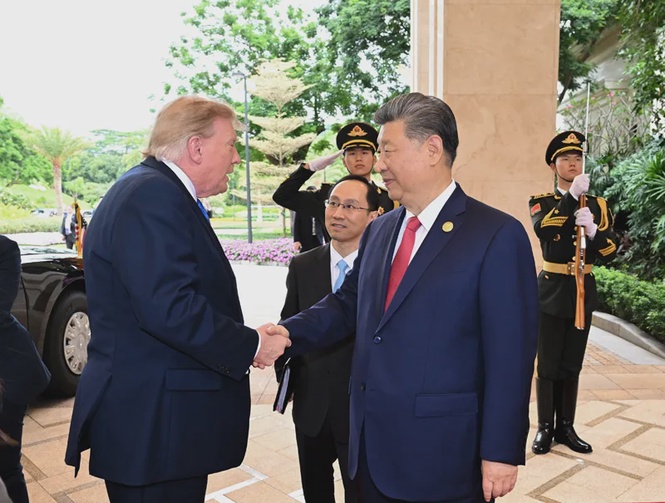
Chinese President Xi Jinping has plenty of reasons to avoid a war over Taiwan, from the legacy of China's one-child policy to the drawn-out wars that have bogged down US President Donald Trump in Iran and Russian President Vladimir Putin in Ukraine, New York Times White House and national security correspondent David Sanger said in Taipei on November 21.
What worries him more, Sanger said, is that Beijing could turn instead to a blockade of Taiwan, a step short of war that the United States and its allies would find much harder to answer.
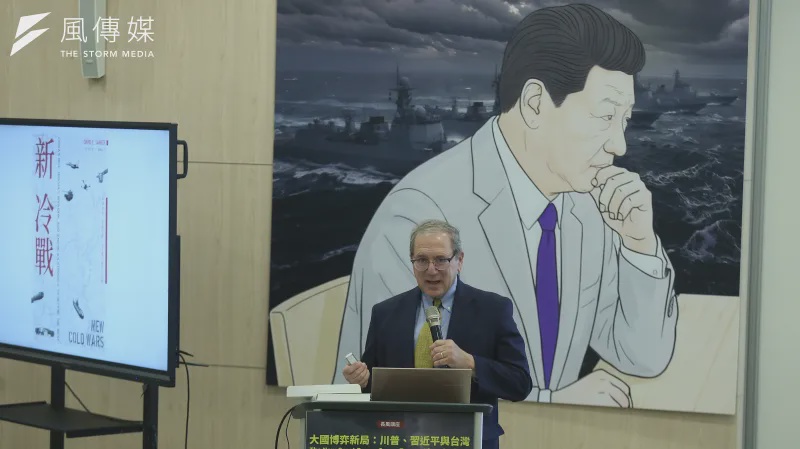
Sanger made the remarks at a lecture hosted by the Fair Winds Foundation, a Taipei-based nonprofit, in a conversation with its chairman, former Premier Jiang Yi-huah, and in answers to questions from the audience. The talk, titled "The New Great Power Game: Trump, Xi Jinping and Taiwan," came days after he covered the APEC summit in Shenzhen, where Trump, Xi, and Putin held a three-way meeting. He also discussed the three Trump-Xi meetings of 2026 and the shift in US politics after the midterm elections, and warned that Taiwan's silicon shield will not last once China stops needing Taiwanese chips.
Sanger, 66, has spent more than 40 years at The New York Times and has covered the White House since 1999, interviewing five presidents from Bill Clinton to Trump. He has been part of three Times teams that won the Pulitzer Prize, teaches at Harvard University's Kennedy School of Government, and wrote the 2024 book "New Cold Wars," which examines Taiwan's strategic position.
Only Children Fill The Ranks Of China's Military
The first reason Xi would not want a major conflict with Taiwan, Sanger said, is the long shadow of the one-child policy.
China introduced the policy in 1979 and did not begin easing it until 2016, when it started encouraging couples to have a second child. In 2021 it went further and encouraged a third.
After 37 years of the policy, a large share of today's People's Liberation Army (PLA) is made up of only sons, Sanger noted. If a war in the Taiwan Strait cost the PLA heavy casualties, he argued, the loss of life would inevitably stir unrest in Chinese society, and could even lead to upheaval.
Russia's Sanctions Show Beijing The Price Of War
A second deterrent is the economic punishment that would likely follow. If China started a war, Sanger said, it could expect sanctions from much of the international community.
Beijing only has to look at Russia, he said. After Moscow invaded Ukraine in 2022, Western countries imposed sweeping sanctions that hit the Russian economy hard, an example that could easily give Chinese leaders pause.
Trump And Putin Are Stuck In Wars They Expected To Win Quickly
The third lesson, in Sanger's view, comes from the two other great powers, both now mired in wars abroad. That, he said, is an ideal cautionary tale for Beijing.
"Putin decided that, whatever the economic cost, he could not let Ukraine go, and once the war began he got stuck in Ukraine, unable to move forward or back," Sanger said. "Trump decided to take on Iran, and he got stuck too. That may make Xi Jinping think twice, because wars abroad rarely go the way superpowers expect."
"Trump thought the Iranian government would collapse within a few days. Then he said it would take five to six weeks. Next week, it will be nearly 10 months," he said.
Sanger Fears A Gray Zone Blockade Of Taiwan
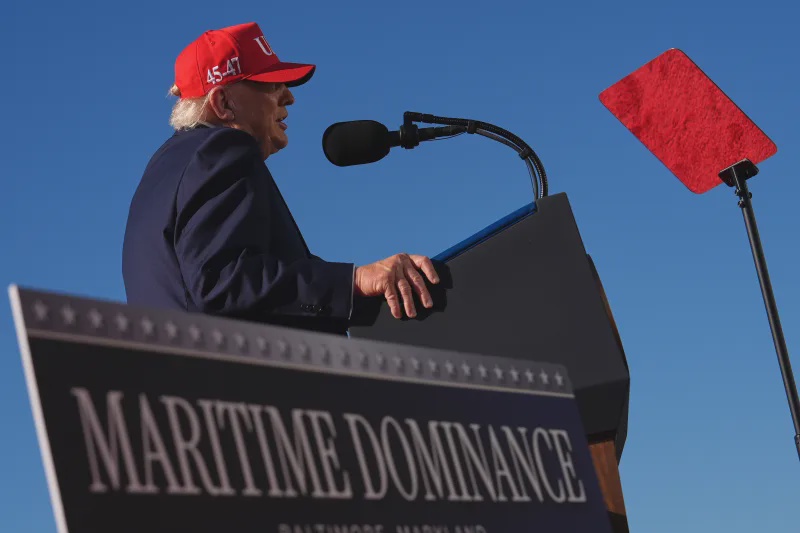
Even if the odds of an armed clash in the Taiwan Strait are falling, Sanger said, he is more worried that Beijing will turn to "gray zone" pressure that stops short of war, such as a maritime blockade that cuts Taiwan's shipping lifeline. Western countries, he said, may find that hard to respond to.
He pointed to China's recent massing of large numbers of military and civilian vessels around the Taiwan Strait for large, unannounced drills, and asked whether Beijing is preparing for a possible blockade of Taiwan. Because such a move is not a military attack, he said, it may be harder for the United States or other Western countries to step in. Earlier this month, Storm Media reported that more than 100 Chinese navy and coast guard ships had fanned out across the region in what two Washington think tanks called a likely rehearsal for cutting Taiwan off.
Sanger sketched how Beijing might frame it. China could say the US naval blockade of Iran in the Persian Gulf was a fine idea, even though China imports a considerable share of its crude oil from the Middle East, and that it wants to do in East Asia what the United States has done in the Middle East.
Beijing could also point out that it said nothing at all about the American blockade of Iran. In return, if China imposed a blockade on Taiwan, the United States should stay out of it. "That is what I worry about," Sanger said.
You've read it. Now join the conversation — follow us on X, Facebook and IG. Editor: Penny Wang