Archaeologists uncover centuries of history beneath Notre-Dame square

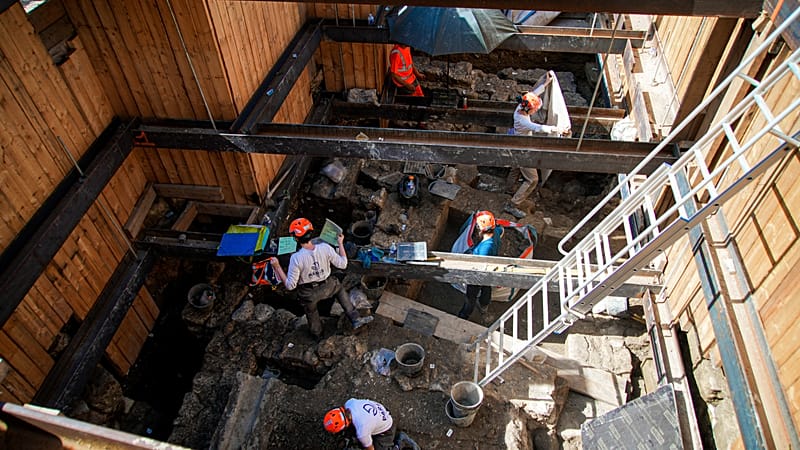
Tourists queue in the heat outside Paris’ Notre-Dame Cathedral, while just metres below them, archaeologists are digging into centuries of history.
Four metres beneath the forecourt, a team is uncovering layers of history stretching back nearly 2,000 years, from medieval Paris to the Roman-era city once known as Lutetia.
The excavation began as part of plans to redesign the square in front of the cathedral, which reopened in late 2024 after a devastating fire in 2019. Paris aims to turn the space into a cooler, greener area with trees and shade to cope with rising temperatures.
But in a city as old as Paris, construction cannot begin until what lies underground is examined and preserved for posterity.
A section of the forecourt has been turned into an open excavation site. Archaeologists say traces appear just 50 centimetres below the surface, and some days teams recover up to 15 crates of artefacts.
“It’s a rare opportunity for us to work on something that’s tangibly going to make a difference to the history of Paris,” Lucie Altenburg, a conservator with the Paris archaeology unit, told The Associated Press.
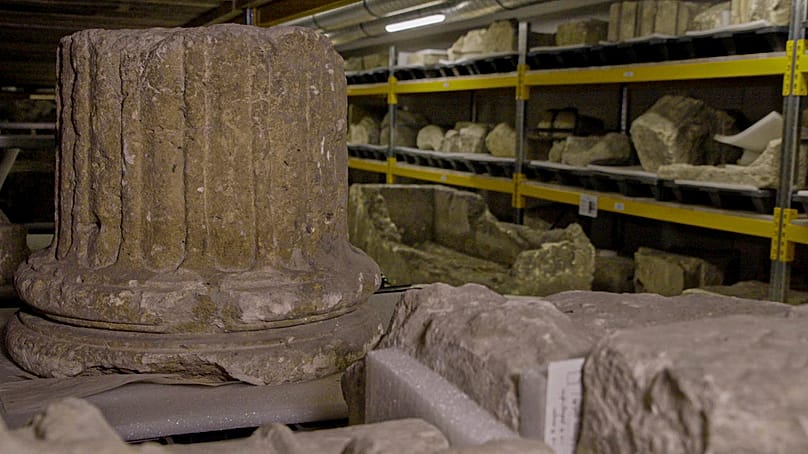
As the team digs deeper, distinct historical layers emerge: medieval remains above earlier Merovingian and Carolingian structures, and a dense Roman quarter below.
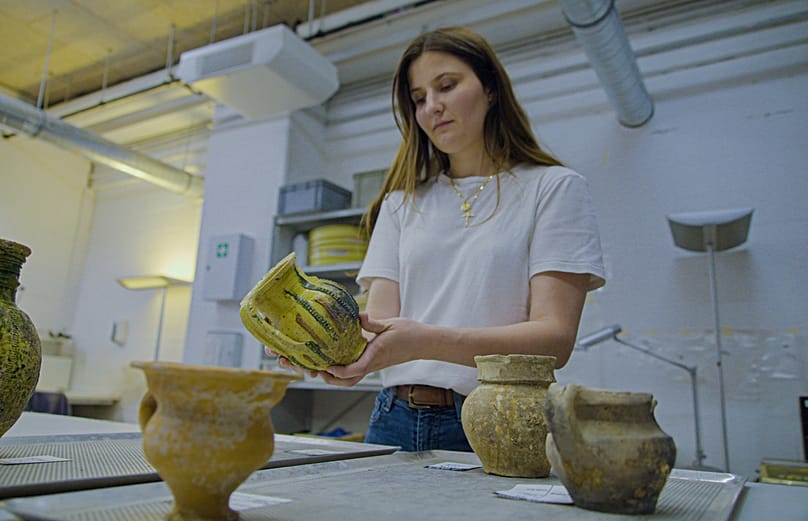
Among the hundreds of objects uncovered are jugs, cups and ceramics, some found intact after centuries underground.
“It’s rare to find complete ceramics,” said archaeologist Valentine Breloux, but the soft waste here has miraculously preserved some whole.
Archaeologists have also uncovered a fourth-century coin bearing the face of Roman emperor Constantine, which helps date the layers in which it was found.
Some pottery fragments have revealed faint reddish markings painted on the inside. Their meaning has not yet been deciphered.
The redevelopment project aims to reshape the square into a more climate-resilient space, with around 160 trees and cooling features to reduce heat in summer.
The project is expected to be largely completed by 2028.
For now, archaeologists hope to dig even deeper — beyond the Roman layers — in search of traces of the Gauls, the area’s earliest known inhabitants.
“It makes Notre Dame feel alive again,” said Emily Carter, 34, a tourist from Manchester waiting in line with her two children. “You come to see the cathedral, then realize there’s another city under your feet. That’s almost more moving.”