No, the EU Democracy Shield isn't a Trojan horse to rig the French presidential election

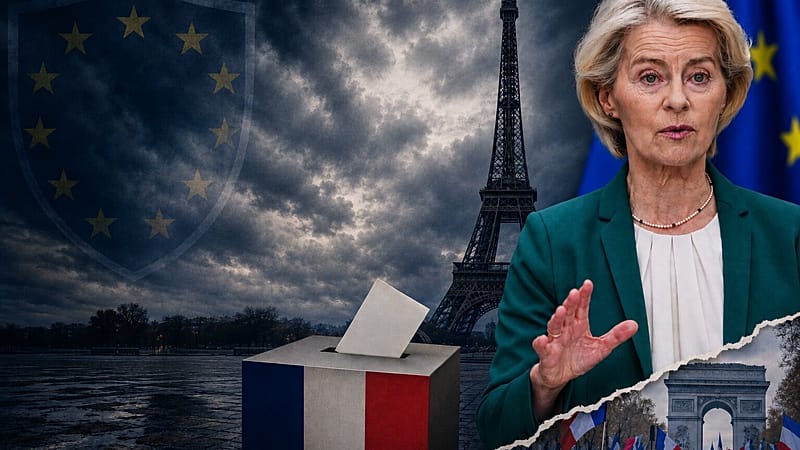
As the European Parliament plenary prepares to discuss the EU Democracy Shield — an initiative designed to protect democratic processes and institutions across the bloc — misleading claims about it have emerged online, alleging it will be used to "cancel" results unwelcome in Brussels, potentially even subverting France's 2027 presidential election.
While the claims are clearly false, as the EU has no mandate to change election results, the fake claims, which began circulating in 2025, recently resurfaced at the hands of Florian Philippot, president of the French nationalist Patriots party.
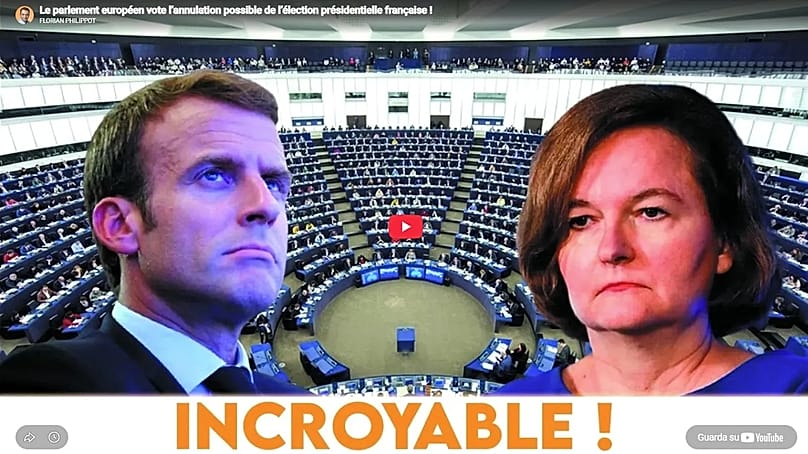
Talking about some of the EU Democracy Shield's provisions, he claimed on YouTube that the anti-disinformation package "could lead to the annulment of the electoral process in all EU countries, as well as France's 2027 presidential election…similarly to what happened in Romania."
Although the French Patriots party has no seats in parliament, its leader enjoys a huge social media base, with nearly 700,000 subscribers on YouTube alone.
What is the European Democracy Shield and what does it actually do?
According to a recent poll, "86% of Europeans agree that the rapid spread of disinformation is a major problem for democracy".
The European Democracy Shield is a broad EU plan to safeguard democracy and elections, and step up the fight against disinformation and foreign interference, including bots and deepfakes.
"It identifies Russia as the primary external hybrid threat actor, with Belarus, China, Iran and North Korea also actively targeting the EU", says the European Parliamentary Research Service.
Works began in 2024 and will continue next week at the Strasbourg plenary.
One approved proposal is a €5 million grant for a network of European fact-checkers.
Although these checkers cannot remove content, they can identify and flag what they deem fake claims to social media platforms, potentially leading to content removal.
This, however, has raised questions of an almost philosophical nature — particularly among Eurosceptics — who wonder how far the EU should go in monitoring information while, at the same time, protecting freedom of speech and pluralism.
Some right-wing voices claim that the democracy shield will end up being a tool for censorship that threatens free speech and targets conservative viewpoints.
Proponents, however, say the initiative reinforces independent journalism, safeguards editorial independence, and shields media workers from abusive lawsuits.
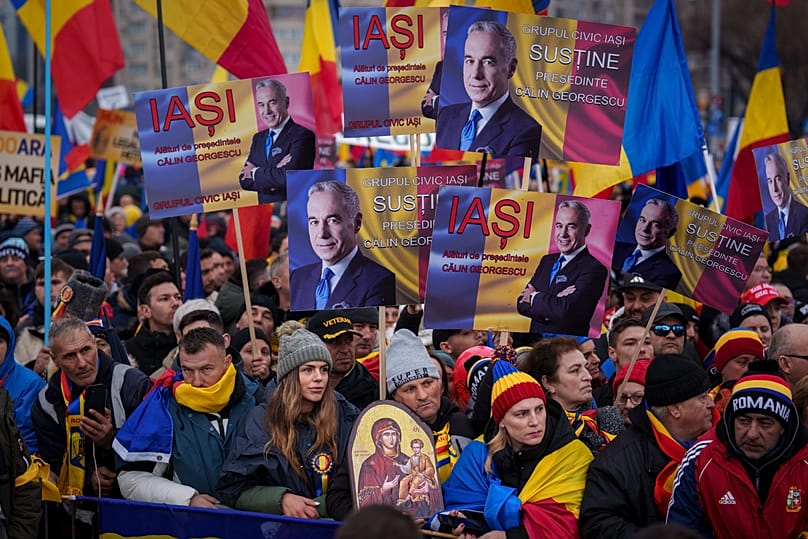
No, Romania's presidential election wasn't invalidated by the EU
In any case, when it comes to national elections, the EU has no mandate to intervene, as it recently stressed after the invalidation of the first round of Romania's 2024 presidential election.
"The conduct of elections is a competence of individual Member States, and the decision in respect of the Romanian presidential election was made by the Romanian Constitutional Court, not any arm of the European Union," Michael McGrath, European commissioner for justice and democracy, said in December of that year.
Indeed, the decision to annul and redo the election was taken by Romania's Constitutional Court, after the intelligence services claimed Russia engaged in a massive TikTok campaign to sway public opinion in favour of independent, far-right candidate Călin Georgescu.
The country's law says that an election can be rerun in case of "fraud" and if foreign interference significantly impacts the results.
Nicușor Dan eventually won the rerun in 2025.
So, the decision to redo the election was controversial and critical for sure, but, ultimately, it sat within Romania, not Brussels.
The European Commission did not respond to a request for comment as of the time of publication.