Pocket-sized sensors and mobile apps are changing how Londoners track air pollution

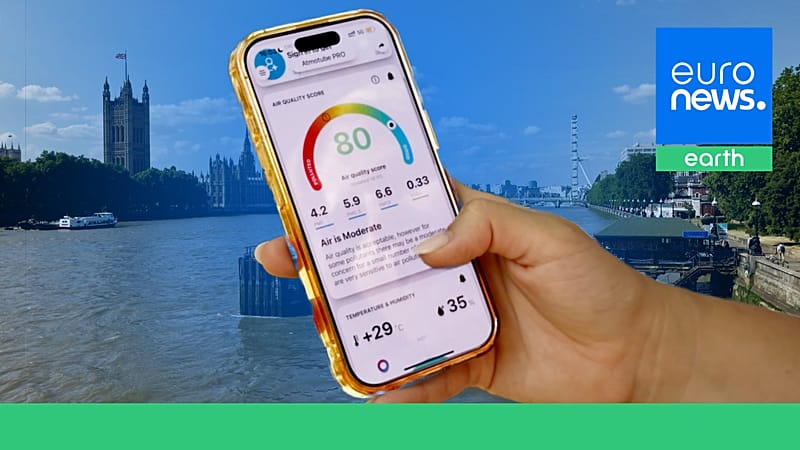
In most countries, air pollution is still one of the biggest threats to people's health. In London, things have been getting better - and that's largely down to tougher transport rules.
An independent analysis by experts from Imperial College London found that the Ultra Low Emission Zone (ULEZ), which keeps the most polluting vehicles off the road, has cut levels of fine particle pollution (PM 2.5) by 31 per cent in outer London and nitrogen dioxide, the traffic-linked gas that irritates the lungs, by 27 per cent across the city.
But air quality can change throughout the day, and that goes for ozone, pollen and other pollutants too.
Air quality sensors reach new places
Keeping up with these swings is getting easier, thanks to a new generation of air quality sensors - compact, and comparatively affordable, though still priced in the tens of thousands of euros.
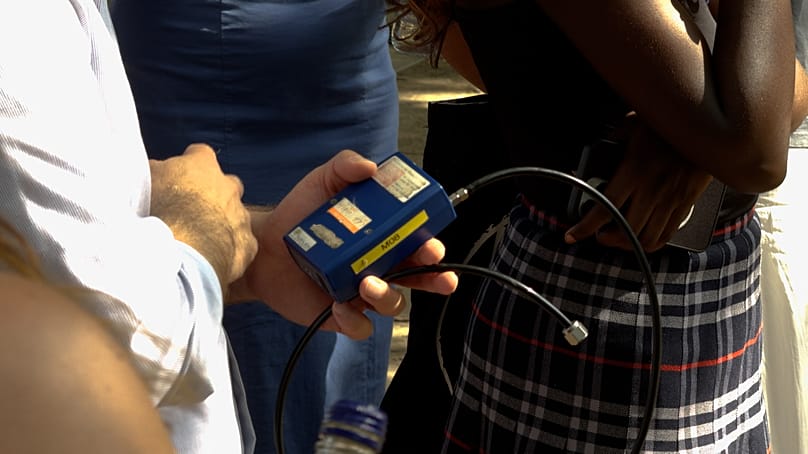
Dr Kayla Schulte is a Social and Environmental Technology researcher at Imperial College London. Her fieldwork relies on devices like a handheld black carbon monitor, a compact sensor that logs particle pollution from burning materials like wood or coal.
"We have lower levels of black carbon here in the UK," she tells Euronews Earth. "It is definitely more of an issue globally and contributes to very high numbers of deaths."
Related
These small sensors - now used across the UK capital's 'Breathe London' monitoring network - can go where bulky reference equipment never could.
"Having small compact equipment like these sensors really changes where and how we're able to monitor pollution," Schulte says, pointing to colleagues who now measure air quality inside the London Underground.
Their size also makes it easier to put sensors right where they're needed most: in the communities carrying the heaviest pollution burden. And software developers can plug the readings into their own apps and platforms, making air quality something people can actually check on their phone, wherever they are in London.
Making pollution data clearer and more accessible
For Schulte, that's an important point - it matters that the public actually sees the data the sensors produce. "Certain groups in society are more likely to interact with information about pollution when they're caring for an individual that might have a health issue," she says. But plenty of people who could benefit from real-time data simply never come across it.
Part of the problem, she argues, is how that data gets published: "The way that air pollution information is presented can be very, very complex."
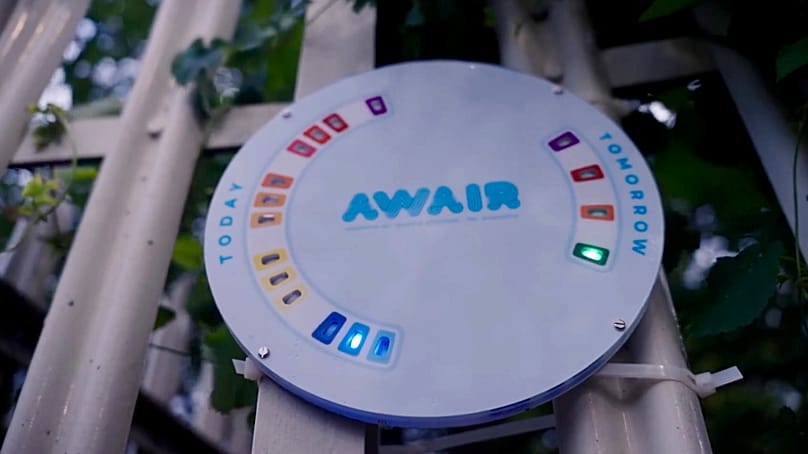
Her team works directly with affected communities to fix that, running school activities where pupils design their own pollution displays, and collaborating with residents on the AWAIR project - a set of solar-powered public air quality displays now installed across several London neighbourhoods.
More rollouts are planned, as researchers try to close the gap between what sensors can measure and what the public can actually understand.